E-Invoicing Coming to the UAE: What Businesses Should Know in 2026
23-Jan-2026
B2G E-Invoicing Solutions in UAE
Upgrade to compliant B2G e-invoicing in UAE with
Reyson Badger. Peppol-ready solutions, VAT
compliance, and seamless ERP integration.
E-Invoicing for Government Contractors (B2G) in UAE
Business-to-Government (B2G) e-invoicing refers to the use of structured electronic invoices when supplying goods or services to government entities. Unlike traditional invoices, B2G invoices must follow specific digital standards so that they can be automatically received, validated, and processed by government procurement systems. As part of broader E invoicing UAE initiatives, these standards help businesses align with government expectations for digital transactions.
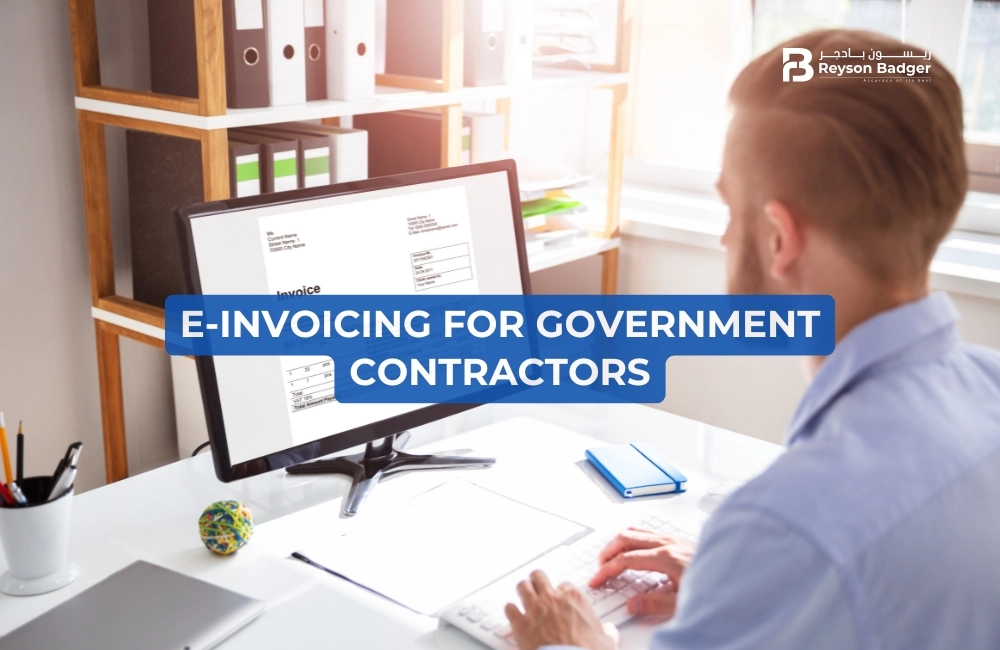
Public sector organizations are increasingly adopting digital procurement and payment platforms. Because governments handle large volumes of transactions and public funds, they require standardized electronic invoices to ensure transparency, faster approvals, and accurate tax reporting. This is driving demand for E invoicing in UAE and specialized the support for government procurement processes.
B2G e-invoicing is closely linked to VAT compliance and digital tax reporting. Governments worldwide are shifting toward real-time invoice validation and digital recordkeeping, and the UAE is moving in the same direction as part of its broader digital transformation strategy. In this context, E-invoicing Services in UAE play a crucial role in helping government contractors stay compliant and ready for future regulatory changes.
Regulatory Requirements for B2G E-Invoicing
Government contracts often come with stricter invoicing rules than private sector transactions. Contractors must ensure invoices are submitted in structured electronic formats that can be automatically verified and processed.
Key regulatory expectations typically include:
- Structured electronic invoice formats
Government entities require invoices in standardized digital formats rather than PDFs or paper invoices. This ensures faster validation and automated processing.
- Peppol and interoperability standards
Many public procurement systems rely on networks such as Peppol to exchange invoices securely and efficiently. Businesses working with government entities must ensure their invoicing systems support such interoperability.
- Automated validation and acceptance workflows
Invoices submitted to government systems are checked automatically for compliance, VAT accuracy, and required fields before approval.
- Digital audit trails and recordkeeping
Electronic invoicing creates a permanent, traceable record of transactions, which supports transparency and simplifies audits.
For government contractors, meeting these requirements is essential to avoid rejected invoices and delayed payments.
Key Benefits of E-Invoicing for Government Contractors
Adopting B2G e-invoicing is not only about compliance—it also improves operational efficiency and financial performance.
- Faster invoice processing and payment cycles: Structured invoices can be validated and approved automatically, reducing manual reviews and accelerating payments from government entities.
- Greater transparency and fewer disputes: Standardized invoice data minimizes misunderstandings and discrepancies between contractors and procurement departments.
- Improved VAT compliance: Automated VAT validation reduces the risk of incorrect tax calculations and simplifies reporting obligations.
- Seamless integration with procurement systems: E-invoicing platforms connect directly with government procurement portals, creating a smoother and more reliable invoicing workflow.
These benefits help contractors maintain strong relationships with public sector clients while improving internal efficiency.
Choosing the Right E-Invoicing Solutions for B2G Compliance
Government contractors need robust e-invoicing platforms that can meet strict regulatory and technical requirements.
Essential features to look for include:
- Peppol interoperability
The ability to exchange invoices securely with government systems through recognized international networks.
- Real-time validation and status tracking
Contractors should be able to monitor invoice submission, acceptance, and payment progress in real time.
- ERP and accounting integration
A strong solution integrates seamlessly with existing finance systems to automate invoice generation and submission.
- High-level data security and compliance
Government transactions require strict data protection, encryption, and compliance with digital reporting standards.
Selecting the right platform ensures long-term scalability, compliance, and efficient B2G operations.
How Reyson Badger Supports Government Contractors?
Implementing B2G e-invoicing requires both technical expertise and regulatory knowledge. Reyson Badger provides tailored e-invoicing solutions designed to help government contractors transition smoothly to structured digital invoicing.
Our services include:
- E-invoicing readiness assessments
- Integration with ERP and accounting systems
- Peppol-ready invoicing implementation
- VAT compliance advisory and validation
- Ongoing monitoring and regulatory updates
We help contractors align with evolving UAE e-invoicing requirements while ensuring uninterrupted business operations.
Why Choose Us?
E-invoicing is becoming a core requirement for businesses working with government entities. Structured digital invoices improve transparency, accelerate payments, and strengthen VAT compliance.
For government contractors, adopting compliant and scalable e-invoicing solutions is no longer optional—it is essential for participating in modern public procurement systems.
With expert support and the right technology, businesses can meet regulatory expectations while improving efficiency and financial performance. Partnering with experienced advisors like Reyson Badger ensures a smooth transition into the future of B2G digital invoicing.
E-Invoice
Related Blogs
UAE E-Invoicing Timeline & Deadline
28-Jan-2026
E-Invoicing Solutions For Financial Institutions
28-Jan-2026Request a Quote
We’ll get back to you shortlyFAQs
E-Invoicing for Government Contractors in UAE refers to the digital issuance and exchange of invoices for business-to-government (B2G) transactions using structured formats like XML or JSON. These invoices are validated and reported through government-approved systems to ensure full compliance.
Yes, B2G transactions are a core part of the UAE’s e-invoicing framework. Government entities are expected to fully adopt e-invoicing by October 2027, making it mandatory for contractors working with government bodies.
Invoices must be generated in a structured format and transmitted through an Accredited Service Provider (ASP) connected to the UAE’s Peppol-based network. Manual invoices, PDFs, or scanned copies will not be considered valid.
Latest Blogs
14
Oct
UAE Corporate Tax Filing for Small Businesses: Everything You Need to Know
Learn how small businesses in the UAE can manage Corporate Tax filing, understand Small Business Relief eligibility, and meet FTA compliance requirements.
READ MORE →
13
Oct
UAE E-Invoicing Mandatory Requirements: What Businesses Need to Prepare
For businesses, this means an effective UAE e-invoicing solution needs to connect invoice creation with the required data structure, validation, electronic exchange, and reporting process.
READ MORE →
12
Oct
What Does an Auditor Check During a Financial Audit?
READ MORE →
14
Oct
How PRO Services Simplify Business Setup in Abu Dhabi
PRO services in Abu Dhabi for documentation, licensing and visa support.
READ MORE →
09
Oct
How Long Does a Company Audit Take in Dubai?
Learn how long a company audit takes in Dubai and how business size, financial records, supporting documents, and audit requirements affect the timeline.
READ MORE →
07
Oct
How Business Strategy Consulting Supports Sustainable Growth in the UAE?
Get practical strategic guidance for market entry, business growth, expansion, competitive positioning, and long-term planning in the UAE.
READ MORE →
07
Oct
UAE Introduces New Tax Reporting Rules for Multinational Companies
Learn about the UAE’s new Pillar Two Information Return filing requirements for multinational companies and UAE entities.
READ MORE →
06
Oct
Feasibility Study Services in Dubai for New Businesses
Feasibility study services in Dubai help entrepreneurs and investors examine the market, financial requirements, technical needs, competition, and regulatory considerations surrounding a proposed business.
READ MORE →
05
Oct
How Auditors Identify Financial Errors in Business Records?
Learn how auditors identify financial errors through record reviews, reconciliations, transaction testing, and analytical procedures.
READ MORE →
29
Sep
How Non-Residents Can Open a Bank Account in the UAE
Understand the key requirements for non-residents seeking to open and manage a bank account in the UAE
READ MORE →