
Save Time and Reduce Risk with Professional PRO Services
03-Mar-2026
UAE commercial invoice attestation
Reliable attestation services for commercial invoices ensuring legal acceptance in the UAE
Commercial Invoice Attestation in UAE
What Is Commercial Invoice Attestation in UAE?
Commercial invoice attestation in the UAE is the official process of verifying and certifying the authenticity of a commercial invoice, whether it is issued locally or internationally. This process confirms that the document is genuine by validating signatures, stamps, and business details through the Ministry of Foreign Affairs and International Cooperation (MOFAIC).
In international trade, a commercial invoice is more than just a billing document it is a key legal record used for customs clearance, taxation, and regulatory verification. Attestation ensures that this document is recognised by UAE authorities and accepted for import/export operations.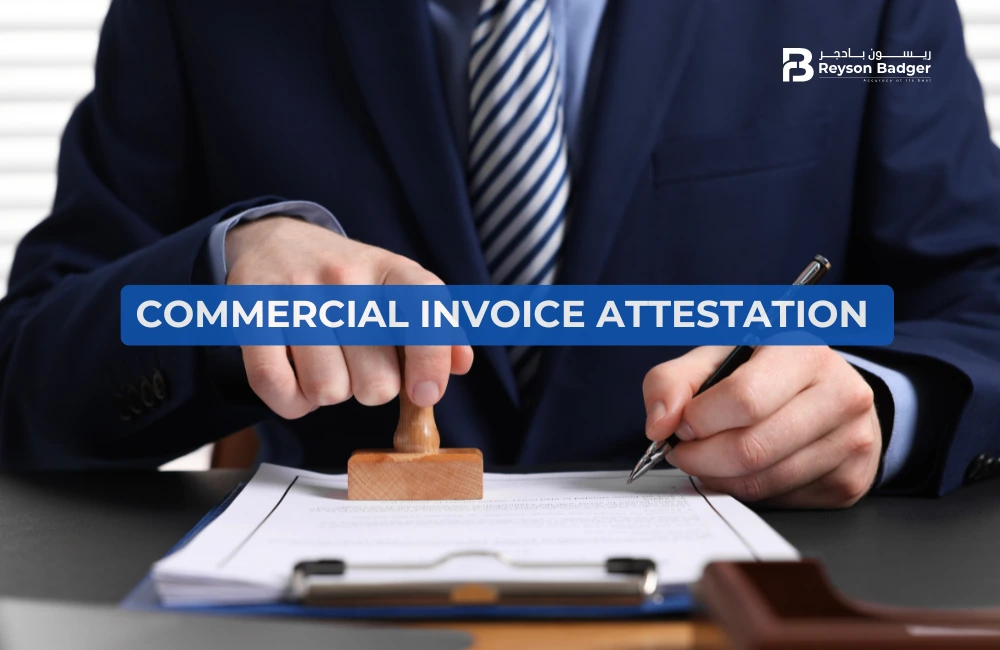
Why Commercial Invoice Attestation Is Important
Commercial invoices form the backbone of international trade documentation. They contain essential details such as the buyer and seller information, description of goods or services, quantity, value, and agreed terms of sale.
Attestation becomes important because it gives these documents legal credibility. Without it, authorities like UAE Customs may not accept the invoice for processing.
The importance of attestation has increased following UAE Cabinet Decision No. 38 of 2022, which made it mandatory to attest import invoices valued at AED 10,000 or more for customs declarations. This regulation has made compliance a critical requirement for businesses involved in cross-border trade.
Commercial Invoice Attestation Rules in UAE
The UAE has introduced clear rules around invoice attestation to streamline trade compliance.
For import transactions, attestation is mandatory when the invoice value is AED 10,000 or higher. Businesses are required to complete the attestation within a specified timeframe typically within 14 days of the customs declaration. Failure to comply can result in administrative penalties, such as fines per unattested invoice.
At the same time, certain transactions are exempt from this requirement. These generally include:
- Invoices below AED 10,000
- Free zone transactions
- Personal imports
- Imports from GCC countries
- Diplomatic, military, or charitable shipments
- Transit goods
Understanding whether your transaction falls under mandatory attestation or exemption is essential to avoid unnecessary delays or penalties.
How Commercial Invoice Attestation Works (MOFA eDAS System)
To simplify the process, the UAE introduced the eDAS (Electronic Document Attestation System) a digital platform that allows businesses to complete attestation online efficiently.
The system, managed by the Ministry of Foreign Affairs and International Cooperation, has significantly reduced processing time and improved transparency.
Step-by-Step Attestation Process
- Company Account Registration: Businesses must first register on the MOFAIC portal using their trade licence details and UAE Pass credentials.
- Submit Attestation Request: Once registered, the company can submit an attestation request by uploading the commercial invoice and required supporting documents.
- Pay Attestation Fees: A standard fee (commonly around AED 150 per invoice) is applied and must be paid online.
- Receive Attested Invoice: After approval, the attested invoice is issued digitally and can be downloaded for use in customs and official procedures.
Required Documents for Invoice Attestation
To complete commercial invoice attestation in UAE, businesses need to prepare relevant documentation.
- Typically required documents include:
- Original commercial invoice
- Certificate of origin (if applicable)
- Company trade licence details
- UAE Pass login credentials
- Any additional supporting documents if requested
For invoices issued outside the UAE, prior authentication from the relevant foreign authority or UAE Embassy may be required before MOFA attestation.
When Do You Need Commercial Invoice Attestation?
Commercial invoice attestation is required in several trade and compliance scenarios.
It is commonly needed for:
- Import clearance with UAE Customs
- Export documentation for international trade
- Legal recognition of transactions abroad
- Verification of transactions by regulatory authorities
In each case, attestation ensures that the invoice is accepted as a valid and authentic document.
Why Choose Our Commercial Invoice Attestation Services in UAE
Managing invoice attestation, especially for multiple shipments or international transactions, can be time-sensitive and complex.
With Reyson Badger’s invoice attestation services in UAE, businesses benefit from:
- smooth handling of the eDAS attestation process
- accurate document submission to avoid rejections
- timely processing to meet compliance deadlines
- end-to-end support for both local and foreign invoices
Our team ensures that your UAE commercial invoice attestation is completed efficiently, helping you stay compliant and avoid penalties.
PRO Services
Attestation Services in UAE
- Company Document Attestation Services in UAE
- True Copy Attestation Services
- MOFA (Ministry of Foreign Affairs) Attestation in UAE
- Commercial Document Attestation
- Trade License Attestation
- Marriage Certificate Attestation
- Birth Certificate Attestation
- Death Certificate Attestation in UAE
- Memorandum of Association (MOA) Attestation
- Educational Certificate Attestation
- Divorce Certificate Attestation
- Articles of Association Attestation in the UAE
- Medical Certificate Attestation in UAE
- Personal Document Attestation
- Police Clearance Certificate (PCC) Attestation in UAE
- Embassy and Consulate Attestation
- Degree Certificate Attestation
- Health Certificate Attestation
- Diploma Certificate Attestation
- Power of Attorney (POA) Attestation in UAE
- Commercial Invoice Attestation in UAE
- Board Resolution Attestation
- Experience Certificate Attestation
- Certificate of Incorporation Attestation
- Transcripts Attestation Services
- Sick Leave Certificate Attestation
- Document Legalization Services
- School Leaving Certificate Attestation
- Marksheet Attestation Services

Request a Quote
We’ll get back to you shortlyLatest Blogs
29
Sep
How Non-Residents Can Open a Bank Account in the UAE
Understand the key requirements for non-residents seeking to open and manage a bank account in the UAE
READ MORE →
29
Sep
How UAE Trading Companies Can Prepare for E-Invoicing: A Guide for Importers & Exporters
This guide explains what UAE importers and exporters should know about e-invoicing and the practical steps trading businesses can take to prepare.
READ MORE →
25
Sep
How to Choose an Auditor in Dubai: What to Check Before You Hire
A practical guide to choosing the right auditor in Dubai, what to check, questions to ask and red flags to avoid.
READ MORE →
24
Sep
Step-by-Step Guide to Getting a Commercial Brokerage Licence in the UAE
A practical guide to setting up a commercial brokerage business and obtaining the required UAE licence
READ MORE →
22
Sep
Disciplined Accounting: The Most Effective Approach for Long-Term Business Success
Accounting Services in Dubai can provide growing Dubai businesses with structured bookkeeping, reporting and financial support.
READ MORE →
22
Sep
Excise Tax vs VAT in the UAE: What Dubai Businesses Need to Know
Understand the key differences between Excise Tax and VAT in the UAE, including applicability, rates, registration, compliance, and what Dubai businesses need to know.
READ MORE →
22
Sep
Common Mistakes Businesses Make Before Their Annual Audit in Dubai
A practical guide to the 8 most common annual audit preparation mistakes Dubai businesses make, and how proper preparation and the right auditors can make your next annual audit faster and stress-free.
READ MORE →
16
Sep
How to Calculate VAT in UAE 2026: Complete Guide
Learn how to calculate VAT in the UAE in 2026, including VAT formulas, taxable amounts, input VAT, output VAT, and practical calculation examples.
READ MORE →
15
Sep
How to Choose an Accredited Service Provider for UAE E-Invoicing?
An e-invoicing service provider helps businesses create, process, transmit and manage electronic invoices through systems designed to support the applicable e-invoicing framework.
READ MORE →
16
Sep
How to Get a UAE Residence Visa: Step-by-Step Guide
Learn how to apply for a UAE residence visa, including visa types, eligibility, required documents, application steps, costs, and common mistakes to avoid
READ MORE →