
Tax Services Provider in Saudi Arabia
Tax Services in Saudi Arabia for Businesses of All Sizes.
Ensure compliance, optimize tax positions, and
manage filings with expert support.
Tax Services in Saudi Arabia (KSA)
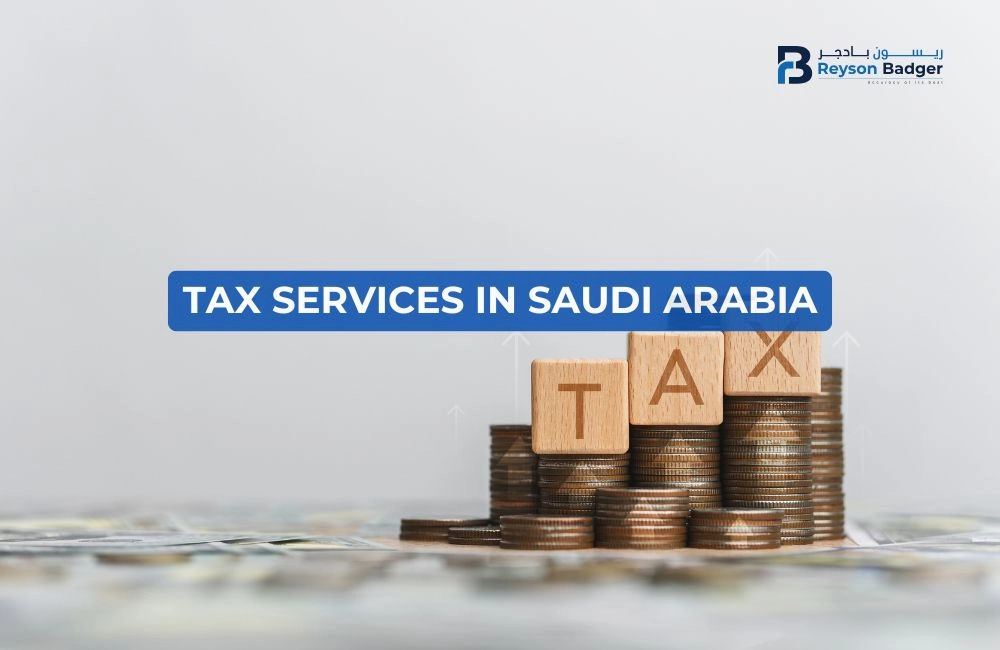
Tax Services Provider in Saudi Arabia
If you need Tax Services in Saudi Arabia, we're here to handle the filings, reviews, and reporting that can otherwise cost you time, money, and avoidable tax exposure. Book a consultation with Reyson Badger, if your business needs help with VAT, Zakat, corporate income tax, withholding tax, or ZATCA-related reporting before missed submissions turn into disputes or delays. Right from paying taxes on your income to ensuring that you're filing tax returns accurately and on time, it's important to have a good grasp of the process. From advice on the types of taxes in Saudi Arabia to expert help with filing and paying taxes, we're here to help! So if you're looking for quality tax service in Saudi Arabia, look no further – Reyson Badger is here for you, offering expert Zakat services Saudi Arabia, experienced tax consultants Riyadh, reliable Corporate tax KSA support, full ZATCA compliance assistance, and comprehensive tax due diligence KSA.
Our Saudi Tax Services
We handle the tax work your business can't afford to get wrong. If returns, registrations, or authority queries are left unresolved, you can face payment issues, delayed clearances, and repeated corrections.
- VAT registration and VAT return filing
- Zakat review and filing assistance
- Corporate income tax review and reporting support
- Withholding tax reviews and filing assistance
- ZATCA compliance support and documentation checks
- E-invoicing implementation support and record review
- Tax assessment support, audit support, and dispute assistance
- Tax outsourcing for ongoing monthly, quarterly, or annual obligations
If you want a fixed scope before you start, you can book a consultation, request a proposal, or speak to a tax advisor about the exact filings and reviews your business needs.
Reyson Badger offers reliable and customized tax services for optimal compliance and planning
You can speak to our team if you need tax outsourcing, a proposal for ongoing filings, or a one-off review before an assessment, audit query, or deadline puts your business at risk.
Need help with Saudi tax compliance?
Speak with a Saudi tax specialist
The Saudi Arabian government levies taxes on individuals and businesses, including a value-added tax (VAT) and excise taxes. If your business misses a filing or reports the wrong figures, you don't just lose time - you can end up dealing with penalties, blocked refunds, and long back-and-forth with the authority. The tax authority is now generally referred to as ZATCA, so businesses should keep their registrations, returns, and correspondence aligned with current authority references rather than older DZIT wording.
Saudi Arabia does not follow a progressive tax system. The corporate income tax rate is a flat 20% on the net adjusted profits of foreign-owned companies and non-GCC share portions. Additionally, there is no personal income tax on salaries or employment income. ZATCA provides online filing and payment channels, but your business still needs the right records, return calendar, and document review before submission or you risk errors that take time to fix.
Zakat is calculated on the company's Zakat base broadly its net equity, reserves, and adjusted net profit, after allowable deductions such as fixed assets and qualifying long-term investments rather than on sales revenue, so VAT-style rules like export zero-rating don't apply to it. Certain long-term investments in other Zakat-paying entities may be excluded from the base under conditions set by ZATCA, to avoid double Zakat. In practice, zakat compliance is often reviewed alongside VAT Services in Saudi Arabia and VAT Refund in Saudi Arabia as businesses assess their overall tax and regulatory obligations.
Tax Service Types and When You Need Them
This table shows when you need each tax service. If you pick the wrong filing path or miss a trigger point, your business can end up correcting returns after submission.
| Service Type | When You Need It | What Can Go Wrong If Delayed |
| VAT registration | When your business becomes liable to register or wants voluntary registration review | Late registration can lead to backdated issues, return corrections, and authority queries |
| VAT return filing | When monthly or quarterly VAT reporting is due | Incorrect returns can create payment gaps, refund delays, or review exposure |
| Zakat support | When your company needs Zakat calculation, review, or filing assistance | Wrong calculations can lead to disputes and repeat submissions |
| Corporate income tax support | When foreign-owned or relevant companies need tax computation and filing review | Errors can affect tax payable and trigger assessments |
| Withholding tax support | When your business makes cross-border or qualifying payments that need review | Missed treatment can create underpayment issues and later corrections |
| E-invoicing support | When your invoicing setup, records, or document controls need review | Weak invoice controls can lead to rejected records and compliance gaps |
| Tax assessment or audit support | When your business receives authority questions, notices, or review requests | Slow replies can make disputes harder and increase internal cost |
Not sure which Saudi tax obligations apply to your business?
Request a tax assessment
How Much Do Tax Services in Saudi Arabia Cost?
Pricing depends on:
- Company size
- Transaction volume
- Number of VAT returns
- Tax types involved
- Number of entities
- Complexity of transactions
- Audit/dispute requirements
- Ongoing vs one-time engagement
Who We Help
We help businesses that need tax work done properly and on time. If your records are incomplete or your filing duties aren't clear, you can lose time across finance, operations, and management.
- Retail businesses with frequent invoice and output tax activity
- Construction companies managing project billing and subcontractor payments
- Manufacturing businesses handling imports, costs, and documentation
- E-commerce businesses dealing with fast transaction volume and record keeping
- Professional services firms that need recurring filing and advisory input
- New businesses that need company formation tax setup and early tax review
- Established companies that want tax outsourcing or periodic health checks
Tax Services for Companies in KSA
Tax services for companies in KSA cover setup, filing, review, and dispute handling. If your business treats tax as a year-end task, problems usually show up after transactions are complete and harder to fix.
We assist companies with company formation tax setup, ongoing filing obligations, tax review work, documentation checks, tax assessment responses, and tax dispute support. This gives your finance team a clearer return calendar and reduces the chance of rushed submissions.
VAT Registration and Filing Services
VAT registration and filing services keep your business from missing registration points and return deadlines. If VAT data isn't checked before filing, you can submit the wrong figures and spend weeks correcting them.
Our work can include registration support, return preparation assistance, transaction review, input and output VAT checks, record keeping review, and documentation checks before submission. We also help businesses that need VAT refund support or a tax review before a ZATCA query.
Zakat and Corporate Income Tax Services
Zakat and corporate income tax services help you calculate, review, and file the right tax position. If the underlying numbers aren't reviewed properly, your company can face assessment issues and difficult follow-up questions.
We support businesses with Zakat calculations, corporate income tax review, year-end tax adjustments, supporting schedules, and submission-ready documentation. This is especially useful where ownership structure, profit allocation, or reporting records need closer review.
Withholding Tax Compliance Services
Withholding tax services review payments before reporting mistakes become tax exposures. If vendor payments are classified the wrong way, your business can end up with underpaid tax and a harder reconciliation later.
We help review payment types, supporting contracts, tax treatment, return preparation, and documentation files for withholding tax obligations in Saudi Arabia. We also assist when businesses need a second review before filing or after receiving questions on past treatment.
ZATCA Compliance and E-Invoicing Support
ZATCA compliance and e-invoicing support help you keep records, invoices, and reporting aligned. If invoice data and tax records don't match, your business can face rejected documentation, delayed reviews, or repeated authority questions.
We assist with e-invoicing implementation support, document review, invoice field checks, record keeping controls, return backing files, and responses to reporting issues. We reference ZATCA as the current authority context on this page so your business isn't working from outdated DZIT terminology.
Taxes Collected by Saudi Arabia
Saudi Arabia applies several tax types, and each one needs different records, filings, and reviews. If your business treats them the same way, you can file the wrong data and create avoidable tax exposure.
When it comes to taxation in Saudi Arabia, it's important to be aware of the main types of taxes and levies: Value Added Tax (VAT), Zakat, Corporate Income Tax, Withholding Tax, Customs Duties, and Excise Tax.
Each follows a distinct set of rules and regulations that must be complied with. Zakat and corporate tax returns, along with final payment, are due within 120 days of the end of a company's fiscal year (around 30 April for businesses on a calendar year). Larger taxpayers must also make three advance installment payments during the year, due at the end of the 6th, 9th, and 12th months so it's important to keep track of your income and assets throughout the year, not just at year-end.
VAT vs Zakat vs Corporate Income Tax vs Withholding Tax
This table shows the main difference between common tax obligations in KSA. If your business mixes up the tax base, filing logic, or supporting records, errors can carry across more than one return.
| Tax Type | What It Usually Applies To | Why Businesses Need Help |
| VAT | Supplies of goods and services, imports, and related taxable activity | Transaction testing, invoice checks, and return accuracy can break down fast without review |
| Zakat | Relevant company net worth and related financial position review | Balance sheet treatment and adjustments need support or disputes can follow |
| Corporate Income Tax | Taxable profits for relevant companies, including foreign-owned interests noted on this page | Wrong profit adjustments can affect tax due and trigger questions |
| Withholding Tax | Certain payments to non-residents or qualifying cross-border arrangements | Payment misclassification can lead to under-withholding and correction work |
Why Businesses Outsource Tax Services in KSA
Businesses outsource Tax Services in KSA because internal teams don't always have time to track every filing, record request, and tax review. If tax work is delayed until the deadline week, errors rise and finance teams lose time fixing old periods.
- You reduce pressure on internal accounting staff
- You get a clearer return calendar and review path
- You cut the risk of missed submissions and incomplete records
- You have a contact point for ZATCA-related questions and document requests
- You can ask for one-off reviews or ongoing tax outsourcing based on need
Our Tax Advisory Process
Our tax advisory process starts with your current tax issue and the deadline attached to it. If we don't define the filing scope, documents, and review points early, your business can waste time gathering records twice.
- You speak to our team and explain the tax issue, filing need, or authority notice
- We review the scope, business activity, and the tax heads involved
- We request the documents needed for the filing or review
- We assess the records, identify gaps, and highlight what needs correction
- We help prepare the submission, response, or review output
We stay involved through follow-up questions where the engagement scope requires it If you'd like to move forward, you can book a consultation, request a proposal, or speak to a tax advisor about expected deliverables and turnaround.
Need help before your next ZATCA filing?
Schedule a consultation
Documents Required for Tax Compliance Support
The documents you need depend on the tax type and filing issue. If key records are missing, your business can face delays, incomplete submissions, and extra rounds of authority questions.
- Commercial registration and company details
- VAT registration records, if applicable
- Sales invoices and purchase invoices
- General ledger and trial balance
- Bank statements and payment support
- Contracts for services, royalties, rent, or technical fees
- Prior tax returns, assessments, or authority correspondence
- E-invoicing records and supporting transaction files
Common Tax Risks for Businesses in Saudi Arabia
Common tax risks usually come from wrong classifications, weak records, and late review of filings. If these issues aren't caught early, your business can face disputes, cash flow pressure, and extra internal work.
- Late VAT registration or delayed return filing
- Incorrect invoice treatment and missing supporting documents
- Weak record keeping for Zakat and corporate income tax review
- Wrong withholding tax treatment on vendor or cross-border payments
- Unclear e-invoicing controls and inconsistent reporting files
- Slow responses to tax assessments, audit questions, or notices
This page doesn't list a penalty schedule because verified amounts need current regulator confirmation, but the business impact is clear: missed deadlines and inaccurate filings can cost money and pull management into long correction cycles.
Tax Services in Riyadh, Jeddah, and Dammam
We provide tax support for businesses operating in Riyadh, Jeddah, and Dammam. If your teams work across multiple locations, inconsistent records and local handoffs can slow filings and create reporting gaps.
You can also review our related pages for Tax Advisory Services in Riyadh, Tax Advisory Services in Jeddah, and Tax Advisory Services in Dammam if you need location-relevant assistance.
Our other Tax related services of Saudi:
- Tax Compliance Service in Saudi Arabia
- Tax Advisory Services in Saudi Arabia
- Tax Advisory Services in Jeddah
- Tax Advisory Services in Dammam
- Tax Advisory Services in Riyadh
Value Added Tax (VAT)
The value-added tax (VAT) is a consumption tax applied to all business activities involving the supply of goods or trade in Saudi Arabia. The rate is currently set at 15%(increased from 5% on July 1, 2020), with certain exemptions. VAT is imposed on the sale of goods and services and on imports, while exports of goods and services outside the GCC are generally zero-rated (taxed at 0%) rather than at the standard rate.
The tax period for value-added services may be either monthly or quarterly. The former offers more frequent filing and payment, while the latter offers a longer window to file and pay.
Withholding Taxation
According to Saudi Arabia's tax authority, the Zakat, Tax and Customs Authority (ZATCA), withholding tax is levied on. payments made by a resident or permanent establishment of a non-local resident. The rate of withholding tax varies depending on the type of payment, but generally ranges from 5% to 20% for example, around 5% on dividends, interest, and rent; 15% on royalties and most other services; and 20% on management fees.
Withholding tax is generally payable on dividend payments, interest payments, royalties, fees for technical services, and rent. However, there are certain exceptions to these rules, such as interest paid on deposits with banks and other financial institutions, which are exempt from withholding tax.
Corporate Income Tax
The Kingdom of Saudi Arabia imposes a corporate income tax on companies resident in Saudi Arabia. The corporate income tax rate is 20% for most companies. The standard rate for non-Saudi/non-GCC entities (including foreign branches) is also 20%; income from oil and hydrocarbon production is instead taxed at rates ranging from 50% to 85%, depending on the level of capital investment. The ZATCA is responsible for the administration and collection of corporate income tax.
Custom duties
Saudi Arabia is a member of the World Customs Organization (WCO), formerly known as the Customs Co-operation Council, and applies the Harmonized System (HS) of classification for tariff purposes, in place internationally since 1988. All imports into Saudi Arabia are subject to customs duty tax. The Kingdom levies taxes on most imported goods at the rate of 5%, with some exceptions. Customs duties collected by the government contribute significantly to state revenues.
What are the penalties for not paying taxes in Saudi Arabia?
Taxes are an inevitable part of life, and if you're living or working in Saudi Arabia, you're likely obligated to pay taxes. However, there are serious penalties that can be imposed if you don't pay your taxes on time. These penalties can include imprisonment, fines, and the seizure of assets. To avoid any of these consequences, it's important to understand your tax obligations and take appropriate steps to comply. Additionally, knowing your options is the best way to protect yourself from unwanted taxes. With the right information, you can make informed decisions and put yourself in a good position to avoid any penalties.
Benefits of Availing Tax Services in Saudi Arabia
There are many benefits of Tax Services in Saudi Arabia, such as:
- Cost Optimization: Reduce your annual tax outlay through expert guidance.
- Regulatory Compliance: Avoid penalties by keeping your filings aligned with Saudi tax codes.
- Liability Management: Plan tax structures proactively to safeguard profit margins.
- System Expertise: Navigate the complexities of the Saudi tax environment with confidence.
- Audit & Conflict Resolution: Obtain expert assistance to settle disputes or queries from government tax authorities.
Tax service in Saudi Arabia can be a great way to protect you and get ahead in life. There are a variety of accountancy firms available, so finding the right one is easy. Tax consultants will help you work out your personal situation and make sure you're paying the correct amount of tax. Overall, taking advantage of tax services in Saudi Arabia is a great way to protect yourself and get clarity on your taxes. It can also help you save time and avoid complications later on.
Why Businesses in Saudi Arabia Choose Reyson Badger?
Reyson Badger is one of the most trusted tax services in the country, with more than 1300+ clients globally. With over 20 years of experience, they have the knowledge and expertise to help you get the most out of your tax return. They offer a variety of services that are tailored to your specific needs, and they have a team of friendly and knowledgeable staff who are always available to answer any questions you may have. With Reyson Badger, you can be sure that you're getting the best possible service.
Our team of 60+ experienced tax professionals will work with you to ensure that the process is as smooth and hassle-free as possible. In addition to providing accurate and up-to-date information about all the latest tax law changes in Saudi Arabia, we'll also provide you with advice on how to reduce your tax burden.
If your business needs help with ZATCA filings, VAT reviews, Zakat calculations, or withholding tax questions in Riyadh, Jeddah, Dammam, or wider KSA operations, we're ready to step in before missed deadlines become costly problems.
Get Tax Support in Saudi Arabia
Contact us today to book a consultation for Tax Services in Saudi Arabia, and let us help you avoid delays, filing errors, and unnecessary back-and-forth with the authority.
FAQs
What tax services are offered in Saudi Arabia?
Tax services in Saudi Arabia include VAT registration and filing, ZATCA compliance, corporate tax advisory, withholding tax filings, zakat calculations, and transaction tax structuring so your business doesn't end up correcting reports after submission.
Who needs VAT registration in Saudi Arabia?
Businesses exceeding the mandatory revenue threshold set by ZATCA must complete VAT registration. Voluntary registration is also available for eligible entities seeking input tax recovery and compliance alignment. If you register late, your business can face avoidable filing issues from the start.
How do tax consultants help with ZATCA compliance?
Tax consultants support ZATCA compliance through VAT return filing, e-invoicing implementation, audit preparation, tax health checks, and regulatory reporting so you don't lose time dealing with preventable notices and document gaps.
Can I outsource Tax Services in KSA?
Yes, you can outsource Tax Services in KSA if your business needs ongoing filing help, return review, document checks, or support with authority queries. This helps when your internal team doesn't have enough time to manage every deadline without errors.
What documents should I prepare before speaking to a tax advisor?
You should usually prepare company registration details, invoices, ledgers, prior returns, contracts, and any ZATCA correspondence. If these records aren't ready, your review can take longer and filings may be delayed.
FAQs
Latest Blogs
What is an Independent Audit and Why is Independence Important?
Learn what an independent audit involves, why auditor independence matters, and how it supports reliable financial reporting and business transparency.
READ MORE →
How Bookkeeping Helps UAE Businesses Maintain Accurate Financial Records?
Bookkeeping focuses mainly on recording and maintaining financial information, while financial management uses that information to support budgeting.
READ MORE →
How to Use ICP Smart Services for Emirates ID & Visa Applications
Simplify your UAE immigration procedures with assistance for ICP Smart Services, including Emirates ID applications, visa processing, residency services, and application tracking
READ MORE →
What Happens If a Company Does Not Complete Its Required Audit in the UAE?
Learn what can happen if a UAE company fails to complete its required audit and how businesses can manage audit and compliance obligations.
READ MORE →
UAE Corporate Tax Filing for Small Businesses: Everything You Need to Know
Learn how small businesses in the UAE can manage Corporate Tax filing, understand Small Business Relief eligibility, and meet FTA compliance requirements.
READ MORE →
UAE E-Invoicing Mandatory Requirements: What Businesses Need to Prepare
For businesses, this means an effective UAE e-invoicing solution needs to connect invoice creation with the required data structure, validation, electronic exchange, and reporting process.
READ MORE →
What Does an Auditor Check During a Financial Audit?
READ MORE →
How PRO Services Simplify Business Setup in Abu Dhabi
PRO services in Abu Dhabi for documentation, licensing and visa support.
READ MORE →
How Long Does a Company Audit Take in Dubai?
Learn how long a company audit takes in Dubai and how business size, financial records, supporting documents, and audit requirements affect the timeline.
READ MORE →
How Business Strategy Consulting Supports Sustainable Growth in the UAE?
Get practical strategic guidance for market entry, business growth, expansion, competitive positioning, and long-term planning in the UAE.
READ MORE →