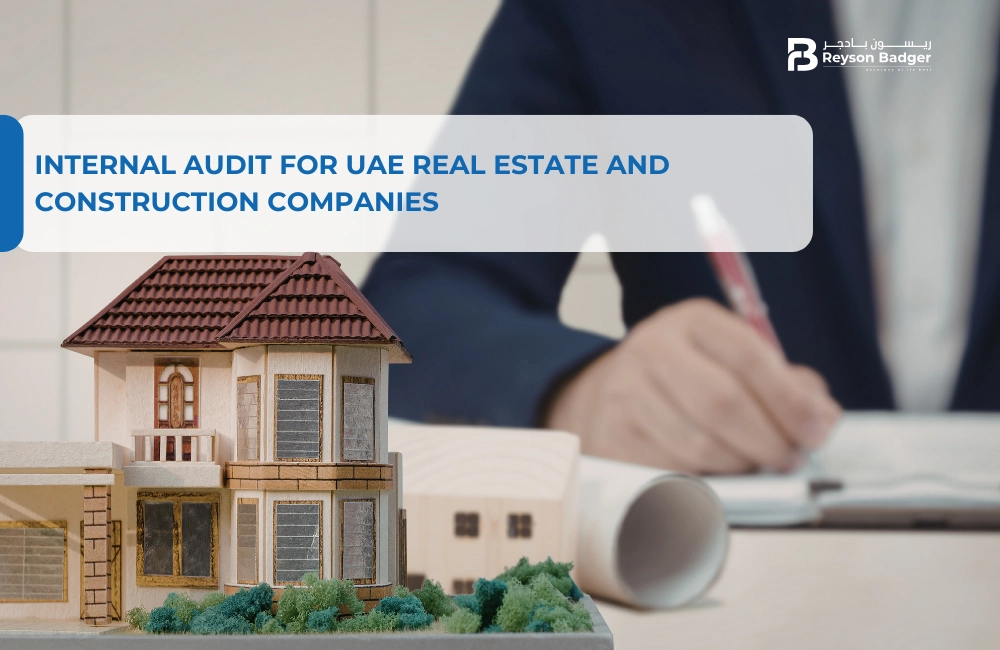
Internal Audit for UAE Real Estate and Construction Companies
27-Jan-2026
Auditing for Construction Companies
Specialised audits for contractors, builders, and infrastructure companies.
Auditing for Construction Companies
Auditing is essential for maintaining the financial health and operational efficiency of construction companies. It goes beyond simple financial verification, providing valuable insights into project cost management, contract compliance, and resource allocation. Auditing helps construction companies track project budgets, monitor expenditures, and ensure that financial reporting aligns with UAE regulatory standards and IFRS. By addressing financial discrepancies early, audits help companies avoid costly mistakes, improve profitability, and ensure smooth project execution.
Challenges Faced by Construction Companies in the UAE
Construction companies in UAE face a range of unique challenges that make auditing particularly critical. These challenges include:
- Complex Contracts: Multi phase projects often involve numerous contracts with suppliers, subcontractors, and clients, making it difficult to track obligations and financial commitments.
- Fluctuating Costs: Material and labor costs can vary significantly during a project, impacting budgets and profitability.
- Compliance Requirements: UAE construction companies must adhere to strict local regulations,including safety regulations, environmental laws, UAE VAT laws, and Corporate Tax compliance., which requires detailed oversight.
- Cash Flow Management: Managing cash flow in large construction projects is crucial to prevent delays, making effective financial planning and auditing indispensable.
Through professional auditing services, construction companies can address these challenges and maintain control over their operations while ensuring long term financial success.
Role of Auditors for Construction Companies
Auditors in the construction industry perform several key roles to maintain financial and operational integrity:
- Financial Reporting and Compliance: comply with UAE financial regulations and International Financial Reporting Standards (IFRS).
- Cost Control and Budget Management: Monitor project expenses, identify cost overruns, and help optimize resource allocation.
- Risk Assessment and Reduction: Identify potential financial and operational risks, and provide strategies to mitigate them.
- Internal Controls and Process Evaluation: Review internal controls and business processes to enhance efficiency and minimize the risk of fraud.
Key Areas of Focus for Auditors
Auditors focus on specific areas critical to the success and financial health of construction companies:
- Project Cost Allocation and Tracking: Ensuring that all project related expenses are accurately tracked and allocated.
- Contract Compliance and Review: Verifying that contracts are executed according to terms and that compliance requirements are met.
- Revenue Recognition and Timing: ensuring accurate revenue recognition for long-term projects as per IFRS 15 guidelines
- Payroll and Labor Costs Auditing: Reviewing labor costs and payroll management to avoid discrepancies.
- Asset Management and Depreciation: Auditing the management and depreciation of construction assets and equipment.
- Cash Flow Management in Construction Projects: Ensuring effective cash flow management to avoid project delays and financial strain.
Benefits of Professional Auditing Services
Engaging professional auditing services offers construction companies several advantages:
- Improving Financial Transparency: Clear and accurate financial records improve internal decision making and improve trust with stakeholders.
- Identifying Inefficiencies and Improving Profitability: Auditors help detect inefficiencies in project management and offer solutions to improve profitability.
- Ensuring Regulatory Compliance and Avoiding Penalties: Professional auditors ensure compliance with UAE regulations, helping companies avoid costly penalties.
- Improving Investor and Stakeholder Confidence: Transparent and audited financial statements improve the confidence of investors and stakeholders in the company's operations.
How Does a Construction Audit Work?
A construction audit follows a structured approach to ensure thorough evaluation of the company’s finances and operations:
- Review of Standard Operating Procedures: Evaluate the company’s policies and procedures to ensure consistency with best practices.
- Look at Financial Statements: Review financial statements to assess the accuracy of reported figures.
- Sample Selection: Select samples from financial data to perform detailed analysis.
- Gather Backup Data: Collect supporting documents for the selected samples, such as invoices and contracts.
- Conduct Internal Verification: Verify the accuracy of internal data and processes.
- Conduct External Verification: Cross check data with external sources, such as suppliers and subcontractors.
- Compile the Audit Package: Present the audit findings in a complete report, offering actionable recommendations.
Checklist for Internal Audit of Construction Company
Here’s a short, description for a Checklist for Internal Audit of Construction Company
- Compliance with Contracts: Verify that projects align with contract terms, conditions, and legal requirements.
- Cost Management: Review budget control, project expenses, and cost variances.
- Procurement Process: Evaluate the selection of suppliers, contractors, and procurement documentation.
- Risk Management: Identify, monitor, and reduce project risks.
- Internal Controls: Examine the effectiveness of internal controls related to financial and operational activities.
- Documentation and Reporting: Verify proper documentation of project reports, records, and audit trails.
This checklist helps ensure effective auditing of the company’s operations, cost efficiency, and compliance.
Why Choose Specialized Auditors for Construction Companies
At Reyson Badger, we understand the unique complexities faced by construction companies in the UAE. Our team of specialized auditors brings deep expertise in the construction industry, helping you manage challenges such as fluctuating costs, complex contracts, and strict regulatory compliance. With our in depth knowledge of UAE construction laws and customized audit services, we ensure financial transparency, cost efficiency, and risk reduction for your large scale projects. Trust us to provide the insights and expertise that drive your construction company's success.
Audit
Audit in Free Zones
- DDA Approved Auditors
- DAFZA Approved Auditors
- Registered Auditors in JAFZA
- Approved Auditors in DMCC
- Dubai Technology and Media Free Zone
- Approved Auditors in Sharjah Media City Free Zone
- Auditors in Dubai Media City(DMC)
- Auditors in Sharjah Publishing City Free Zone (SPCFZ)
- Twofour54 Free Zone
- SRTIP Free zone Approved Auditors
- Registered Auditors in IFZA
- Registered Auditors in DWC
- Registered Auditors in RAKEZ
- Umm Al Quwain Free Trade Zone
- Dubai International Academic City Approved Auditors
- Registered Auditors in AFZ
- Registered Auditors in Meydan
- Registered Auditors in TECOM
- Registered Auditors in Dubai Silicon Oasis
- Dubai Production City
- Dubai Auto Zone
- Registered Auditors in SAIF Zone
- Dubai Biotechnology and Research Park
- Khalifa Port and Industrial Zone (KPIZ)
- Dubai Design District
- Dubai Car and Automotive City Free Zone
- DIC Approved Auditors
- Dubai CommerCity Free Zone
- Dubai Flower Centre Free Zone
- Ras Al Khaimah Media Free Zone
- Dubai Gold and Diamond Park
- RAK Maritime City Free Zone Authority
- Dubai Healthcare City Free Zone
- Ras Al Khaimah Free Trade Zone
- Dubai Studio City
- Masdar City Free Zone
- International Humanitarian City Free Zone
- Dubai Knowledge Village Free Zone
- Dubai Logistics City Free Zone
- Industrial City of Abu Dhabi Free Zone
- Dubai Knowledge Park Free Zone
- Auditors in Dubai Outsource City Free Zone
- Registered Auditors in ADAFZ
- Registered Auditors in FFZ
- Registered Auditors in HFZ
- Higher Corporation for Specialized Economic Zones
- Dubai Maritime City Free Zone
- Dubai Techno Park Free Zone
- Dubai Textile Village Free Zone
- Dubai World Trade Centre
- Fujairah Creative City Free Zone
- Khalifa Industrial Zone Abu Dhabi (KIZAD)
- Dubai Science Park Free Zone
Auditing Services for Industries
- Auditing Services for Bakeries in Dubai
- Auditing Services for Butcheries in Dubai
- Auditing Services for Catering Services in Dubai
- Auditing Services for Clinics in Dubai
- Auditing Services for Event Management Companies in Dubai
- Auditing Services for Groceries in Dubai
- Auditing Services for Gym in Dubai
- Auditing Services for Health Club in Dubai
- Auditing Services for Hospital in Dubai
- Auditing Services for Legal Translation Company in Dubai
- Auditing Services for Management Consulting Companies in Dubai
- Auditing Services for Minimarts in Dubai
- Auditing Services for Owner's Association (Building Association Management) in Dubai
- Auditing Services for Printing Press in Dubai
- Auditors For Exhibition Companies
- Auditors for Sports Companies
- Auditing Services for Real Estate in Dubai
- Auditing Services for Restaurant in Dubai
- Auditors for Family Business
- Audit Services for Online Trading Companies
- Auditors for Interior Design Companies
- Audit Services for Mining Companies
- Auditing Services for Shopping Malls in Dubai
- Auditing Services for Supermarkets in Dubai
- Auditors for Manufacturing Industries
- Auditors for Trading Companies
- Audits in the Hotel Industry
- Auditors for Pharmacies
- Auditors for Oil and Gas Companies in UAE
- Auditors for Hospitality Industry
- Auditors for Digital Marketing Companies
- Auditors for Marine Companies
- Auditors for Automobiles
- Auditors for Retail Companies
- Auditing for Construction Companies
- Auditors For Vacation Home Rental
- Auditing services for Advertisement Company in Dubai
Request a Quote
We’ll get back to you shortlyLatest Blogs
22
Oct
What is an Independent Audit and Why is Independence Important?
Learn what an independent audit involves, why auditor independence matters, and how it supports reliable financial reporting and business transparency.
READ MORE →
21
Oct
How Bookkeeping Helps UAE Businesses Maintain Accurate Financial Records?
Bookkeeping focuses mainly on recording and maintaining financial information, while financial management uses that information to support budgeting.
READ MORE →
19
Oct
How to Use ICP Smart Services for Emirates ID & Visa Applications
Simplify your UAE immigration procedures with assistance for ICP Smart Services, including Emirates ID applications, visa processing, residency services, and application tracking
READ MORE →
16
Oct
What Happens If a Company Does Not Complete Its Required Audit in the UAE?
Learn what can happen if a UAE company fails to complete its required audit and how businesses can manage audit and compliance obligations.
READ MORE →
14
Oct
UAE Corporate Tax Filing for Small Businesses: Everything You Need to Know
Learn how small businesses in the UAE can manage Corporate Tax filing, understand Small Business Relief eligibility, and meet FTA compliance requirements.
READ MORE →
13
Oct
UAE E-Invoicing Mandatory Requirements: What Businesses Need to Prepare
For businesses, this means an effective UAE e-invoicing solution needs to connect invoice creation with the required data structure, validation, electronic exchange, and reporting process.
READ MORE →
12
Oct
What Does an Auditor Check During a Financial Audit?
READ MORE →
14
Oct
How PRO Services Simplify Business Setup in Abu Dhabi
PRO services in Abu Dhabi for documentation, licensing and visa support.
READ MORE →
09
Oct
How Long Does a Company Audit Take in Dubai?
Learn how long a company audit takes in Dubai and how business size, financial records, supporting documents, and audit requirements affect the timeline.
READ MORE →
07
Oct
How Business Strategy Consulting Supports Sustainable Growth in the UAE?
Get practical strategic guidance for market entry, business growth, expansion, competitive positioning, and long-term planning in the UAE.
READ MORE →