

In a country as forward-thinking as the UAE, where digital transformation is a national priority, adopting modern business solutions isn't just an option; it's a necessity. E-invoicing is a prime example of this evolution, poised to reshape how businesses manage their financial transactions. This technology is especially vital for small and medium enterprises (SMEs), offering a path to greater efficiency, cost savings, and enhanced compliance in a rapidly digitizing economy.
What is E-Invoicing?
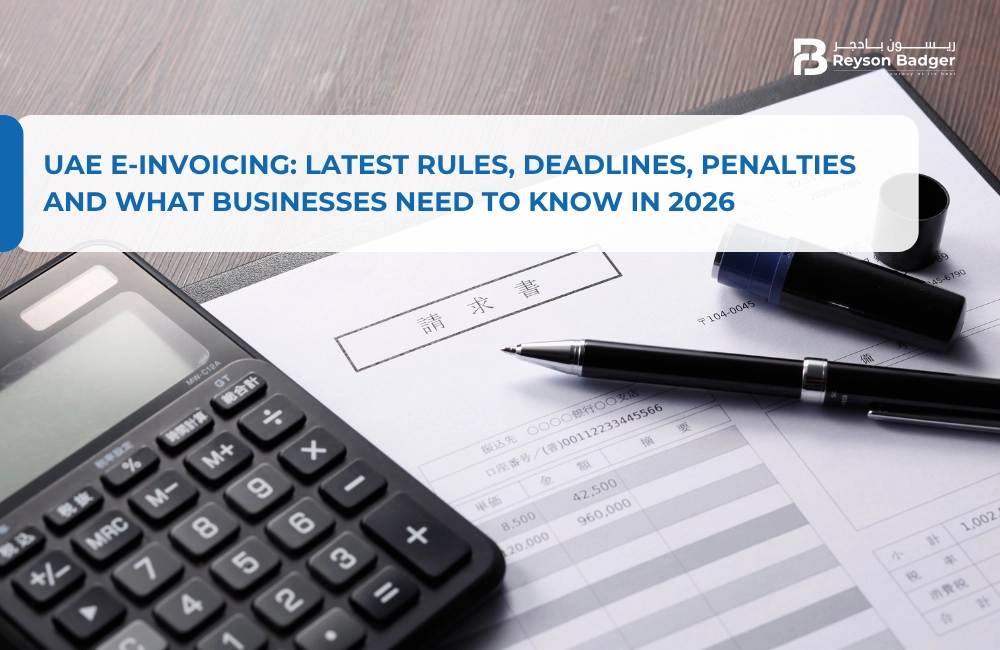
E-invoicing is the electronic exchange of invoices between a supplier and a buyer in a structured, digital format. According to the MOF, unstructured invoice formats such as PDF, Word documents, images, scanned copies, emails are not eInvoices.
How it works?:
The UAE's e-invoicing framework operates on a decentralized Continuous Transaction Control & Exchange (DCTCE) model, also known as the Peppol 5-corner model . Supplier submits invoice data via its ASP; ASP validates and converts into the UAE standard eInvoice XML; ASP transmits to buyer’s ASP; in parallel the ASP reports the Tax Data Document (TDD) to the reporting engine (“Corner 5”) via a reporting channel. The MOF also notes that e-Invoices will be exchanged via Accredited Service Providers (ASPs) in a multi-corner architecture.
Legal Framework and FTA Compliance:
The UAE's push for mandatory e-invoicing is supported by a legal framework, with amendments to the VAT Law establishing e-invoices as valid for issuance and input tax recovery.
The UAE's e-Invoicing system is being implemented in phases, with specific deadlines based on business size and type. For small businesses with annual revenue less than AED 50 million, the key dates are:
- 31 March 2027: Deadline to appoint an Accredited Service Provider (ASP).
- 1 July 2027: Mandatory e-Invoicing implementation begins.
These deadlines are set to ensure a smooth transition and compliance with the new electronic invoicing requirements.
Key Benefits of E-Invoicing for Small Businesses in UAE
| Key Benefit | Description |
|---|---|
| Cost Savings | Eliminates costs from printing, postage, and physical storage of paper invoices, significantly reducing administrative expenses. |
| Faster Payments | Instant digital delivery of invoices shortens the payment cycle, which improves and maintains healthy cash flow. |
| Increased Accuracy | Automated calculations and data validation reduce human errors, preventing mistakes like incorrect totals or duplicate invoices. |
| Enhanced Compliance | ASPs report the Tax Data Document (TDD) in parallel while exchange is happening; message-level status (MLS) flows are used for validation feedback. |
| Improved Efficiency | Automating the creation, sending, and tracking of invoices saves valuable time, allowing teams to focus on core business activities. |
| Better Data Security | Digital invoices are stored securely and can be retrieved instantly, protecting financial data from physical loss and unauthorized access. |
| Environmental Benefits | Using a paperless system reduces a business's carbon footprint, supporting the UAE's broader sustainability goals. |
How E-Invoicing Supports UAE’s Digital Transformation Vision?
The e-invoicing mandate is a key component of the UAE's broader digital transformation strategy, which aims to make the nation a leader in a knowledge-driven, post-oil economy. By requiring all businesses, including SMEs, to adopt this technology, the government is building a nationwide digital ecosystem that is more efficient, transparent, and competitive on a global scale.
Practical Tips for Small Businesses Adopting E-Invoicing
- Choose an FTA-Approved Solution: When the Ministry of Finance publishes the list of approved Accredited Service Providers (ASPs), businesses must select one that meets their needs.
- Integrate Systems: Ensure that your chosen e-invoicing solution can seamlessly integrate with your existing accounting or ERP software.
- Train Your Staff: Proper training for finance, IT, and operations teams is essential to ensure a smooth transition and full utilization of the new system.
Common Challenges Small Businesses Face and Solutions
- Initial Setup Cost Concerns: While there are initial costs, the long-term savings on paper, postage, and labor often outweigh the investment.
- Resistance to Change: Change management can be a challenge. Highlighting the benefits and providing adequate training can help overcome resistance.
- Data Security Worries: Work with a reputable ASP that offers robust security features like encryption and digital signatures to protect sensitive financial data.
E-Invoicing Services in UAE
E-invoicing represents a significant and necessary step for small businesses in the UAE. Beyond a simple compliance requirement, it is a strategic move that offers a clear pathway to greater efficiency, cost savings, and improved cash flow. By embracing this digital shift, small businesses can position themselves for sustained growth and success in the UAE's dynamic and forward-looking economy. Choose Reyson Badger, a leading e-invoicing solution provider, to navigate this digital transformation with confidence and ease.