
Internal Audit for UAE Real Estate and Construction Companies
27-Jan-2026
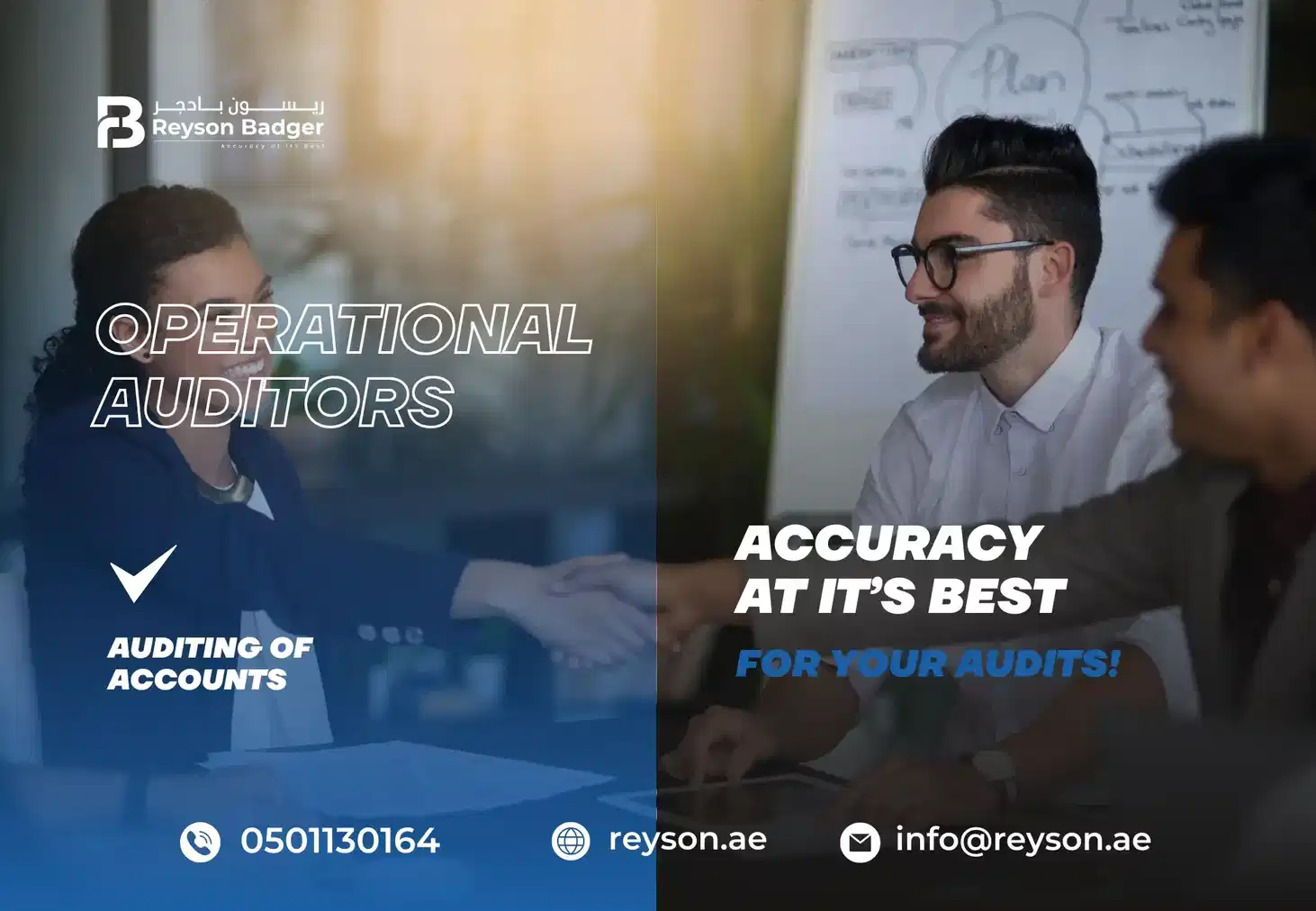
Operational Audit Services in UAE
Expert operational auditors in Dubai evaluate your
processes, identify inefficiencies, and deliver actionable insights
so your business performs smarter, and at lower cost.
Operational Audit
Internal audit helps businesses identify risks, strengthen internal controls, and improve operational efficiency. In the UAE, companies increasingly rely on internal auditors to ensure compliance with VAT regulations, corporate tax laws, financial reporting standards, and industry-specific requirements. Professional internal auditors assess business processes, detect weaknesses, reduce fraud risks, and support better decision-making. A strong internal audit function also improves corporate governance and investor confidence. Whether you are a startup, SME, or large enterprise, internal audit services help maintain transparency and business continuity. Consult our UAE internal audit experts today for tailored risk and compliance solutions.
Operational Audit vs. Internal Audit
Operational audit focuses on improving your organization's business functions and outcomes, while internal audit primarily reviews your compliance with financial controls and regulations. If you only carry out a basic internal audit, you might miss operational issues that lead to financial loss or FTA penalties.
| Criteria | Internal Audit | Operational Audit |
|---|---|---|
| Primary Focus | Compliance, financial controls, and risk management | Operational effectiveness, efficiency, economy, and ethics (4Es) |
| Key Drivers | Accounting standards, regulatory/FTA requirements | Business objectives, process improvement, 2025 IIA Standards |
| Scope | Mainly financial activities and reporting | All operational processes, including HR, IT, procurement, etc. |
| Audit Approach | Control-based, sample testing | Risk-based, process mapping, benchmarking, AI/technology review |
| Outcome | Identifies weaknesses in controls | Provides SMART recommendations for continuous improvement; addresses root causes of inefficiency |
| Framework | PCAOB, old IPPF (pre-2025) | 2025 IIA Standards, COSO 2024, NIST CSF 2.0 |
Key Components of an Operational Audit
Operational audits examine every part of your daily business to catch issues before they cost you. We cover:
- Efficiency, Effectiveness, Economy, Ethics (4Es): We apply the 4Es to check if resources are used wisely, if outcomes match your goals, and whether practices are ethical and cost-conscious. Missing any 'E' can lead to wasted funds or serious compliance risks.
- Risk Assessment and Internal Controls: Every audit is risk-based and mapped against your highest exposure points and the newest 2025 IIA Global Internal Audit Standards.
- Use of Benchmarks: We compare your practices to regional competitors and international standards so you never fall behind.
- Legal & Regulatory Requirements: All reviews consider Federal Decree-Law No. 47 and relevant free zone rules, protecting you from sudden legal issues.
Types of Operational Audits
There are several types of operational audits depending on what your business needs. If you choose the wrong type, you may overlook hidden losses or legal violations.
- Process Audit: Evaluates individual workflows or departments for breakdowns
- Compliance Audit: Focuses on adherence to internal policies, Federal Decree-Law No. 47, or industry standards
- Risk-based Audit: Prioritizes high-risk activities based on a custom risk assessment as per 2025 IIA Global Internal Audit Standards
- Thematic/Project Audit: Reviews specific projects (like ERP rollouts, supply chain upgrades, or new business lines)
Common Challenges in Operational Auditing
Common challenges include inaccurate data, lack of process documentation, employee resistance, and changing regulatory requirements. If these aren't addressed, you risk audit failure or FTA penalties.
- Insufficient or outdated process documentation
- Lack of management buy-in leading to slow adoption of recommendations
- Rapid regulatory changes (e.g., switch from IPPF to 2025 IIA standards)
- No use of modern controls (e.g., generative AI or automated risk analytics)
- Failure to address root causes of recurring inefficiencies
Objectives of an Operational Audit
An operational audit in UAE is a detailed review of an organisation's operational systems, processes, and controls, aimed at evaluating their efficiency, effectiveness, and compliance. An Operational audit typically aims to achieve the following objectives:
- Assessing efficiency: Analysing the utilization of resources, the management of time, and the control of costs within a variety of operational processes and activities. Thus, waste can be reduced and resources can be optimized by identifying areas for improvement.
- Effectiveness Assessment: Assessment of an organization's operational efficiency and effectiveness in relation to its goals. Consequently, it is necessary to determine whether the organization's operational processes are aligned with its key strategic objectives.
- Evaluation of Risk: Identify and assess risks by conducting a thorough review of internal controls and risk management procedures to mitigate potential operational disruptions, fraud, or compliance issues.
- Legal Compliance: Achieving compliance with laws, regulations, industry standards, and internal policies that govern the organization's operations. An important aspect of compliance is to verify compliance, since non-compliance may have legal and reputational ramifications.
- Expense Analysis: The evaluation and control of operating costs, which includes both direct and indirect costs. An operational audit may identify opportunities for cost savings or determine whether a particular operation is cost-effective.
- Streamlining Workflows: Streamline workflows, optimize resource allocation, and organize procedures to increase productivity.
- Utilisation of Resources: Evaluation of the efficiency of an organization's utilization of resources, including assets, technology, and human resources.
- Evaluation of Performance: Measurement, tracking, and improvement of operational processes using metrics and key performance indicators (KPIs).
- Quality Assurance: Assuring high-quality standards are maintained by operational activities, as well as delivering high-quality products and services to customers.
- Analysing Benchmarks: Assessing the organization's performance in relation to industry benchmarks or best practices in order to identify areas where the organization may be lacking or excelling.
- Roles and Responsibilities: Establishing clear roles and responsibilities within operational processes, as well as ensuring accountability for team members and individuals.
- Documentation: Providing management and stakeholders with a comprehensive audit report that can serve as a basis for action planning and to communicate findings and recommendations.
Strengthen Your Business with an Operational Audit in Dubai
Dubai's business environment thrives on efficiency. An operational audit, conducted by expert Operational Auditors, can give your company a significant edge. They will help you identify opportunities and take control of your operations, propelling your business forward in the exciting Dubai market. This in-depth review goes beyond finances, assessing your day-to-day operations for weaknesses and streamlining opportunities. The benefits are indisputable.
- Cost Savings: Recognize areas where resources are wasted, allowing Operational Auditors in Dubai to suggest adjustments and cut unnecessary expense
- Improved Competitiveness: Streamlining operations can result in faster turnaround times and potentially lower costs, making you more competitive in Dubai's dynamic market.
- Stronger Internal Controls: The audit can expose vulnerabilities in areas like inventory management or data security, allowing you to fix them before problems arise.
Operational Audit Process
A proactive approach to achieving organizational excellence is to implement robust operational audit procedures. This can be done with "Expert Operational Audit Services in Dubai". Maintaining a competitive edge in the marketplace requires organizations to continuously assess and optimize internal processes.
- Identify the purpose and objectives of the project
- Planning the audit
- Collection of data
- Assessment of risks
- Analysis of data
- Conclusions and recommendations
- Preparation of the report
- Response from the management
- Continual evaluation and follow-up
To have a more-detailed approach on-to Audit Process in Dubai, check out here .
Tips for Streamlining Your Operational Audit Process
Our experience shows that operational audits succeed when you follow these steps:
- Centralize up-to-date documentation for quick review
- Assign clear audit liaisons on your team to avoid delays
- Prioritize risk areas using your last audit’s findings or engage us for a fresh risk assessment
- Invest in basic automation tools to gather operational data—this saves hours and cuts the risk of human error
- Hold a short team workshop on the new 2025 IIA Global Internal Audit Standards to reduce adoption issues
How AI and Technology Are Changing Operational Audits
AI, automation, and new tech standards are transforming operational audits. If you're relying only on manual reviews, you're risking missed problems and inefficiencies.
- COSO 2024 Guidance: The "Supplemental Guidance: Internal Control Considerations for Generative AI" (April 2024) sets out key controls internal auditors should use when bots or AI are in your business.
- NIST Cybersecurity Framework 2.0: Adopted in Feb 2024, this standard gives a risk-based approach to technology controls that we apply in digital and hybrid environments.
- IIA Pulse Survey (2025): According to IIA’s 2025 North American Pulse survey, over 60% of Chief Audit Executives are now using GenAI tools—if you’re not, you’re already behind.
We incorporate these technologies in every audit, so your business is future-ready and protected against cyber threats or fraud.
2025 IIA Standards Impact on Operational Auditing
The 2025 IIA Global Internal Audit Standards (effective January 9, 2025) replaced the old International Professional Practices Framework (IPPF), introducing mandatory risk-based scoping, explicit requirements for AI/tech control reviews, and updated reporting obligations. If you don't adopt these changes, your operational audits could be out-of-date, exposing your business to compliance failures or regulator scrutiny.
- Mandatory risk assessments for every audit (Clauses 6.1, 7.1, 8.2)
- Defined use of SMART recommendations methodology
- Clear lines of auditor independence and reporting as per new Standard Part 5
- Requirement to assess technology controls in line with guidelines like COSO 2024
- PCAOB AS 1105/2301 amendments (effective December 15, 2025) mean your reporting must now cover risk of error from AI/automation use in operational processes
Reyson Badger’s audits are already mapped to the new legal standards, so your business won't face transition pain or risk fines due to non-compliance.
Duties of an Operational Auditor
The duties of an Operational Auditor in Dubai include:
- Conducting an independent review of the organization's processes and systems
- Evaluating the organization's performance
- Assessing the organization's compliance with laws, regulations, and internal policies
- They also recommend changes to improve the overall performance of the organization and ensure compliance with laws, regulations, and internal policies.
“Check your Company’s Efficiency and Compliance with Professional Operational Audit Services in Dubai”
Why choose Reyson Badger as your Operational Auditor in Dubai?
With unmatched industry insight and experience, Reyson Badger audit services help your business thrive in Dubai. When you choose us, you are choosing precision, efficiency, and compliance.
Our Operational Auditors are a strategic choice in the vibrant business hub of Dubai. We deliver high-quality service, local insight, and personalized support to empower your business to succeed. Let us help you succeed in the UAE with audits that transcend compliance.
Reyson Badger provides Operational Audit Services in most of the Free Zones across the UAE and several industries in the UAE. An overview of them is given below.
Operational Audit for Freezones
- Dubai Development Authority - DDA
- International Free Zone Authority - IFZA
- Ras Al Khaimah Economic Zone (RAKEZ) - RAKEZ
- Ajman Free Zone - AFZ
- Meydan Free Zone
- TECOM
- Dubai Silicon Oasis Free Zone
- DAFZA - Dubai Airport Free Zone Authority
- SAIF ZONE
- Jebel Ali Free Trade Zone - JAFZA
- Dubai Multi Commodities Centre - DMCC
FAQs
1. Why do businesses in Dubai and the UAE need an Operational Audit?
The UAE's competitive and rapidly evolving business environment demands that companies operate at peak efficiency. An operational audit helps Dubai and UAE businesses eliminate wasteful processes, strengthen internal controls, reduce operational costs, and align their operations with strategic goals especially important as businesses scale or prepare for regulatory reviews.
2. What areas does an Operational Audit typically cover?
An operational audit can cover a wide range of business functions, including procurement and supply chain, human resources and workforce management, inventory management, IT systems and data controls, finance and accounting processes, sales and customer service operations, and compliance with internal policies and procedures.
Audit
Audit in Free Zones
- DDA Approved Auditors
- DAFZA Approved Auditors
- Registered Auditors in JAFZA
- Approved Auditors in DMCC
- Dubai Technology and Media Free Zone
- Approved Auditors in Sharjah Media City Free Zone
- Auditors in Dubai Media City(DMC)
- Auditors in Sharjah Publishing City Free Zone (SPCFZ)
- Twofour54 Free Zone
- SRTIP Free zone Approved Auditors
- Registered Auditors in IFZA
- Registered Auditors in DWC
- Registered Auditors in RAKEZ
- Umm Al Quwain Free Trade Zone
- Dubai International Academic City Approved Auditors
- Registered Auditors in AFZ
- Registered Auditors in Meydan
- Registered Auditors in TECOM
- Registered Auditors in Dubai Silicon Oasis
- Dubai Production City
- Dubai Auto Zone
- Registered Auditors in SAIF Zone
- Dubai Biotechnology and Research Park
- Khalifa Port and Industrial Zone (KPIZ)
- Dubai Design District
- Dubai Car and Automotive City Free Zone
- DIC Approved Auditors
- Dubai CommerCity Free Zone
- Dubai Flower Centre Free Zone
- Ras Al Khaimah Media Free Zone
- Dubai Gold and Diamond Park
- RAK Maritime City Free Zone Authority
- Dubai Healthcare City Free Zone
- Ras Al Khaimah Free Trade Zone
- Dubai Studio City
- Masdar City Free Zone
- International Humanitarian City Free Zone
- Dubai Knowledge Village Free Zone
- Dubai Logistics City Free Zone
- Industrial City of Abu Dhabi Free Zone
- Dubai Knowledge Park Free Zone
- Auditors in Dubai Outsource City Free Zone
- Registered Auditors in ADAFZ
- Registered Auditors in FFZ
- Registered Auditors in HFZ
- Higher Corporation for Specialized Economic Zones
- Dubai Maritime City Free Zone
- Dubai Techno Park Free Zone
- Dubai Textile Village Free Zone
- Dubai World Trade Centre
- Fujairah Creative City Free Zone
- Khalifa Industrial Zone Abu Dhabi (KIZAD)
- Dubai Science Park Free Zone
Auditing Services for Industries
- Auditing Services for Bakeries in Dubai
- Auditing Services for Butcheries in Dubai
- Auditing Services for Catering Services in Dubai
- Auditing Services for Clinics in Dubai
- Auditing Services for Event Management Companies in Dubai
- Auditing Services for Groceries in Dubai
- Auditing Services for Gym in Dubai
- Auditing Services for Health Club in Dubai
- Auditing Services for Hospital in Dubai
- Auditing Services for Legal Translation Company in Dubai
- Auditing Services for Management Consulting Companies in Dubai
- Auditing Services for Minimarts in Dubai
- Auditing Services for Owner's Association (Building Association Management) in Dubai
- Auditing Services for Printing Press in Dubai
- Auditors For Exhibition Companies
- Auditors for Sports Companies
- Auditing Services for Real Estate in Dubai
- Auditing Services for Restaurant in Dubai
- Auditors for Family Business
- Audit Services for Online Trading Companies
- Auditors for Interior Design Companies
- Audit Services for Mining Companies
- Auditing Services for Shopping Malls in Dubai
- Auditing Services for Supermarkets in Dubai
- Auditors for Manufacturing Industries
- Auditors for Trading Companies
- Audits in the Hotel Industry
- Auditors for Pharmacies
- Auditors for Oil and Gas Companies in UAE
- Auditors for Hospitality Industry
- Auditors for Digital Marketing Companies
- Auditors for Marine Companies
- Auditors for Automobiles
- Auditors for Retail Companies
- Auditing for Construction Companies
- Auditors For Vacation Home Rental
- Auditing services for Advertisement Company in Dubai



Request a Quote
We’ll get back to you shortlyFAQs
Most businesses benefit from conducting an operational audit annually or once every two years. However, companies undergoing rapid growth, restructuring, new system implementation, or facing regulatory scrutiny should consider more frequent reviews.
An operational audit is not legally mandated in the UAE the way a financial audit may be for certain entities. However, it is strongly recommended as a best practice for businesses that want to improve efficiency, prepare for growth, satisfy board or investor requirements, or proactively manage operational risk.
Latest Blogs
22
Sep
Disciplined Accounting: The Most Effective Approach for Long-Term Business Success
Accounting Services in Dubai can provide growing Dubai businesses with structured bookkeeping, reporting and financial support.
READ MORE →
22
Sep
Excise Tax vs VAT in the UAE: What Dubai Businesses Need to Know
Understand the key differences between Excise Tax and VAT in the UAE, including applicability, rates, registration, compliance, and what Dubai businesses need to know.
READ MORE →
22
Sep
Common Mistakes Businesses Make Before Their Annual Audit in Dubai
A practical guide to the 8 most common annual audit preparation mistakes Dubai businesses make, and how proper preparation and the right auditors can make your next annual audit faster and stress-free.
READ MORE →
16
Sep
How to Calculate VAT in UAE 2026: Complete Guide
Learn how to calculate VAT in the UAE in 2026, including VAT formulas, taxable amounts, input VAT, output VAT, and practical calculation examples.
READ MORE →
15
Sep
How to Choose an Accredited Service Provider for UAE E-Invoicing?
An e-invoicing service provider helps businesses create, process, transmit and manage electronic invoices through systems designed to support the applicable e-invoicing framework.
READ MORE →
16
Sep
How to Get a UAE Residence Visa: Step-by-Step Guide
Learn how to apply for a UAE residence visa, including visa types, eligibility, required documents, application steps, costs, and common mistakes to avoid
READ MORE →
11
Sep
Accounting Software in UAE: How to Choose the Right Accounting Software for Your Business
Professional Accounting Software Consultant in Dubai or Accounting Software Consultant in UAE services can help you compare suitable options and make a more informed decision.
READ MORE →
10
Sep
How to Register Copyright in the UAE: Requirements, Fees, and Timeline
A practical guide explaining how to register copyright in the UAE, covering requirements, fees, process, timeline, and key benefits for individuals and businesses.
READ MORE →
09
Sep
What Does an Audit Service in Dubai Actually Include? A Full Breakdown
Not sure what an audit actually covers? This guide breaks down the full audit process step by step, from financial checks to reporting and explains what to expect from professional Audit Services in Dubai.
READ MORE →
03
Sep
How Businesses Can Stay VAT Compliant in 2026
Learn how businesses can stay VAT compliant in 2026 through proper registration, accurate filing, record keeping, invoicing, and regular compliance checks.
READ MORE →