Top 20 Corporate Tax Consultants in UAE
19-Jan-2026
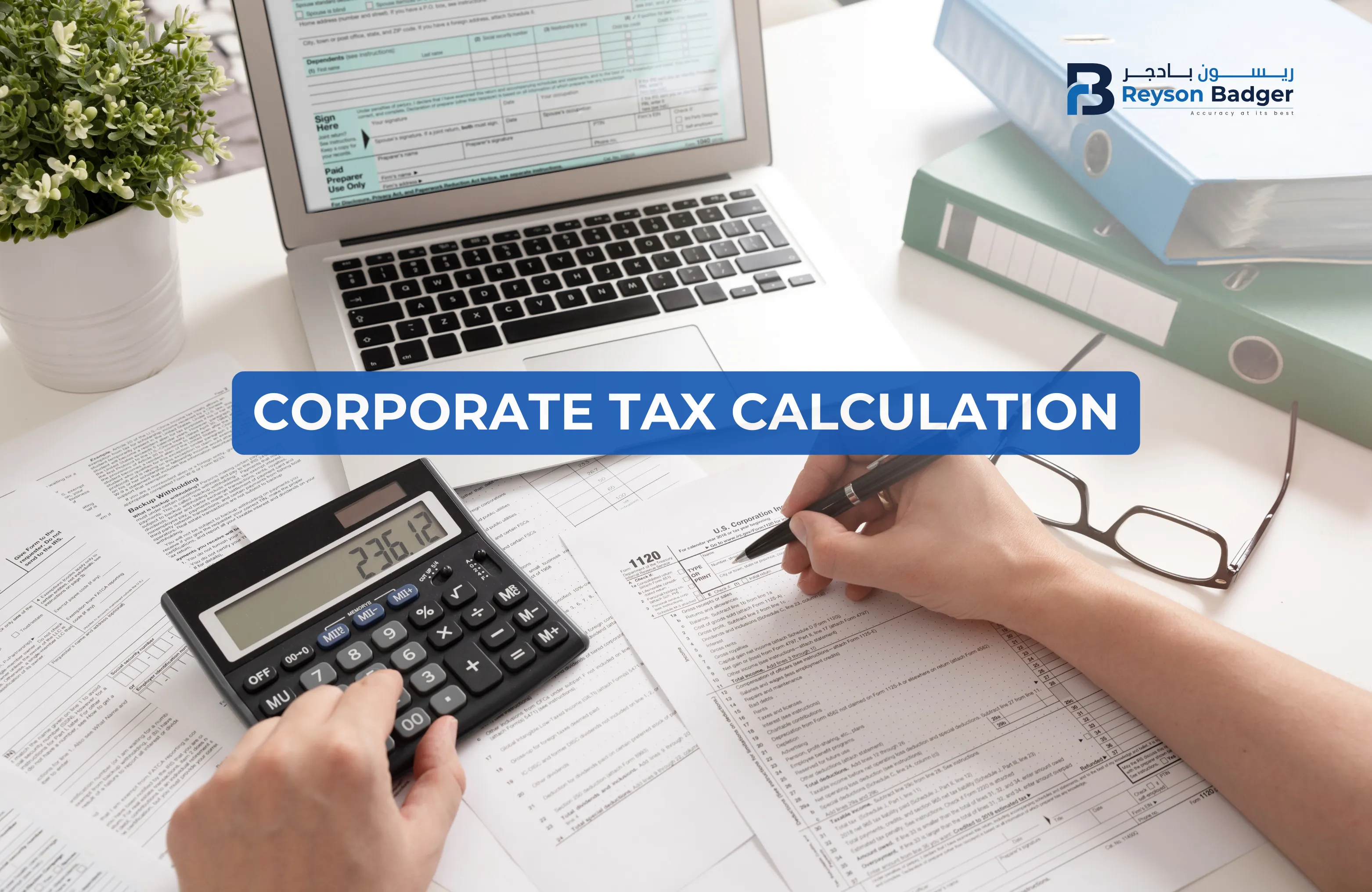
UAE Corporate Tax Calculation
The UAE introduced a federal corporate tax (CT) system in January 2022. This tax applies to businesses operating in the UAE mainland, excluding certain free zones. Free zone persons are within the corporate tax regime; however, if they satisfy the conditions of a Qualifying Free Zone Person, their qualifying income may be taxed at 0%. The CT regime implements a tiered system with rates varying depending on the taxable income. This guide serves as a detailed manual to help you prepare your company for the UAE Corporate Tax Calculation.
Key Points on UAE Corporate Tax
Tax Rate:
- A standard rate of 9% applies to taxable income exceeding AED 375,000.
- A 0% tax rate applies to taxable income up to AED 375,000.
- A separate tax rate (to be determined) will apply to large multinationals meeting specific criteria.
Taxable Income:
- The basis for calculating CT is the net profit (or loss) Start with accounting profit. Then apply adjustments as required by the CT law: exclude exempt income, add back non-deductible expenditure, apply loss relief rules, interest deduction limits, etc., as reflected in a company's financial statements prepared following International Financial Reporting Standards (IFRS) or similar standards accepted by UAE authorities.
- Adjustments are made to the net profit to arrive at the taxable income, considering applicable deductions and excluding exempt income.
Calculating Corporate Tax in the UAE
Here's a step-by-step approach to UAE corporate tax calculation:
Gather Financial Statements:
You'll need your company's financial statements prepared according to IFRS or a similar accepted standard.
Identify Net Profit:
- Locate the net profit figure in your financial statements. This represents your company's profit after accounting for all expenses and revenues during the tax period.
Adjustments for Taxable Income:
- Review the financial statements to identify and add back any non-deductible expenses that may have been subtracted when calculating net profit.
- Conversely, identify and remove any income exempted from corporate tax.
- Common examples of deductible expenses include business-related costs, interest on business loans, and depreciation on assets.
- Interest Limitation Rule: Interest expense deduction is capped, affecting allowable deductions.
- Tax Loss Relief: Tax losses can be carried forward and offset future taxable income, subject to conditions.
Apply Tax Rate:
Once you have reached the final taxable income figure, apply the relevant tax rate based on the UAE's tiered system:
- 0% tax for taxable income up to AED 375,000.
- 9% tax for taxable income exceeding AED 375,000.
Example Calculation
Let's assume your company's net profit for the tax period is AED 500,000. Here's how to calculate the corporate tax in UAE payable:
Taxable Income Calculation:
- Since the net profit (AED 500,000) exceeds the AED 375,000 threshold, adjustments for taxable income are likely not required in this scenario (assuming all expenses are business-related and deductible).
- Therefore, the taxable income for corporate tax purposes is AED 500,000.
Corporate Tax Calculation:
- As the taxable income (AED 500,000) surpasses AED 375,000, the applicable tax rate is 9%.
- Corporate Tax Payable = Taxable Income * Tax Rate
- Corporate Tax Payable = AED 500,000 * 9%
- Corporate Tax Payable = AED 45,000
Important Considerations
- The UAE CT regime is relatively new, and further guidance or updates from the Ministry of Finance can be expected. Staying informed about any official announcements is crucial.
- Consulting a tax professional is advisable, especially for complex situations or companies with significant taxable income. They can assist with navigating the CT regime, ensuring proper calculations, and maximizing deductions and allowances.
By following these steps and considering the essential points, you can calculate your company's corporate tax liability in the UAE. Remember, this guide serves as a general overview, and seeking professional advice is recommended for comprehensive tax planning and compliance.
FAQs
The UAE corporate tax rate is 9% for taxable income exceeding AED 375,000, and 0% for taxable income up to AED 375,000. Threshold applies to taxable income, not revenue. Different rate for large multinationals subject to future regulation and specific criteria.
The UAE corporate tax period is typically a calendar year, but businesses can choose a different financial year-end.
UAE corporate tax is calculated as 9% of taxable income exceeding AED 375,000, after deducting allowable expenses and exemptions.
Here is the example for UAE Corporate Tax calculation: A company has a taxable income of AED 500,000. The corporate tax would be 9% of AED 125,000 (AED 500,000 - AED 375,000), which is AED 11,250. Example: Tax = 0% on AED 375,000 + 9% on AED 125,000 = AED 11,250. The tax rate is applied stepwise depending on portions of taxable income.
UAE corporate tax calculation formula: UAE Corporate Tax = 9% x (Taxable Income - AED 375,000) Revise formula to: “Corporate Tax = (Taxable Income up to AED 375,000 × 0%) + (Taxable Income above AED 375,000 × 9%). Applies post adjustments.”
Corporate Tax


Request a Quote
We’ll get back to you shortlyLatest Blogs
22
Oct
What is an Independent Audit and Why is Independence Important?
Learn what an independent audit involves, why auditor independence matters, and how it supports reliable financial reporting and business transparency.
READ MORE →
21
Oct
How Bookkeeping Helps UAE Businesses Maintain Accurate Financial Records?
Bookkeeping focuses mainly on recording and maintaining financial information, while financial management uses that information to support budgeting.
READ MORE →
19
Oct
How to Use ICP Smart Services for Emirates ID & Visa Applications
Simplify your UAE immigration procedures with assistance for ICP Smart Services, including Emirates ID applications, visa processing, residency services, and application tracking
READ MORE →
16
Oct
What Happens If a Company Does Not Complete Its Required Audit in the UAE?
Learn what can happen if a UAE company fails to complete its required audit and how businesses can manage audit and compliance obligations.
READ MORE →
14
Oct
UAE Corporate Tax Filing for Small Businesses: Everything You Need to Know
Learn how small businesses in the UAE can manage Corporate Tax filing, understand Small Business Relief eligibility, and meet FTA compliance requirements.
READ MORE →
13
Oct
UAE E-Invoicing Mandatory Requirements: What Businesses Need to Prepare
For businesses, this means an effective UAE e-invoicing solution needs to connect invoice creation with the required data structure, validation, electronic exchange, and reporting process.
READ MORE →
12
Oct
What Does an Auditor Check During a Financial Audit?
READ MORE →
14
Oct
How PRO Services Simplify Business Setup in Abu Dhabi
PRO services in Abu Dhabi for documentation, licensing and visa support.
READ MORE →
09
Oct
How Long Does a Company Audit Take in Dubai?
Learn how long a company audit takes in Dubai and how business size, financial records, supporting documents, and audit requirements affect the timeline.
READ MORE →
07
Oct
How Business Strategy Consulting Supports Sustainable Growth in the UAE?
Get practical strategic guidance for market entry, business growth, expansion, competitive positioning, and long-term planning in the UAE.
READ MORE →