Company Formation in Saudi Arabia vs UAE: Which is Better for Your Business?
03-Mar-2026
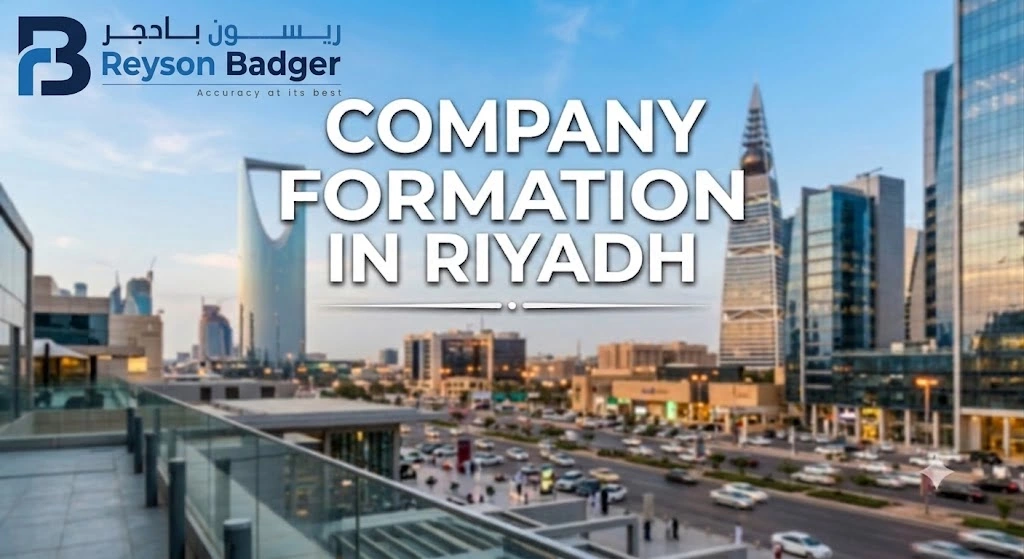
Company Formation in Riyadh, Saudi Arabia
Establish your business in Riyadh with expert company formation services, including MISA licensing, Commercial Registration, tax compliance, and 100% foreign ownership in eligible sectors.
Company Formation in Riyadh
Riyadh has rapidly emerged as the leading destination for company formation in Saudi Arabia, attracting foreign investors, startups, SMEs, multinational corporations, and GCC entrepreneurs seeking access to one of the fastest-growing economies in the Middle East. As the capital city of Saudi Arabia and the center of government, finance, technology, and innovation, Riyadh offers unparalleled opportunities for businesses looking to establish a strong regional presence.
Driven by Saudi Vision 2030, significant economic reforms, and the liberalization of foreign investment laws, investors can now enjoy 100% foreign ownership in many sectors through licensing from the Ministry of Investment Saudi Arabia (MISA). Combined with a streamlined registration process, strong infrastructure, and access to major government projects, Riyadh continues to strengthen its position as a global business hub.
Whether you are launching a startup, opening a branch office, establishing a regional headquarters, or expanding an international company into Saudi Arabia, understanding the legal requirements, registration process, costs, licensing obligations, and compliance framework is essential for a successful business setup.
Why Riyadh Is the Preferred Business Destination in Saudi Arabia
Capital City and Economic Hub
Riyadh contributes a significant share of Saudi Arabia’s GDP and serves as the headquarters for major government institutions, multinational corporations, financial institutions, and regulatory authorities. The city is the center of economic activity and decision-making in the Kingdom.
Strategic Access to GCC and Global Markets
Businesses established in Riyadh gain access to Saudi Arabia’s domestic market while benefiting from trade connections across the GCC, Middle East, Asia, Europe, and Africa.
Government-Led Investment Reforms
Recent reforms have simplified company formation procedures, reduced bureaucratic barriers, expanded foreign ownership opportunities, and improved ease-of-doing-business indicators.
Vision 2030 Business Opportunities
Saudi Vision 2030 has created substantial investment opportunities across sectors such as:
- Technology
- Renewable energy
- Healthcare
- Manufacturing
- Tourism
- Logistics
- Fintech
- Artificial Intelligence
- Smart Cities
Growing Startup and Technology Ecosystem
Riyadh is home to a thriving startup ecosystem supported by accelerators, venture capital funds, incubators, and government-backed innovation initiatives.
Regional Headquarters Program Benefits
Saudi Arabia's RHQ Program, a joint initiative between the Ministry of Investment (MISA) and the Royal Commission for Riyadh City (RCRC), encourages multinational companies to establish their regional headquarters in Riyadh. The program has already exceeded its original Vision 2030 target of 500 companies, with over 700 international RHQs established by end of 2025, including major corporations such as Amazon, Google, PwC, and Deloitte.
Types of Legal Entities Available for Company Formation in Riyadh
Selecting the right legal structure is one of the most important decisions during company formation.
Limited Liability Company (LLC)
The LLC remains the most popular structure among foreign investors.
Benefits include:
- Limited shareholder liability
- Flexible ownership structure
- Eligibility for foreign ownership
- Suitable for SMEs and international businesses
- Simple governance requirements
Branch of a Foreign Company
A branch office allows an existing foreign company to conduct business in Saudi Arabia as a direct extension of the parent company without creating a separate legal entity.
However, under the New Commercial Registration Law (effective April 3, 2025, via Royal Decree M/83), Saudi Arabia abolished the traditional branch sub-registration system. Under the new regime, a company is registered only once under a Single Unified National CR, which covers all its activities and locations across the Kingdom — replacing the previous city-by-city subsidiary CR system.
Suitable for:
- Contracting firms
- Engineering companies
- Consulting businesses
- International corporations expanding operations
Joint Stock Company (JSC)
Designed for large-scale investments and publicly traded businesses.
Key features include:
- Ability to raise capital
- Corporate governance structure
- Suitable for large projects and IPOs
Simplified Joint Stock Company (SJSC)
Introduced under Saudi Arabia's 2022 Companies Law, the SJSC was designed to support entrepreneurship and startup growth. A key distinction from the standard JSC is that the SJSC can be formed by a single founder, making it a practical option for solo foreign entrepreneurs seeking limited liability without the multi-founder requirement of a full Joint Stock Company.
Advantages:
- Flexible governance
- Simplified management requirements
- Investor-friendly framework
Single-Person Company
Allows one shareholder to own and manage the company while benefiting from limited liability protection.
Professional Company
Designed for licensed professionals including:
- Accountants
- Lawyers
- Engineers
- Consultants
- Architects
Joint Ventures and Partnerships
Suitable when two or more parties collaborate on a project or investment opportunity.
Sole Establishment (GCC Nationals)
Typically available to Saudi and GCC nationals operating small businesses.
Comparison of Business Structures
Structure | Ownership | Liability | Suitable For | Foreign Investors |
LLC | Multiple shareholders | Limited | SMEs | Yes |
Branch Office | Parent company | Parent liable | International firms | Yes |
JSC | Multiple shareholders | Limited | Large corporations | Yes |
SJSC | Flexible | Limited | Startups | Yes |
Single-Person Company | One owner | Limited | Entrepreneurs | Yes |
Professional Company | Licensed professionals | Limited | Service firms | Yes |
Sole Establishment | Individual | Unlimited | GCC Nationals | Limited |
Who Can Start a Company in Riyadh?
Foreign Investors
Foreign investors can establish businesses in numerous sectors with full ownership through MISA approval.
GCC Nationals
GCC citizens generally receive treatment similar to Saudi nationals for many business activities.
International Corporations
Global companies frequently establish branches, subsidiaries, or regional headquarters in Riyadh.
Entrepreneurs and Startups
Saudi Arabia actively supports startups through funding initiatives, incubators, and innovation programs.
Professional Service Firms
Consultants, engineering firms, legal practices, and accounting firms can establish professional companies subject to regulatory approvals.
Step-by-Step Company Formation Process in Riyadh
Step 1 - Select Business Activities
The chosen activity determines:
- Licensing requirements
- Regulatory approvals
- Foreign ownership eligibility
- Capital requirements
Step 2 - Choose the Appropriate Legal Structure
Select the most suitable entity based on ownership, liability, and business objectives.
Step 3 - Prepare and Legalize Corporate Documents
Foreign documents typically require:
- Notarization
- Embassy attestation
- Ministry authentication
- Certified Arabic translation
Step 4 - Obtain MISA Investment License
Foreign investors must secure a MISA license before incorporation.
Required documents may include:
- Corporate documents
- Shareholder information
- Financial statements
- Business activity details
Step 5 - Reserve Trade Name
Reserve a unique business name through the Ministry of Commerce.
Step 6 - Draft and Notarize Articles of Association
The Articles of Association define:
- Ownership structure
- Capital contribution
- Management framework
- Shareholder rights
Step 7 - Obtain Commercial Registration (CR)
The Commercial Registration certificate officially establishes the company as a legal entity.
Step 8 - Chamber of Commerce Registration
Membership is generally required for business operations and official transactions.
Step 9 - National Address Registration
Companies must register an approved national address.
Step 10 - General Manager Visa and Iqama Processing
Following incorporation, companies can sponsor visas and obtain residency permits.
Government Authorities Involved in Riyadh Company Formation
Ministry of Investment Saudi Arabia (MISA)
Issues foreign investment licenses and oversees foreign investor approvals.
Ministry of Commerce (MoC)
Responsible for company registration and Commercial Registration issuance.
Zakat, Tax and Customs Authority (ZATCA)
Administers:
- Corporate tax
- VAT
- Zakat
- Tax compliance
Ministry of Human Resources and Social Development (MHRSD )
Regulates labor laws and employment compliance.
General Organization for Social Insurance (GOSI)
Administers employee social insurance registration.
Qiwa Platform
Manages workforce compliance, Saudization, and employment contracts.
MODON
Supports industrial and manufacturing investments.
Documents Required for Company Formation in Riyadh
Documents for Foreign Companies
- Certificate of Incorporation
- Trade License
- Board Resolution
- Memorandum of Association
- Audited Financial Statements
- Passport Copies
Documents for Individual Investors
- Passport
- Identification documents
- Address proof
- Contact information
Documents for Startups
- Business Plan
- Pitch Deck
- Funding Information
- Incubator Support Letter (where applicable)
Cost of Company Formation in Riyadh
The overall cost varies depending on:
- Business activity
- Legal structure
- Foreign ownership
- Office requirements
- Number of visas
- Regulatory approvals
Typical cost components include:
- MISA licensing fees
- Commercial Registration fees
- Chamber fees
- Office rental costs
- Visa expenses
- Professional service fees
- Translation and legalization costs
Timeline for Business Setup in Riyadh
Stage | Estimated Timeline |
MISA Approval | 5-15 Business Days |
Trade Name Reservation | 1-2 Days |
Articles of Association | 1-5 Days |
Commercial Registration | 1-3 Days |
Tax Registration | 1-5 Days |
Visa Processing | 2-8 Weeks |
Most company formations can be completed within 2-8 weeks depending on approvals and documentation.
Compliance Requirements After Company Formation
Saudization (Nitaqat Program)
Companies must meet workforce localization requirements by employing Saudi nationals according to prescribed quotas.
Qiwa Registration
Businesses must register employees and maintain workforce compliance.
GOSI Employee Registration
All eligible employees must be registered with GOSI.
Employment Contract Compliance
Employment contracts must comply with Saudi labor regulations and be properly documented.
Tax and Financial Compliance for Riyadh Companies
Corporate Income Tax
Foreign-owned entities are generally subject to a flat 20% corporate income tax on net taxable profits derived from Saudi sources. This rate applies to foreign shareholders' portions in resident companies and to permanent establishments of non-resident entities.
VAT Registration
VAT registration becomes mandatory once the applicable revenue threshold is met. Saudi Arabia currently applies a 15% VAT rate.
Zakat Registration
Saudi and GCC-owned portions of businesses are subject to Zakat rather than corporate income tax. Zakat is calculated at 2.5% of the Zakat base (broadly, the net worth of the Saudi-owned portion of the business). In mixed-ownership companies, corporate income tax applies proportionally to the foreign-owned share while Zakat applies to the Saudi or GCC-owned share.
Accounting and Bookkeeping Requirements
Companies must maintain proper accounting records in accordance with Saudi regulations.
Annual Financial Statements
Businesses are required to prepare annual financial statements.
Audit Requirements
Certain companies must appoint licensed auditors and submit audited financial reports.
Office Space Requirements in Riyadh
Physical Office Requirements
Many business activities require a physical office lease.
Serviced Offices
Popular among startups and foreign investors seeking flexibility.
Coworking Spaces
A cost-effective option during early-stage operations.
Virtual Office Considerations
Acceptance depends on regulatory requirements and licensing conditions.
Benefits of Company Formation in Riyadh
100% Foreign Ownership Opportunities
Numerous sectors now permit full foreign ownership.
No Personal Income Tax
Saudi Arabia does not impose personal income tax on employment income.
Strong Economic Growth
The Kingdom continues to diversify beyond oil through large-scale economic initiatives.
Strategic Regional Headquarters
Riyadh is becoming the preferred location for multinational regional headquarters.
Vision 2030 Incentives
Government programs continue to encourage foreign investment and innovation.
Access to Government Projects
Many large infrastructure and development projects are based in Riyadh.
Thriving Startup Ecosystem
The city offers funding, mentorship, and accelerator support.
Digital Infrastructure and Innovation
Strong investment in technology and digital transformation supports business growth.
Riyadh vs Other Saudi Business Destinations
Factor | Riyadh | Jeddah | Dammam | NEOM |
Government Access | Excellent | Moderate | Moderate | Emerging |
Corporate HQ Presence | High | Medium | Medium | Developing |
Startup Ecosystem | Strong | Growing | Growing | Emerging |
International Connectivity | High | High | High | Future-Oriented |
Government Projects | Very High | Medium | Medium | Very High |
Riyadh vs Jeddah
Riyadh excels in government access and corporate headquarters, while Jeddah benefits from its port and trade economy.
Riyadh vs Dammam
Dammam is ideal for energy and industrial businesses, whereas Riyadh offers broader commercial opportunities.
Riyadh vs NEOM
NEOM focuses on future industries and innovation, while Riyadh provides immediate market access and established infrastructure.
Riyadh vs Free Zone Models
Riyadh offers direct access to the domestic Saudi market compared to specialized free-zone environments.
Common Challenges During Company Formation in Riyadh
Document Legalization
Foreign documents often require multiple levels of authentication.
Licensing Approvals
Certain regulated sectors require additional government approvals.
Regulatory Changes
Saudi regulations continue to evolve alongside Vision 2030 reforms.
Saudization Compliance
Meeting workforce localization requirements can be challenging for new businesses.
Banking Procedures
Corporate account opening may involve extensive due diligence.
Tax Registration Requirements
Businesses must ensure timely registration and ongoing compliance.
Why Work With a Professional Business Setup Consultant in Riyadh
Professional consultants can help businesses navigate regulatory requirements efficiently while minimizing delays.
Benefits include:
- Faster approvals
- MISA licensing support
- Government liaison services
- Visa assistance
- Banking support
- Tax registration guidance
- Ongoing compliance management
- Risk reduction
Why Choose Reyson Badger for Company Formation in Riyadh
Establishing a company in Riyadh involves multiple government authorities, licensing requirements, compliance obligations, and post-incorporation registrations. Reyson Badger provides end-to-end support to help investors launch and grow their businesses efficiently.
Our services include:
- Dedicated Business Setup Advisors
- Complete Company Registration Support
- MISA License Assistance
- Commercial Registration (CR) Processing
- PRO and Government Liaison Services
- Corporate Tax and VAT Registration
- Banking Assistance
- Payroll and Compliance Support
- Ongoing Accounting and Audit Services
Whether you are a startup, SME, multinational corporation, or foreign investor, our experts ensure a smooth and compliant company formation process in Riyadh.
Frequently Asked Questions About Company Formation in Riyadh
Can foreigners own 100% of a company in Riyadh?
Yes, many sectors allow 100% foreign ownership subject to MISA approval.
How long does company formation take in Riyadh?
Typically between 2 and 8 weeks depending on approvals and documentation.
Is MISA approval required for foreign investors?
Yes, foreign investors generally require a MISA investment license.
What is the minimum capital requirement in Saudi Arabia?
Capital requirements vary depending on the activity and licensing category.
What is the best legal structure for foreign investors?
An LLC is generally the most popular and flexible option.
How much does company formation cost in Riyadh?
Costs vary based on licensing, office requirements, visas, and business activity.
Is an office required to register a company?
In most cases, yes, an approved office address is required.
What taxes apply to companies in Saudi Arabia?
Corporate income tax, VAT, and Zakat may apply depending on ownership structure.
Is VAT registration mandatory?
It becomes mandatory once applicable revenue thresholds are reached.
What is Commercial Registration (CR)?
CR is the official business registration certificate issued by the Ministry of Commerce.
What documents are needed for foreign company registration?
Corporate documents, financial statements, board resolutions, and shareholder identification documents are typically required.
Can a foreign company open a branch in Riyadh?
Yes, subject to obtaining the relevant MISA approvals.
What is Saudization and why is it important?
Saudization requires businesses to employ Saudi nationals according to workforce quotas.
Do companies need annual audits?
Certain companies are legally required to undergo annual audits.
Can startups establish companies in Riyadh?
Yes, Riyadh offers a strong startup ecosystem and supportive regulatory framework.
What industries are attracting foreign investment in Riyadh?
Technology, fintech, healthcare, logistics, manufacturing, tourism, renewable energy, and AI are among the leading sectors.
What is the Regional Headquarters Program?
The RHQ Program encourages multinational companies to establish regional headquarters in Riyadh.
Can investors obtain residency through company ownership?
Business ownership may support eligibility for investor-related residency pathways subject to applicable regulations.
What are the ongoing compliance obligations after registration?
Tax filings, Saudization compliance, Qiwa registration, GOSI registration, accounting, and annual reporting.
Why should I use a business setup consultant?
A consultant can streamline approvals, reduce compliance risks, and accelerate market entry.
Company Formation in Saudi Arabia
Business Setup in Saudi Arabia
- Iqama Services in Saudi Arabia
- Bank Account Opening in Saudi Arabia
- Dedicated GRO Services in Saudi Arabia
- Premium Residency in Saudi Arabia
- ZATCA Registration in Saudi Arabia
- MLSD Registration in Saudi Arabia
- GOSI Registration in Saudi Arabia
- Baladiyah Approval in Saudi Arabia
- Company Formation in Dammam
- Company Formation in Riyadh
- Company Formation in Jeddah
- Saudisation Consultancy & Employee Transfer Services in Saudi Arabia
- Commercial Registration in Saudi Arabia
- MISA License in Saudi Arabia
Company Formation in UAE
- Company Formation in UAE Offshore
- Company Formation in UAE Mainland
- Free Zone Company Formation
- Company Formation in Dubai International Academic City (DIAC)
- Company Formation in Gold and Diamond Park (DGDP)
- Company Formation in Dubai Design District
- Company Formation in Dubai Industrial City (DIC)
- Company Formation in Dubai Healthcare City (DHCC)
- Company Formation in Dubai Internet City (DIC)
- Company Formation in Dubai Logistics City
- Company Formation In Dubai Media City(DMC)
- Company Formation in Dubai Multi Commodities Center (DMCC)
- Company Formation in Dubai Silicon Oasis Authority (DSOA)
- Company Formation in Dubai Outsource City (DOC)
- Company Formation in Dubai Studio City
- Company Formation in Dubai Techno Park (DTP)
- Company Formation in Dubai South Free Zone
- Company Formation in Dubai Science Park (DSP)
- Company Formation in Jebel Ali Free Zone Authority (JAFZA)
- Company Formation in Rakez Freezone
- Company Formation Services in Jebel Ali Free zone
- Company Formation in Dubai Wholesale City
- Company Formation in Dubai Freezone
- Company Formation in Dubai Production City (DPC)
- Company Formation in Dubai Humanitarian
- Company Formation in Energy and Environmental Park
- Ras Al Khaimah Mainland Company Formation
- Company Formation in Dubai Flower Centre (DFC)
- Umm Al Quwain Mainland Company Formation
- Company Formation in Dubai Auto Zone (DAZ)
- Company Formation in Creative City Free Zone Authority
- Company Formation in Dubai Textile City(DTC)
- Company Formation in Fujairah Mainland
- E-Commerce Company Formation UAE



Request a Quote
We’ll get back to you shortlyLatest Blogs
07
Oct
How Business Strategy Consulting Supports Sustainable Growth in the UAE?
Get practical strategic guidance for market entry, business growth, expansion, competitive positioning, and long-term planning in the UAE.
READ MORE →
07
Oct
UAE Introduces New Tax Reporting Rules for Multinational Companies
Learn about the UAE’s new Pillar Two Information Return filing requirements for multinational companies and UAE entities.
READ MORE →
06
Oct
Feasibility Study Services in Dubai for New Businesses
Feasibility study services in Dubai help entrepreneurs and investors examine the market, financial requirements, technical needs, competition, and regulatory considerations surrounding a proposed business.
READ MORE →
05
Oct
How Auditors Identify Financial Errors in Business Records?
Learn how auditors identify financial errors through record reviews, reconciliations, transaction testing, and analytical procedures.
READ MORE →
29
Sep
How Non-Residents Can Open a Bank Account in the UAE
Understand the key requirements for non-residents seeking to open and manage a bank account in the UAE
READ MORE →
29
Sep
How UAE Trading Companies Can Prepare for E-Invoicing: A Guide for Importers & Exporters
This guide explains what UAE importers and exporters should know about e-invoicing and the practical steps trading businesses can take to prepare.
READ MORE →
25
Sep
How to Choose an Auditor in Dubai: What to Check Before You Hire
A practical guide to choosing the right auditor in Dubai, what to check, questions to ask and red flags to avoid.
READ MORE →
24
Sep
Step-by-Step Guide to Getting a Commercial Brokerage Licence in the UAE
A practical guide to setting up a commercial brokerage business and obtaining the required UAE licence
READ MORE →
22
Sep
Disciplined Accounting: The Most Effective Approach for Long-Term Business Success
Accounting Services in Dubai can provide growing Dubai businesses with structured bookkeeping, reporting and financial support.
READ MORE →
22
Sep
Excise Tax vs VAT in the UAE: What Dubai Businesses Need to Know
Understand the key differences between Excise Tax and VAT in the UAE, including applicability, rates, registration, compliance, and what Dubai businesses need to know.
READ MORE →