
VAT Return Filing Services in Abu Dhabi
VAT Return Filing Services in Abu Dhabi
for All Businesses. Ensure accurate filing, stay
compliant, and avoid penalties with expert support.
VAT Return Filing Services in Abu Dhabi
VAT return filing is an important compliance requirement for businesses in Abu Dhabi, UAE, and mistakes in figures, tax periods, or supporting records can cost your business money. This VAT forms a part of the United Arab Emirates' fiscal package implemented in 2018 with the objective to diversify revenue streams and promote economic growth. The taxation scheme provided in the UAE imposes a 5% value-added tax on most goods and services transactions while exempting others. Here, A business must register for VAT if its taxable supplies and imports exceed the mandatory registration threshold of AED 375,000 over the previous 12 months. Most VAT-registered businesses are assigned a quarterly tax period. Businesses with very large annual taxable supplies will be required to file monthly. The exact tax period is assigned by the FTA when registration is approved.
Besides, timely filing of VAT returns is vital for companies to avoid penalties, fines, and unnecessary follow-up from the FTA. A correct VAT return also helps you reclaim eligible input VAT and keeps your records ready if the authority asks for taxable documents for a given period.
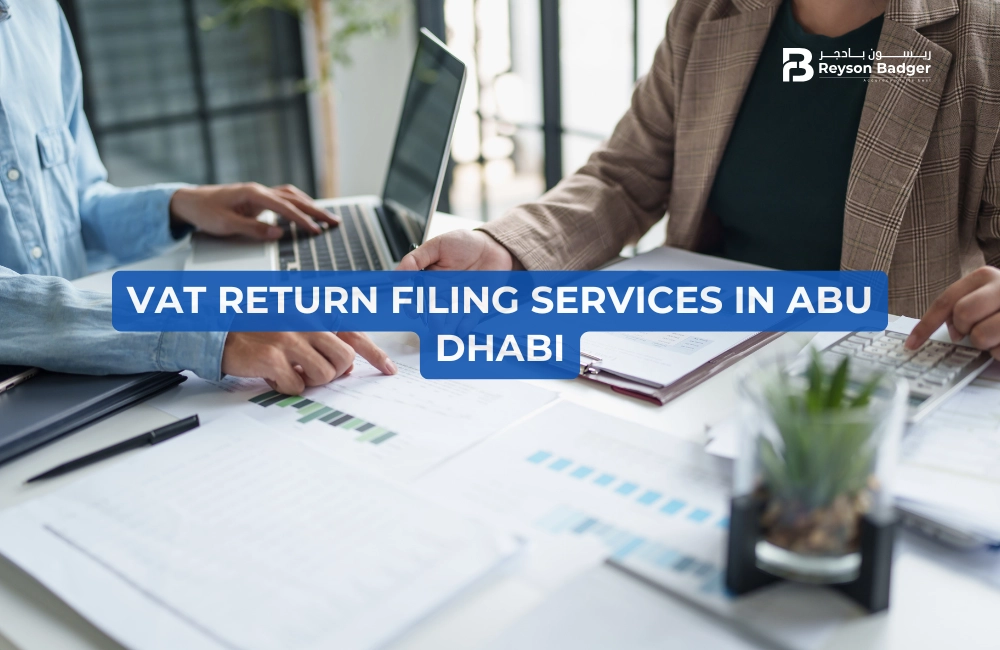
Who Needs to File VAT Returns?
Registered businesses and registered entities in Abu Dhabi must file VAT returns for the tax period assigned to them by the FTA, and if you miss that filing duty, your business can face penalties and payment issues. As a general rule, taxable supplies and imports that are equal to or more than AED 375,000 per annum require the filing of VAT returns. This is simply to make sure all VAT registered entities file information on sales and purchases with the Federal Tax Authority.
Requirements on Frequency:
The return filing for VAT is mostly based on the turnover of the business in a year. VAT filing frequency is generally assigned by the FTA. Businesses with annual taxable supplies of AED 150 million or more are typically required to file monthly; most other businesses are quarterly. Annual filing is rare and granted only where specified by the FTA.
Filing Thresholds by Filing Frequency
- Monthly Filing: Any business whose taxable supplies exceed AED 3 million.
- Quarterly Filing: All businesses whose taxable supplies fall within the range of AED 1.5 million to AED 3 million.
- Annual Filing: Granted to businesses whose taxable supplies amount to less than AED 1.5 million.
Scope of Our VAT Return Filing Services in Abu Dhabi
Our VAT Return Filing Services in Abu Dhabi cover the filing work from record review to submission, so you don't lose time fixing avoidable errors after the deadline passes.
- Review of sales, purchases, and taxable documents for a given period
- Checking output VAT and input VAT figures before filing
- Preparing return data for submission through the FTA online website
- Review of supporting records such as tax invoices, purchase invoices, bank statements, and import or export documents
- VAT compliance services connected to routine filing obligations
- Assistance with VAT penalty review where previous filings may have caused fines
- Guidance on VAT de-registration and VAT pre-inspection requirements where relevant to your case
- Support with VAT penalty waivers and applications where a review is needed before approaching the authority
- Management reports to help you understand what was filed and what needs attention in the next period
VAT Return Filing Process
VAT return filing follows the submission route set by the Federal Tax Authority, and if your figures or period details are wrong on the FTA online website, you can end up with delays, corrections, or penalties. There is a step-by-step VAT return filing on the FTA portal, and all relevant information related to this process can be found there along with the submitting deadlines.
Step by Step Guide to Filing VAT Returns
Login to the FTA Portal:
Go to the FTA site using your registered credentials for accessing the portal.
- Step 1: Open the VAT Return Section Locate the VAT return section in your account management dashboard
- Choose the right tax period on which you are filing the return. While doing so, the system automatically populates VAT return period reference number and the due date.
- Fill up Required Details Key in the details necessitated by this stage, including Tax Registration Number (TRN)
- Ensure every entry is accurate and complete, and that numeric fields are correctly rounded to the appropriate number of decimal places.
- When you have completed your checking, then you submit your return online through the gateway.
- When you submit your return through the FTA (e-Services/EmaraTax) the system will confirm receipt and retain the submission confirmation for your records.
Information to be Included in the VAT Return Form
The following are some essential information that would appear in the VAT return form:
- Information of the Taxable Person: Name, address, and TRN.
- VAT Return Period: Highlight the relevant filing period, as well as the date by which one should file the returns.
- Output VAT: Mark taxable supplies at normal rates, zero-rated supplies, and those exempted.
- Input VAT: Point out all the expenses where VAT has been paid
- Net VAT Payable: Calculate tax payable against recoverable input tax.
Submission Deadlines for VAT Returns
- VAT returns and payments are due within 28 days from the end of the tax period. If the due date falls on a weekend or official holiday, the deadline is extended to the next business day.
- Monthly filers: if your tax month ends on 31st January, your return will fall due on 28th February
- Quarterly filers: if your quarter closes on 31st March, your return will fall due as 28th April
- If the deadline falls on a weekend or public holiday, it is shifted to the next business day.
Document required for VAT return filing
You need complete records for the relevant tax period before filing, because missing taxable documents for a given period can lead to wrong VAT claims or problems if the authority checks your return.
- Trade License: This is the basis for your company's legal existence in the UAE. Businesses must have a valid trading license in order to register for VAT and make additional filings. To avoid complications for enterprises operating in the UAE, trade licenses should be renewed before they expire.
- Tax Registration Certificate: This certificate, issued by the Federal Tax Authority (FTA), attests to your company's VAT registration. It is important to file returns and provide a formal identity in the VAT system.
- Tax Invoices: The foundation of your VAT records is your tax invoices. The FTA requires that all details, including supplier and recipient information, invoice date and number, itemized descriptions, taxable amounts, and VAT rates, be included on all invoices issued for taxable supplies and services.
- Purchase Invoices: These are records of your input VAT or the tax you must pay on things purchased for your company. They should be retained for audit purposes and contain information similar to that of tax invoices.
- Financial Documents and Bank Statements: These provide a thorough picture of your company's economic activity and aid in accurate VAT computations. Cash flow, balance sheet, and profit and loss statements are some terms that might provide useful information. Statements should cover the appropriate tax period.
- Import Declarations: If your company imports products that are subject to VAT, these serve as proof of import and payment.
- Export Declarations: These documents streamline export procedures and demonstrate the zero-rating of VAT for products exported.
- Credit and Debit Notes: These make the necessary changes to previously mailed bills due to errors, cancellations, or returns. They must be suitably justified and documented. Records for the Reverse Charge Mechanism: This applies to select industries where the recipient is responsible for paying VAT rather than the provider. Maintain up-to-date records of all transactions conducted using this system.
- Audited Financial Reports: If your company is subject to an external audit, the FTA may request audited reports for specific VAT filings.
- Management Reports: Internal sales summaries, purchase summaries, and period reports help you spot mismatches before submission, and if you don't review them, you can carry errors into the VAT return.
Late Filing Penalties
- Submitting on time: Failure in compliance will occur if VAT returns are not submitted on time and appropriate penalties may be imposed.
- Failure to meet the payment deadline: In case of failure to pay VAT by the prescribed deadline, the tax authority will charge extra interest and levy a fine on payment.
- Accrual of penalties and interest: Continuing VAT delay in submissions and payment leads to accrual of penalties and interest, which might also be heavily costed for the business.
Common VAT Return Filing Errors We Help Prevent
We help prevent filing mistakes that lead to penalties, rejected claims, or extra review from the tax authority.
- Using the wrong tax period
- Claiming input VAT without complete purchase records
- Reporting output VAT figures that don't match invoices
- Missing credit notes or debit notes that change the final payable amount
- Submitting incomplete records for mainland or free zone activity
- Leaving filing until the due date and finding missing documents too late
What You Gain From Professional VAT Compliance Services
Professional VAT compliance services give you reviewed figures, cleaner records, and fewer filing mistakes, so you don't spend more later fixing fines or disputed claims.
- More accurate return preparation
- Better record readiness if the authority asks for supporting documents
- Less internal time spent chasing invoices and calculations
- Clearer visibility over VAT payable and recoverable amounts
- Help with follow-up issues such as VAT penalty review or related filing corrections
VAT Return Filing for Mainland and Free Zone Businesses
VAT return filing applies to both mainland and free zone businesses where registration and filing duties exist, and if your records are split across entities or locations, mistakes can affect the whole return.
We assist registered businesses operating in mainland and free zones by reviewing the documents, transactions, and tax period records relevant to the filing. Where a business operates under a Free Zone structure, records may also need to line up with the relevant Free Zone authority's documentation, so incomplete records can slow down reviews and create filing issues.
Industries We Serve in Abu Dhabi
We work with businesses that need regular VAT return support, and if your sector has high invoice volume or mixed supplies, filing errors can build up fast.
- Trading businesses
- Professional services firms
- Construction and contracting businesses
- Retail and e-commerce companies
- Import and export businesses
- General commercial entities with periodic VAT filing obligations
Why Businesses Choose Our VAT Return Filing Services in Abu Dhabi
Businesses choose our VAT Return Filing Services in Abu Dhabi because we're focused on getting the return reviewed and filed without avoidable mistakes that lead to penalties or wasted management time.
- We check the figures before submission
- We help you organise supporting records for the filing period
- We reduce the risk of late or inaccurate filings
- We can assist where earlier filings need review or correction
- We keep the focus on what your business needs to submit and what can go wrong if it isn't handled properly
Related VAT Services
You may also need related VAT services if your business is still setting up its tax records or fixing older filing issues.
Document Review and Error Detection
We review your records before filing so you don't submit incomplete or mismatched figures. This includes checking sales data, purchase data, TRN details, and taxable documents for a given period against the figures prepared for the return.
Corrective Action Before Submission
We fix filing issues before submission so you don't carry errors into the return and trigger penalties later. If invoices, notes, or input VAT claims need adjustment, we flag them before the return is submitted.
Follow-up Support After Filing
We stay available after filing so you don't handle post-submission questions alone. If you need submission records, payment follow-up, or clarification on the filed return, we help you respond with the right documents.
How Our VAT Return Filing Service Abu Dhabi Process Works
Our VAT Return Filing Service Abu Dhabi businesses rely on starts with your records and ends with a filed return, so you don't waste time guessing what the FTA expects.
- You share the records for the relevant tax period.
- We review taxable sales, purchases, input VAT, output VAT, and supporting documents.
- We identify errors, missing figures, or records that can affect the return.
- We prepare the return details for submission through the FTA filing channel.
- We confirm the filing status and help you keep the supporting records for future review.
Benefits of professional VAT return filing services
Accurate Calculation and Filing of VAT Returns:
Mistakes, especially those calculated by checking output and input VAT, are risks removed by professionals.
Keeping Track of UAE VAT Legislation Changes:
Experts know the new rules; therefore, all filings are compliant with the current rules.
Risk Reduction from Penalties Due to Failure to Meet or File Inaccurately:
Professionals keep you away from penalties resulting from failing to file in time or due to mistakes when filing returns.
Support in Claiming VAT Refunds (if applicable):
They help firms by walking them through the process of reclaiming VAT on purchases made that may be subject to a refund
VAT return filing deadlines and penalties
- VAT returns are due by the 28th day of the month following the end of the tax period (monthly or quarterly).
- Late submission incurs a penalty of AED 1,000, increasing to AED 2,000 for repeat offences within 24 months.
- Incorrect returns may also attract similar penalties.
- There is no official grace period; thus, timely filing is crucial.
- To avoid penalties, businesses should maintain accurate records, file returns on time, and consult with VAT professionals when needed.
Why choose VAT return filing services?
Expert assistance in preparing VAT returns
Choosing VAT return filing services allows businesses to employ expert resources to prepare accurate and compliant returns, ensuring correct data, all supporting documents are in order, and corresponding accuracy in all computations and fewer opportunities for error and penalty.
Time-saving and hassle-free process
VAT return outsourcing saves precious time and effort for businesses. Allow experts to handle complicated regulations of VAT free up resource time to focus on core activities. The hassle-free process reduces stress related to it, along with ensuring timely submission.
Deter Costly Mistakes
VAT return filing services help prevent the costly mistakes associated with it. Experts ensure accuracy in VAT calculations while avoiding penalties and fines. This can prevent costly losses and reputational damage.
Long-term VAT advisory services for compliance
One of the benefits that a business company derives from reputable VAT return filing services includes long-term advisory support by the firm to ensure continuous compliance. Experts will ensure that a business firm keeps getting informed on changes in VAT regulations so that they can get on board the optimal VAT strategies and best practices available.
Conclusion
VAT Return Filing Services in Abu Dhabi help your business file on time, reduce avoidable mistakes, and keep records ready if questions come up later. Issues such as incomplete books, wrong VAT treatment, and missed adjustments can lead to penalties, delayed corrections, and lost time for your team. Reyson Badger advises professionally on simplifying the VAT filing process of a company and also ensuring complete compliance with the requirements laid down by the Federal Tax Authority. For personalised VAT return filing advice and additional detailed tax advice, contact Reyson Badger today if you need VAT Return Filing Services in Abu Dhabi and want your FTA filing handled with care before the deadline.
FAQs
Who should use a VAT Return Filing Service Abu Dhabi businesses can outsource?
Any registered business that wants to avoid filing mistakes, delays, or missing records can use a VAT Return Filing Service Abu Dhabi companies outsource. If your team isn't sure the figures are right, it's better to review them before submission than fix penalties later.
What documents do you need for VAT return filing?
You need records for the relevant tax period, including invoices, purchase records, bank statements, import or export documents, and registration details. If these records are incomplete, your return can be wrong.
Do you help with penalty review?
Yes, we can review past VAT issues and identify where filing mistakes may have caused penalties. If an earlier return was prepared with missing or wrong data, your business may need corrective action before the next filing.
Can mainland and free zone businesses both need VAT return filing?
Yes, mainland and free zone businesses may both have VAT filing duties where registration applies. If your business structure spans more than one setup, record gaps can create reporting problems.
How can we get started?
Contact us with your business details and tax period records, and we'll tell you what needs review before submission. If you're close to the deadline, it's best to act early so you don't rush the filing.
FAQs
Latest Blogs

Disciplined Accounting: The Most Effective Approach for Long-Term Business Success
Accounting Services in Dubai can provide growing Dubai businesses with structured bookkeeping, reporting and financial support.
READ MORE →
Excise Tax vs VAT in the UAE: What Dubai Businesses Need to Know
Understand the key differences between Excise Tax and VAT in the UAE, including applicability, rates, registration, compliance, and what Dubai businesses need to know.
READ MORE →
Common Mistakes Businesses Make Before Their Annual Audit in Dubai
A practical guide to the 8 most common annual audit preparation mistakes Dubai businesses make, and how proper preparation and the right auditors can make your next annual audit faster and stress-free.
READ MORE →
How to Calculate VAT in UAE 2026: Complete Guide
Learn how to calculate VAT in the UAE in 2026, including VAT formulas, taxable amounts, input VAT, output VAT, and practical calculation examples.
READ MORE →
How to Choose an Accredited Service Provider for UAE E-Invoicing?
An e-invoicing service provider helps businesses create, process, transmit and manage electronic invoices through systems designed to support the applicable e-invoicing framework.
READ MORE →
How to Get a UAE Residence Visa: Step-by-Step Guide
Learn how to apply for a UAE residence visa, including visa types, eligibility, required documents, application steps, costs, and common mistakes to avoid
READ MORE →
Accounting Software in UAE: How to Choose the Right Accounting Software for Your Business
Professional Accounting Software Consultant in Dubai or Accounting Software Consultant in UAE services can help you compare suitable options and make a more informed decision.
READ MORE →
How to Register Copyright in the UAE: Requirements, Fees, and Timeline
A practical guide explaining how to register copyright in the UAE, covering requirements, fees, process, timeline, and key benefits for individuals and businesses.
READ MORE →
What Does an Audit Service in Dubai Actually Include? A Full Breakdown
Not sure what an audit actually covers? This guide breaks down the full audit process step by step, from financial checks to reporting and explains what to expect from professional Audit Services in Dubai.
READ MORE →
How Businesses Can Stay VAT Compliant in 2026
Learn how businesses can stay VAT compliant in 2026 through proper registration, accurate filing, record keeping, invoicing, and regular compliance checks.
READ MORE →