Accounting Services in Dubai: A Practical Guide for Growing Companies
19-Jan-2026
Anti-Money Laundering Documentation
Stay compliant with clear, accurate AML
records prepared to meet UAE regulatory
requirements with confidence.
AML Documentation
Anti-Money Laundering (AML) compliance and accounting services assist organizations in identifying suspicious activity linked to illegal crimes such as money laundering and terrorism funding. Businesses are under great pressure from increased regulation and investigations by international and local authorities, which has resulted in significant assessments, audits, and litigation.
The UAE is a major international financial and business center. The country has numerous free trade zones, which attract huge companies while also posing money laundering and terrorist financing risks. To address these concerns, the UAE has strict anti-money laundering laws and regulations in place. In recent years, the UAE has made significant progress to improve its anti-money laundering regulations. This includes updated standards for financial companies, which will be announced in June 2021, as well as the creation of a new specialized anti-money laundering court. This Service will discuss the AML documentation in UAE.
The UAE's AML Law applies to financial institutions, banks, insurance companies, Designated Non-Financial Businesses and Professions, and Virtual Asset Services Providers. The Designated Non-Financial Businesses and Professions (DNFBPs) are:
- dealers in precious metals and stones.
- Real estate agents and brokers.
- Trust and Corporate Service Providers.
- Auditors and Independent Accountants
- Attorneys, notaries, and other legal professionals
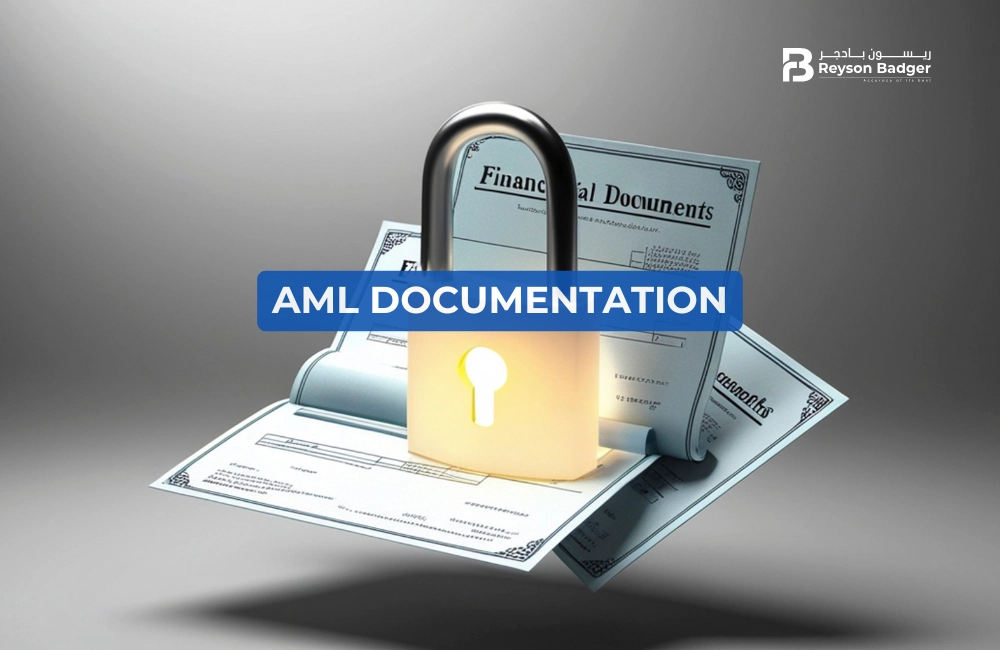
What is AML?
AML (Anti-Money Laundering) is a widely recognized term for combating and preventing money-related financial crimes. The Anti-Money Laundering (AML) process consists of legislation, laws, and policies designed to restrict and combat money laundering activities and crimes. Financial institutions and banks must implement anti-money laundering legislation.
AML Documentation
Natural Persons
Information
- Personal information such as name, date of birth, nationality, gender, contact information, and address
- Tax number
- Details about the occupation, including the employer's name and address.
- Purpose of transaction
Documents
- Identification: Emirates ID, passport, driving licence, or any other government-issued document with a photograph.
- Address verification: Utility bill, municipal tax record, property purchase or rent agreement, bank statement, insurance policy, or any other government-issued document that captures address.
Corporate/Legal Entities
Information
- Organisation details such as name, date of establishment, nature of business, and address information for directors, shareholders, and senior management
- Annual Report for the Previous Year
Documents
- Identification: Certificate of Incorporation / Memorandum of Association / Articles of Association, Trade License, /and Certificate of Good Standing Address.
- Verification: Utility bill / municipal tax record /property purchase or rent agreement /bank statement / insurance policy.
- Others: Audited Financial Statements, Register of Shareholders/Directors/UBO, Board Resolution Appointing Authorised Signatories
DIRECTORS/UBO/PARTNERS/SHAREHOLDERS
Information and Documentation: Same as Natural Person
Directors/Senior Management: Designation. Partners/Shareholders: % of shareholding
UBO: Reason for qualifying as UBO.
Foreign Persons
- Bills or statements from public utilities
- Documents issued by both local and national governments
- Registered property purchase, lease, or rental agreements
- Bank statements, credit or debit card statements, or insurance policies are examples of documents issued by supervised third-party financial organizations.
Why is AML Documentation important?
A consumer must always present an official identity document, such as a passport or driver's license, for any identity verification process. Additional documents confirming the customer's identity and/or address, such as a utility bill, may also be requested. The validity and accuracy of a check depend on verifying the legitimacy of all the papers that are included.
If the corporation cannot show that they have verified these documents—especially if there is a possibility of money laundering—they could be subject to legal action. Significant fines, legal repercussions, and harm to a company's reputation may result from this.
Organisations can detect when a criminal is attempting to fraudulently utilize their services by validating the authenticity of documents and reporting that individual to the appropriate authorities.
Conclusion
Reyson Badger offers Anti-Money Laundering (AML) compliance services in UAE, with a specific focus on the UAE market. We are committed to increasing business compliance in the UAE with all essential anti-money laundering consultancy and countering terrorist funding through proper rule and regulation enforcement. Our AML consultants relieve you of the strain of AML compliance, allowing you to focus on your business.
FAQ
1. What is AML documentation and why is it important for businesses in the UAE?
AML documentation refers to the policies, procedures, risk assessments, and records required to comply with UAE anti-money laundering regulations. Proper documentation helps businesses demonstrate compliance, reduce regulatory risk, and avoid penalties.
2. What does your AML documentation service include?
Our AML documentation service includes drafting AML policies, risk assessments, customer due diligence procedures, internal controls, reporting frameworks, and ongoing compliance documentation tailored to your business activities.
Accounting
Accounting Services for Industries
- Engine Manufacturing
- Pharmaceutical Manufacturing Industry in UAE
- Accounting Services For Bread Manufacturing Units in Dubai
- Manufacturing Sector in UAE
- Accounting For Tobacco And Cigarette Manufacturing Industry in Dubai
- Iron and Steel Casting Industry in UAE
- Accounting for Marine Companies in UAE
- Accounting for Insurance Companies in UAE
- Accounting Services for Construction in UAE
- Accounting Services for Event Management in UAE
- Accounting Services for Oil and Gas in UAE
- Accounting Services for Real Estate in UAE
- Accounting Services for Restaurants in UAE
- Accounting services for E-Commerce in UAE
- Accounting Services for Technology in UAE
- Accounting Services for Food Manufacturing Industry in UAE
Request a Quote
We’ll get back to you shortlyFAQs
All regulated entities, including financial institutions and designated non-financial businesses and professions (DNFBPs), must maintain proper AML records as per UAE regulations.
AML policies should be reviewed at least annually or whenever there are regulatory updates, changes in business activities, or emerging risk factors.
Failure to maintain proper records can result in regulatory fines, reputational damage, operational restrictions, and potential legal consequences.
Latest Blogs
16
Sep
How to Calculate VAT in UAE 2026: Complete Guide
Learn how to calculate VAT in the UAE in 2026, including VAT formulas, taxable amounts, input VAT, output VAT, and practical calculation examples.
READ MORE →
15
Sep
How to Choose an Accredited Service Provider for UAE E-Invoicing?
An e-invoicing service provider helps businesses create, process, transmit and manage electronic invoices through systems designed to support the applicable e-invoicing framework.
READ MORE →
16
Sep
How to Get a UAE Residence Visa: Step-by-Step Guide
Learn how to apply for a UAE residence visa, including visa types, eligibility, required documents, application steps, costs, and common mistakes to avoid
READ MORE →
11
Sep
Accounting Software in UAE: How to Choose the Right Accounting Software for Your Business
Professional Accounting Software Consultant in Dubai or Accounting Software Consultant in UAE services can help you compare suitable options and make a more informed decision.
READ MORE →
10
Sep
How to Register Copyright in the UAE: Requirements, Fees, and Timeline
A practical guide explaining how to register copyright in the UAE, covering requirements, fees, process, timeline, and key benefits for individuals and businesses.
READ MORE →
09
Sep
What Does an Audit Service in Dubai Actually Include? A Full Breakdown
Not sure what an audit actually covers? This guide breaks down the full audit process step by step, from financial checks to reporting and explains what to expect from professional Audit Services in Dubai.
READ MORE →
03
Sep
How Businesses Can Stay VAT Compliant in 2026
Learn how businesses can stay VAT compliant in 2026 through proper registration, accurate filing, record keeping, invoicing, and regular compliance checks.
READ MORE →
04
Sep
UAE E-Invoicing: Latest Rules, Deadlines, Penalties and What Businesses Need to Know in 2026
Reyson Badger, businesses can get support in reviewing their current invoicing processes, understanding applicable requirements and preparing their accounting operations for the transition.
READ MORE →
03
Sep
How Government and Legal Services in UAE Support Business Setup and Operations
Explore how government and legal services help UAE businesses manage setup, licensing, immigration, documentation, compliance, and ongoing administrative requirements.
READ MORE →
02
Sep
Accounting Mistakes That Triggers Tax Issues in the UAE
Our Accounting services in UAE can include ongoing bookkeeping, financial record maintenance, reconciliations, financial reviews, and accounting support tailored to the needs of the business.
READ MORE →