
Set Up Your Company in Dubai with Expert Support
Get professional assistance for company formation
in Dubai, including mainland, free zone, and
offshore setups with full regulatory compliance.
Company Formation in Dubai
Dubai has established itself as one of the world’s leading business destinations, attracting entrepreneurs and investors from across the globe. With investor-friendly policies, a dynamic economy, and a strategic geographic location, the city provides an ideal environment for launching and expanding businesses.
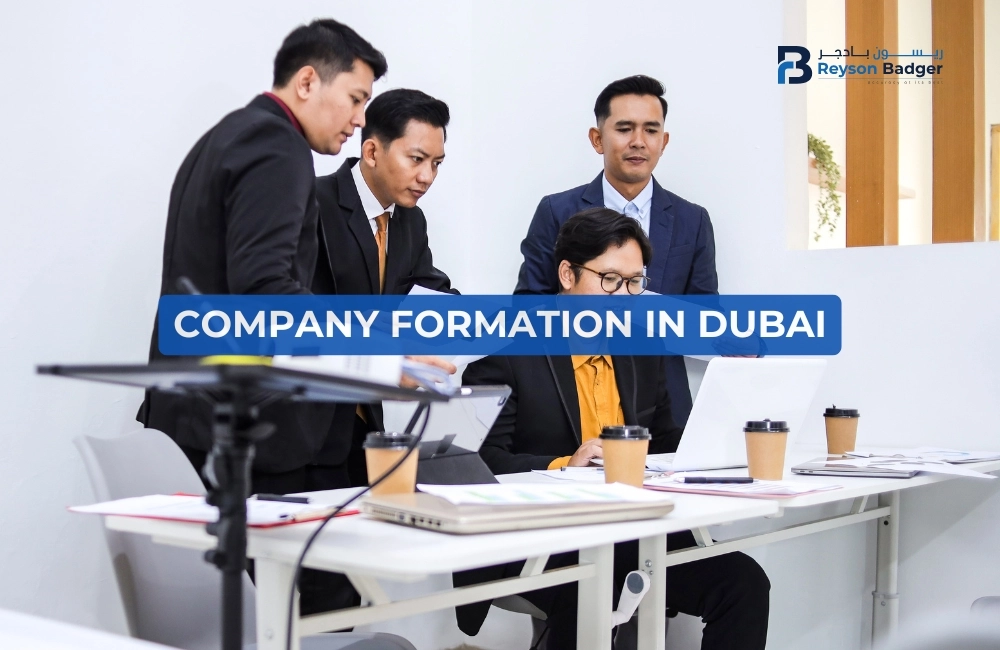
Located at the crossroads of Europe, Asia, and Africa, Dubai offers excellent connectivity for international trade and global expansion. Its modern infrastructure, advanced logistics networks, and business-focused regulations make it a preferred destination for startups, multinational companies, and investors.
Another major advantage is the variety of business setup options available. Entrepreneurs can choose from mainland companies, free zone companies, or offshore structures, depending on their business goals and operational requirements. This flexibility makes Company Formation in Dubai suitable for a wide range of industries and business models.
Types of Company Formation in Dubai
Dubai offers several company formation structures designed to accommodate different types of businesses. Understanding these options helps entrepreneurs choose the most suitable setup for their operations.
Mainland Company
A mainland company is licensed by the Department of Economy and Tourism (DET) and allows businesses to operate freely within the UAE market.
One of the key advantages of a mainland company is the ability to trade anywhere within the UAE and work directly with local clients and partners. Mainland companies can also participate in government contracts and tenders, which can provide significant growth opportunities.
This structure is ideal for businesses planning to operate within the UAE market or establish a physical presence across multiple emirates.
Free Zone Company
Free zones are specialized economic areas designed to attract international investors by offering simplified regulations and incentives.
A Dubai free zone company setup allows entrepreneurs to enjoy 100% foreign ownership, which is a major attraction for international investors. Free zones also provide tax benefits, simplified company registration procedures, and access to world-class infrastructure.
These zones are particularly popular for sectors such as technology, logistics, media, consulting, and e-commerce.
Offshore Company
An offshore company is primarily used for international business operations and asset management. While offshore companies cannot conduct business directly within the UAE market, they offer several strategic advantages.
Offshore structures are commonly used for international trading, asset protection, and holding investments. They also provide privacy and simplified administrative requirements, making them attractive for global investors and entrepreneurs managing international operations.
Benefits of Company Formation in Dubai
Starting a business in Dubai offers numerous advantages that make it one of the most attractive investment destinations in the world.
100% Foreign Ownership
Recent regulatory reforms allow full foreign ownership in many business sectors, especially in free zones and several mainland activities. This gives international investors greater control over their companies.
Tax Advantages
Dubai offers a favorable tax environment with competitive corporate tax policies and no personal income tax, making it financially attractive for entrepreneurs and investors.
Quick Business Registration
The company registration process in Dubai is efficient and streamlined, allowing many businesses to be established within a short period.
Access to International Markets
Dubai’s strategic location and world-class logistics infrastructure make it an ideal gateway for businesses looking to expand into regional and global markets.
Investor and Employee Visas
Business owners can apply for UAE residency visas for themselves, their employees, and family members, allowing them to live and work in the country while managing their companies.
Company Formation Process in Dubai
Setting up a company in Dubai involves several important steps. While the process is relatively straightforward, careful planning ensures smooth registration.
- Choose a Business Activity: The first step is selecting the type of business activity you want to operate. Dubai authorities maintain an official list of permitted activities across multiple sectors.
- Select the Company Structure: After choosing the activity, entrepreneurs must decide whether the company will operate as a mainland, free zone, or offshore entity based on their business requirements.
- Register the Trade Name: The next step involves selecting a unique business name and submitting it for approval through the relevant authority.
- Apply for a Trade License: Once the trade name is approved, the company must apply for the appropriate trade license corresponding to the selected activity.
- Complete Approvals and Launch the Business: After all regulatory approvals are obtained and documentation is submitted, the business license is issued, allowing the company to begin operations.
Documents Required for Company Formation in Dubai
To complete the registration process, several documents are typically required. These documents help authorities verify the identity of shareholders and confirm business details.
Commonly required documents include:
- Passport copies of shareholders and directors
- Business activity details
- Proposed trade name options
- Company formation application forms
Additional documents may be required depending on the chosen business structure and licensing authority.
FAQs
1. How long does it take to start a company in Dubai?
The company formation process in Dubai is efficient, and most businesses can be registered within a few working days, depending on the type of company and approvals required.
2. Can foreigners own 100% of a company in Dubai?
Yes, foreign investors can own 100% of their business in many sectors, especially in free zones and several mainland activities.
3. What is the difference between mainland and free zone companies?
Mainland companies can operate across the UAE and work with government entities, while free zone companies offer benefits like full ownership and simplified processes but may have certain market restrictions within the UAE.
FAQs
Latest Blogs

How Bank Statements Help Ensure Accurate Corporate Tax Filing in the UAE?
Learn how bank statements help UAE businesses verify transactions, reconcile financial records, and improve Corporate Tax filing accuracy.
READ MORE →
How the Right UAE E-Invoicing Provider Cuts Invoice Errors?
Choosing the right E-Invoicing Services in UAE can be equally important because the provider needs to work with the business's accounting systems, data, processes, and compliance requirements.
READ MORE →
What is an Independent Audit and Why is Independence Important?
Learn what an independent audit involves, why auditor independence matters, and how it supports reliable financial reporting and business transparency.
READ MORE →
How Bookkeeping Helps UAE Businesses Maintain Accurate Financial Records?
Bookkeeping focuses mainly on recording and maintaining financial information, while financial management uses that information to support budgeting.
READ MORE →
How to Use ICP Smart Services for Emirates ID & Visa Applications
Simplify your UAE immigration procedures with assistance for ICP Smart Services, including Emirates ID applications, visa processing, residency services, and application tracking
READ MORE →
What Happens If a Company Does Not Complete Its Required Audit in the UAE?
Learn what can happen if a UAE company fails to complete its required audit and how businesses can manage audit and compliance obligations.
READ MORE →
UAE Corporate Tax Filing for Small Businesses: Everything You Need to Know
Learn how small businesses in the UAE can manage Corporate Tax filing, understand Small Business Relief eligibility, and meet FTA compliance requirements.
READ MORE →
UAE E-Invoicing Mandatory Requirements: What Businesses Need to Prepare
For businesses, this means an effective UAE e-invoicing solution needs to connect invoice creation with the required data structure, validation, electronic exchange, and reporting process.
READ MORE →
What Does an Auditor Check During a Financial Audit?
READ MORE →
How PRO Services Simplify Business Setup in Abu Dhabi
PRO services in Abu Dhabi for documentation, licensing and visa support.
READ MORE →