Accounting Services in Dubai: A Practical Guide for Growing Companies
19-Jan-2026
Food Manufacturing Industry in UAE
Accounting Services for Food Manufacturing Industry in UAE
help businesses manage production costs, maintain
financial records, and improve profitability.
Accounting Services for Food Manufacturing Industry in UAE
The food manufacturing industry in the UAE is one of the fastest-growing sectors in the region, driven by increasing population demand, strong import–export activity, and the country’s focus on food security. As the industry expands, food manufacturers face complex operational and financial challenges that require structured financial management and accurate reporting.
From managing raw material costs to handling inventory with expiry dates, food production businesses operate with unique accounting requirements. Regulatory compliance also plays an important role, particularly with VAT regulations, corporate tax obligations, and financial reporting standards applicable in the UAE.
This is where Accounting Services for the Food Manufacturing Industry in UAE become essential. Specialized accounting support helps manufacturers manage production costs, maintain accurate inventory records, ensure tax compliance, and improve financial visibility across operations. With proper accounting systems in place, food manufacturers can control costs, protect profit margins, and maintain sustainable growth in a highly competitive market.
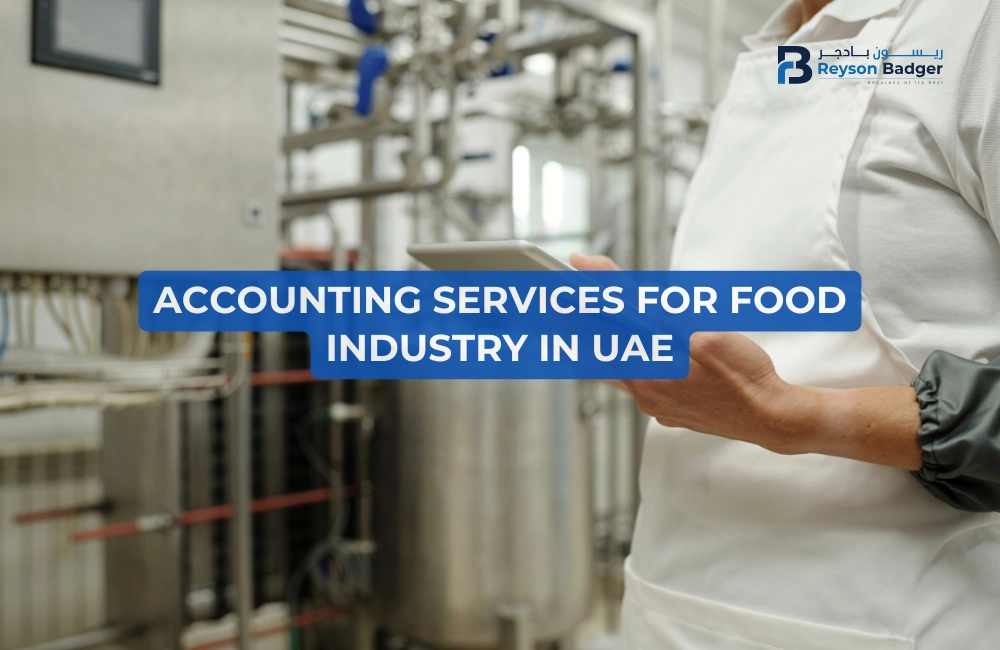
Understanding the Food Manufacturing Industry in UAE
The Food Manufacturing Industry in UAE has grown significantly in recent years due to government initiatives promoting local food production and supply chain resilience. The country has invested heavily in food processing facilities, industrial zones, and logistics infrastructure to support domestic manufacturing and reduce reliance on imports.
Despite these opportunities, the industry remains highly competitive. Food manufacturers must manage fluctuating raw material prices, evolving consumer preferences, and strict regulatory requirements. Financial management therefore plays a critical role in ensuring operational efficiency.
One important factor affecting the industry is the regulatory environment. Food manufacturers must comply with multiple authorities and regulatory frameworks, including product safety regulations, labeling requirements, and financial reporting obligations. Additionally, businesses must manage VAT implications on food products, which can vary depending on the type of product and its classification under UAE tax law.
Another major complexity arises from production costing. Unlike service industries, food manufacturing involves multiple cost layers, including raw materials, labor, packaging, logistics, and wastage. These factors make financial tracking more complicated and require structured accounting systems to ensure accurate cost allocation.
Supply chain management is another area that adds financial complexity. Many manufacturers rely on imported ingredients and operate across multiple warehouses, production units, and distribution channels. Without proper accounting controls, businesses may struggle to maintain accurate inventory valuation and financial reporting.
Accounting Challenges Faced by Food Manufacturers
Food manufacturing businesses face a range of accounting challenges that differ significantly from other industries. These challenges often arise due to the nature of production processes, inventory management requirements, and regulatory compliance obligations.
Raw Material Cost Fluctuations
One of the most significant financial challenges for food manufacturers is the constant fluctuation in raw material costs. Ingredients such as grains, dairy products, oils, and packaging materials are often subject to global market price changes.
These fluctuations can significantly impact production costs and profit margins. Without accurate cost tracking and forecasting, businesses may struggle to maintain stable pricing strategies. Proper accounting systems help monitor raw material costs and analyze their impact on overall production expenses.
Batch and Process Costing
Food manufacturing typically follows batch production or continuous processing systems, which require specialized cost accounting methods. Unlike simple product costing models, manufacturers must allocate costs across batches, production stages, and finished goods.
Accurate batch costing allows businesses to determine the true cost of each product and evaluate profitability. Without proper accounting practices, companies may underestimate production expenses or fail to identify inefficiencies within the manufacturing process.
Inventory and Expiry Management
Inventory management in the food industry is particularly complex due to product shelf life and expiry dates. Businesses must track inventory carefully to avoid spoilage, wastage, and financial losses.
Accounting systems must integrate inventory tracking with financial records so that stock levels, valuation, and expiry management are accurately recorded. Proper inventory accounting ensures that financial statements reflect the real value of stock held by the company.
VAT Classification of Food Products
Not all food products are treated equally under VAT regulations in the UAE. Some items may qualify for zero-rated VAT, while others are subject to standard VAT rates.
Incorrect classification can lead to compliance issues, inaccurate VAT filings, or penalties from tax authorities. Food manufacturers therefore require accounting professionals who understand VAT regulations and can ensure accurate tax reporting.
Multi-location Production Units
Many food manufacturers operate across multiple production facilities, warehouses, and distribution centers. Managing financial records across different locations can create reporting challenges.
Without centralized accounting systems, businesses may face inconsistencies in financial reporting, cost allocation, and inventory management. Integrated accounting solutions allow companies to consolidate financial data from different locations and maintain accurate financial oversight.
Cash Flow and Margin Control
Food manufacturing businesses often operate with tight profit margins due to production costs, supply chain expenses, and competitive pricing pressures. Poor financial visibility can lead to cash flow issues and reduced profitability.
Proper accounting systems provide businesses with accurate financial insights, helping them monitor operational costs, manage working capital, and maintain healthy profit margins.
Our Accounting Services for the Food Manufacturing Industry in UAE
Food manufacturing companies require accounting services that go beyond basic bookkeeping. Specialized accounting support helps businesses manage production costs, maintain regulatory compliance, and improve financial performance.
Bookkeeping and Monthly Financial Reporting
Accurate bookkeeping is the foundation of effective financial management. Our accounting services ensure that all financial transactions are recorded correctly and categorized properly.
Monthly financial reports provide management with clear insights into revenue, expenses, and operational performance. These reports allow businesses to monitor profitability and make informed financial decisions.
Cost Accounting and Production Analysis
Cost accounting is essential for food manufacturing businesses. We analyze production costs, raw material consumption, labor expenses, and operational overheads to determine the true cost of manufacturing each product.
This analysis helps manufacturers identify inefficiencies in production processes and implement strategies to improve cost control.
Inventory Accounting and Stock Valuation
Inventory management plays a critical role in the food industry. Our accounting services ensure accurate stock valuation, proper inventory tracking, and integration with financial reporting systems.
This helps businesses maintain optimal inventory levels, reduce wastage, and ensure financial statements accurately reflect stock values.
VAT Registration and Filing
Food manufacturers must comply with UAE VAT regulations, including proper product classification, invoice management, and tax filing requirements.
Our accounting professionals assist businesses with VAT registration, return filing, and compliance monitoring, ensuring that companies meet their tax obligations accurately and on time.
Corporate Tax Advisory
With the introduction of UAE corporate tax, food manufacturing companies must ensure their financial reporting and tax planning strategies are aligned with new regulatory requirements.
Our corporate tax advisory services help businesses understand their tax obligations, prepare accurate tax returns, and maintain full compliance with corporate tax regulations.
Budgeting and Financial Forecasting
Financial planning is essential for long-term business stability. Our accounting services include budgeting and forecasting to help food manufacturers plan future production costs, manage capital investments, and maintain healthy cash flow.
Internal Controls and Audit Support
Strong internal controls help prevent financial errors and reduce the risk of fraud. We assist companies in implementing structured financial controls and preparing for internal or external audits.
This ensures transparency, financial accuracy, and improved governance within the organization.
Our Accounting Process for Food Manufacturing Companies
Our accounting approach is designed to address the specific needs of food manufacturing businesses while ensuring compliance with UAE regulations.
- Business Assessment and Risk Review: The process begins with a comprehensive assessment of the company’s financial structure, operational processes, and potential risk areas. This helps identify gaps in accounting systems and compliance procedures.
- Accounting System Setup: Based on the assessment, we implement or optimize accounting systems that support production tracking, inventory management, and financial reporting.
- Cost Structure Design: We develop cost accounting frameworks that accurately track production expenses, raw material consumption, and overhead allocations.
- Monthly Reporting and Tax Compliance: Regular financial reporting ensures that businesses maintain accurate records while meeting VAT and corporate tax filing obligations.
- Continuous Financial Advisory: Beyond compliance, we provide ongoing financial advisory services to help businesses improve operational efficiency and financial performance.
Why Choose Our Accounting Services in UAE?
Choosing the right accounting partner can significantly impact the financial success of a food manufacturing business. Our accounting services are designed to provide industry-specific expertise combined with strong regulatory compliance support.
We understand the operational challenges faced by manufacturers and provide accounting solutions tailored specifically for production-based businesses. Our dedicated accounting professionals ensure accurate reporting, timely tax compliance, and structured financial management.
Transparency is another key focus of our services. Businesses receive clear financial reports and insights that help management make informed decisions.
As companies grow, our accounting support also scales with their operations, ensuring that financial systems remain efficient and compliant with evolving regulations.
Industries We Also Support
In addition to food manufacturing, our accounting services support a wide range of related sectors within the production and FMCG industry. These include:
- FMCG manufacturing companies
- Beverage manufacturing businesses
- Frozen food production companies
- Bakery and processed food manufacturers
- Export-oriented food production businesses
Each of these industries faces unique accounting and regulatory challenges that require specialized financial management.
Conclusion
The Food Manufacturing Industry in UAE continues to expand as the country strengthens its food production capabilities and supply chain infrastructure. However, the industry also faces complex financial and regulatory challenges that require specialized accounting expertise.
Reyson Badger the professional Accounting Services for the Food Manufacturing Industry in UAE help businesses manage production costs, maintain accurate financial records, comply with VAT and corporate tax regulations, and improve overall profitability.
By implementing structured accounting systems and professional financial oversight, food manufacturing companies can strengthen their financial stability and focus on growing their operations in an increasingly competitive market.
FAQs
1. How often should inventory audits be conducted in a food manufacturing business?
Inventory audits should ideally be conducted regularly, often monthly or quarterly, to ensure accurate stock records and minimize wastage or financial discrepancies.
2. Why does a food manufacturing company need specialized accounting services?
Food manufacturing involves complex cost structures, inventory management, and regulatory compliance requirements that require specialized accounting expertise.
3. Is VAT applicable to all food products in UAE?
No. Some food items may qualify for zero-rated VAT depending on their classification. Correct product classification is important to ensure accurate VAT compliance.
Accounting
Accounting Services for Industries
- Engine Manufacturing
- Pharmaceutical Manufacturing Industry in UAE
- Accounting Services For Bread Manufacturing Units in Dubai
- Manufacturing Sector in UAE
- Accounting For Tobacco And Cigarette Manufacturing Industry in Dubai
- Iron and Steel Casting Industry in UAE
- Accounting for Marine Companies in UAE
- Accounting for Insurance Companies in UAE
- Accounting Services for Construction in UAE
- Accounting Services for Event Management in UAE
- Accounting Services for Oil and Gas in UAE
- Accounting Services for Real Estate in UAE
- Accounting Services for Restaurants in UAE
- Accounting services for E-Commerce in UAE
- Accounting Services for Technology in UAE
- Accounting Services for Food Manufacturing Industry in UAE
Request a Quote
We’ll get back to you shortlyFAQs
Food manufacturing companies typically require bookkeeping, cost accounting, inventory management, VAT compliance, corporate tax advisory, and financial reporting services.
Many businesses use cloud-based accounting systems that support inventory tracking, cost allocation, and financial reporting. The best solution depends on the company’s production scale and operational complexity.
Professional accounting helps businesses analyze production costs, reduce waste, improve inventory management, and identify inefficiencies that affect profitability.
Latest Blogs

22
Oct
What is an Independent Audit and Why is Independence Important?
Learn what an independent audit involves, why auditor independence matters, and how it supports reliable financial reporting and business transparency.
READ MORE →
21
Oct
How Bookkeeping Helps UAE Businesses Maintain Accurate Financial Records?
Bookkeeping focuses mainly on recording and maintaining financial information, while financial management uses that information to support budgeting.
READ MORE →
19
Oct
How to Use ICP Smart Services for Emirates ID & Visa Applications
Simplify your UAE immigration procedures with assistance for ICP Smart Services, including Emirates ID applications, visa processing, residency services, and application tracking
READ MORE →
16
Oct
What Happens If a Company Does Not Complete Its Required Audit in the UAE?
Learn what can happen if a UAE company fails to complete its required audit and how businesses can manage audit and compliance obligations.
READ MORE →
14
Oct
UAE Corporate Tax Filing for Small Businesses: Everything You Need to Know
Learn how small businesses in the UAE can manage Corporate Tax filing, understand Small Business Relief eligibility, and meet FTA compliance requirements.
READ MORE →
13
Oct
UAE E-Invoicing Mandatory Requirements: What Businesses Need to Prepare
For businesses, this means an effective UAE e-invoicing solution needs to connect invoice creation with the required data structure, validation, electronic exchange, and reporting process.
READ MORE →
12
Oct
What Does an Auditor Check During a Financial Audit?
READ MORE →
14
Oct
How PRO Services Simplify Business Setup in Abu Dhabi
PRO services in Abu Dhabi for documentation, licensing and visa support.
READ MORE →
09
Oct
How Long Does a Company Audit Take in Dubai?
Learn how long a company audit takes in Dubai and how business size, financial records, supporting documents, and audit requirements affect the timeline.
READ MORE →
07
Oct
How Business Strategy Consulting Supports Sustainable Growth in the UAE?
Get practical strategic guidance for market entry, business growth, expansion, competitive positioning, and long-term planning in the UAE.
READ MORE →