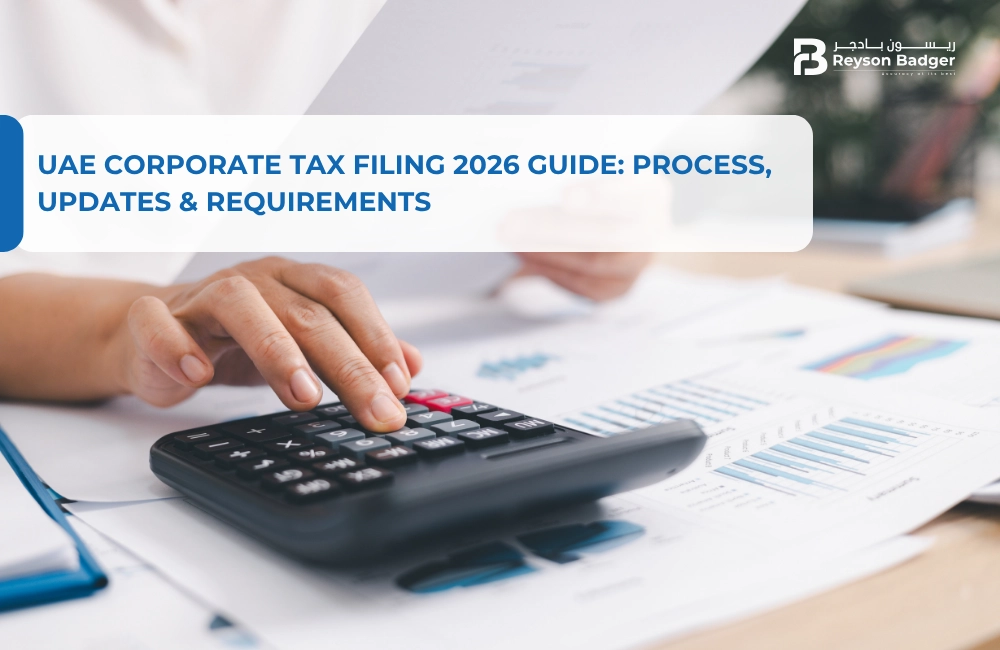


Corporate tax is no longer something businesses in the UAE can ignore it’s now a key part of running a compliant and sustainable company. If you’re operating in the UAE, understanding how UAE Corporate Tax Filing works is essential to avoid penalties and keep your finances in order.
With the latest changes introduced for 2026, businesses need to stay updated on new requirements, reporting standards, and compliance expectations. The UAE Corporate Tax Filing 2026 Guide helps simplify everything from understanding the basics to actually filing your tax return correctly.
Many businesses today are also relying on professional support like accounting services, VAT services, and tax advisory to manage their tax responsibilities more efficiently. In this guide, we’ll walk you through the process, updates, required documents, and common mistakes so you can stay compliant without stress.
What is UAE Corporate Tax Filing?
Let’s start with the basics.
UAE Corporate Tax Filing is simply the process where your business reports its income, calculates the tax it owes, and submits a tax return UAE to the Federal Tax Authority.
Under the corporate tax UAE system, businesses are taxed based on their taxable income UAE.
So, who needs to file?
- Businesses operating in the UAE mainland
- Certain Free Zone companies (depending on eligibility)
- Foreign businesses with operations in the UAE
What about tax rates?
- 0% tax on income up to AED 375,000
- 9% tax on income above AED 375,000
So if your business is generating profits beyond that threshold, you’ll need to calculate and file your taxes accordingly.
UAE Corporate Tax Filing Updates for 2026
Now, let’s talk about what’s new.
The UAE Corporate Tax Filing Updates for 2026 mainly focus on tightening compliance and improving transparency. In simple terms, the government wants businesses to maintain clearer records and report more accurately.
Key updates you should know:
- More detailed reporting requirements
- Better documentation standards
- Increased focus on audit readiness
- Stricter monitoring by authorities
These new tax rules UAE mean businesses can no longer afford to be casual about bookkeeping or tax reporting.
What has changed in compliance?
- Financial records need to be more accurate and structured
- Income and expenses must be properly classified
- Accounting records should match your tax filings
- Deadlines must be strictly followed
These compliance changes UAE are designed to make the system more transparent—but they also mean businesses need to be more careful.
Documents Required for UAE Corporate Tax Filing
Before you file your taxes, you need to have the right documents ready. This is where many businesses struggle.
Here’s a simple checklist of corporate tax documents UAE:
- Trade license
- Financial statements
- Tax Registration Number (TRN)
- Invoices and supporting records
- Bank statements
Meeting these tax filing requirements UAE is important because incomplete documentation can lead to delays or penalties.
Corporate Tax Calculation Example (UAE)
Let’s break this down with a simple example so it’s easier to understand.
Example:
- Revenue: AED 1,000,000
- Expenses: AED 600,000
- Taxable income: AED 400,000
Now the tax calculation:
- 0% on first AED 375,000 → AED 0\
- 9% on remaining AED 25,000 → AED 2,250
Total tax payable: AED 2,250
This basic corporate tax example UAE shows how your tax is calculated based on profits, not total revenue.
Common Mistakes in UAE Corporate Tax Filing
Even though the process sounds straightforward, many businesses still make corporate tax errors UAE.
Here are some common tax filing mistakes UAE to avoid:
- Incorrect calculation of taxable income
- Missing or incomplete documents
- Late filing of returns
- Misclassifying expenses or income
- Poor record-keeping
These mistakes can lead to penalties and unnecessary stress—so it’s important to get things right from the beginning.
Penalties for Non-Compliance in UAE
Ignoring corporate tax requirements can be costly.
Corporate tax penalties UAE may include:
- Fines for late filing
- Penalties for incorrect reporting
- Additional scrutiny or audits
- Legal complications in serious cases
The best way to avoid this? Stay compliant, stay organized, and file on time.
Why Choose Reyson Badger for UAE Corporate Tax Filing?
When it comes to corporate tax services UAE, having the right support can make a big difference.
At Reyson Badger, the focus is on making tax filing simple, accurate, and stress-free.
- Expert UAE corporate tax consultants who understand local regulations
- Accurate tax calculations to avoid errors and penalties
- Complete support from documentation to filing
- Strong compliance focus to keep your business safe
- Strategic tax advisory to help you plan better financially
Instead of worrying about deadlines and calculations, you can focus on running your business while the experts handle your tax compliance.
Conclusion
Corporate tax is now a reality for businesses in the UAE, and staying compliant is more important than ever. The UAE Corporate Tax Filing 2026 Guide helps you understand what’s required and how to approach it correctly.
With new updates and stricter compliance requirements, businesses need to be proactive. Whether it’s maintaining proper records or filing returns on time, every step matters.
Working with professionals offering accounting services, VAT services, and tax advisory can make the entire process smoother and more efficient. Stay organized, stay informed, and don’t wait until the last minute.