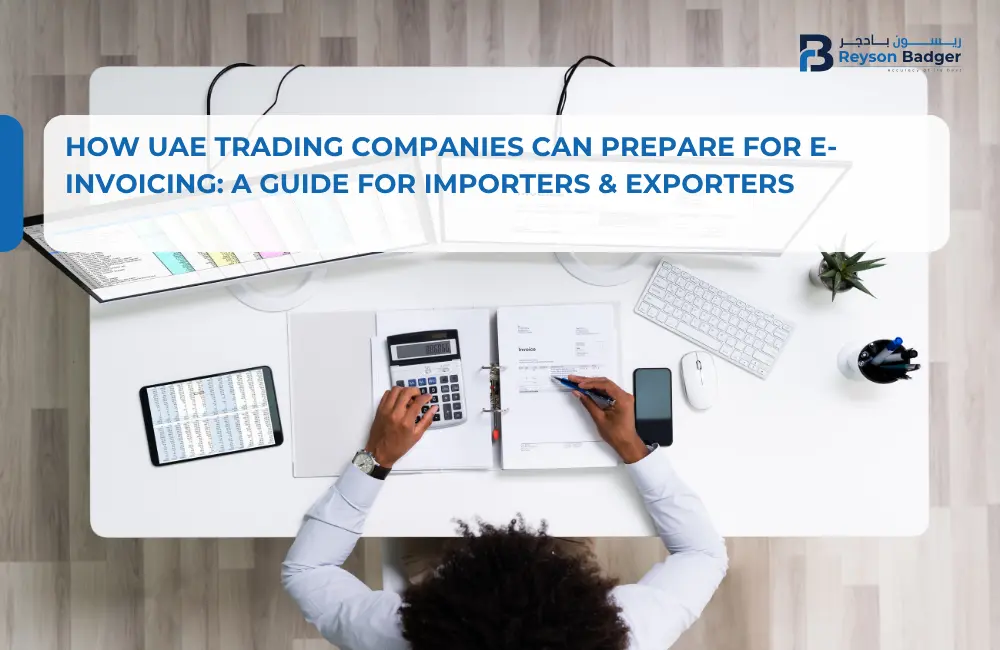


The Gulf region is moving rapidly toward a fully digital economy. Governments across the UAE, Saudi Arabia, Oman, Bahrain, and Qatar are investing heavily in digital infrastructure, smart government services, and data-driven financial systems. In this context, E-invoicing Services in UAE are playing a critical role in supporting this shift.
As this transformation accelerates, traditional paper-based invoicing is quickly becoming outdated. E-invoicing UAE is emerging as a key pillar of the region’s digital financial ecosystem.
Electronic invoicing allows invoices to be generated, shared, validated, and stored in a structured digital format. This shift is not just about technology it is about improving transparency, strengthening tax systems, and modernizing how businesses operate.
Today, e-invoicing is becoming an essential requirement for businesses that want to remain compliant, competitive, and future-ready in the Gulf, with specialized UAE E invoicing helping companies streamline tax and financial operations.
Regulatory Push for Digital Tax Compliance
One of the biggest reasons behind the rising demand for e-invoicing in the Gulf is the strong regulatory push from governments.
Over the past decade, Gulf countries introduced VAT systems and began modernizing tax frameworks. With this shift came the need for better visibility, accurate reporting, and real-time data.
E-invoicing supports these goals by enabling governments to monitor transactions digitally and reduce tax leakage.
Key drivers behind this regulatory push include:
- Real-time invoice reporting
Tax authorities are moving toward systems where invoice data can be reported instantly or near real-time. This helps ensure accuracy and reduces errors in tax filings. - Improved data accuracy
Structured e-invoices reduce the chances of incorrect or incomplete data, making compliance easier for businesses and authorities. - VAT and tax modernization
E-invoicing is part of a broader digital tax transformation across the Gulf. It supports VAT reporting, corporate tax frameworks, and future digital tax initiatives.
As regulations evolve, businesses are realizing that early adoption of e-invoicing is the safest way to stay ahead of compliance requirements.
Efficiency and Cost Savings for Businesses
Beyond regulatory pressure, businesses are embracing e-invoicing because of the clear operational advantages it provides.
Traditional invoicing processes are often manual, time-consuming, and prone to human error. E-invoicing replaces these inefficiencies with automation and digital workflows.
Key business benefits include:
- Reduced manual work
Automated invoice generation eliminates repetitive tasks like data entry and manual validation. - Faster invoice processing
Invoices can be sent and received instantly, significantly reducing payment cycles. - Lower administrative costs
Less paper, printing, and storage means reduced overhead expenses. - Fewer disputes and errors
Structured data improves accuracy and reduces misunderstandings between buyers and suppliers.
As a result, companies experience improved cash flow, faster collections, and better operational efficiency.
Enhanced Transparency, Security & Data Insights
E-invoicing is not only about efficiency, it also introduces a new level of financial transparency and security.
Digital invoicing systems create standardized electronic records that are easy to track, audit, and analyze.
This brings major advantages:
- Standardized audit trails
Every invoice is stored digitally, creating a clear and traceable financial history. - Reduced fraud and tax evasion
Digital systems make it harder to manipulate invoices or hide transactions. - Better business insights
E-invoice data can be analysed to understand spending patterns, customer behavior, and revenue trends. - Real-time economic visibility for governments
Authorities gain insights into economic activity, helping them design better policies and improve tax systems.
These benefits make e-invoicing valuable not just for compliance, but for smarter financial decision-making.
The Role of E-Invoicing Services in UAE and the Gulf
As adoption accelerates, businesses are increasingly seeking professional support to implement e-invoicing correctly. Transitioning to digital invoicing involves technology integration, regulatory alignment, staff training, and ongoing compliance monitoring. This is why many companies partner with experienced providers such as Reyson Badger to manage the transition smoothly.
Professional e-invoicing services help businesses:
- Assess readiness and identify gaps
- Integrate e-invoicing with accounting or ERP systems
- Ensure compliance with evolving regulations
- Provide training and ongoing support
This expert guidance helps companies adopt e-invoicing without disrupting daily operations.
Conclusion
The rising demand for e-invoicing in the Gulf is not a short-term trend it is part of a long-term digital transformation.
Government regulations, tax modernization, and business efficiency are all driving the shift toward electronic invoicing. At the same time, companies are recognizing the operational and financial advantages of automation, transparency, and real-time reporting.
Reyson Badger as digital growth continues across the region, e-invoicing services is becoming an indispensable part of doing business in the Gulf. Businesses that adopt early will benefit from smoother compliance, stronger financial control, and improved efficiency in the years ahead.
FAQs
1. What is driving the rising demand for e-invoicing in the Gulf?
Growing regulatory push from governments, tax modernization, business efficiency gains, and the region's broader shift toward a digital economy are all fueling e-invoicing adoption across the UAE, Saudi Arabia, Oman, Bahrain, and Qatar.
2. How does e-invoicing support tax compliance?
E-invoicing enables real-time or near real-time invoice reporting, improves data accuracy, and supports VAT and corporate tax modernization, helping tax authorities monitor transactions digitally and reduce tax leakage.
3. What operational benefits does e-invoicing offer businesses?
E-invoicing reduces manual work, speeds up invoice processing and payment cycles, lowers administrative costs by cutting paper and printing needs, and reduces disputes through more accurate, structured data.