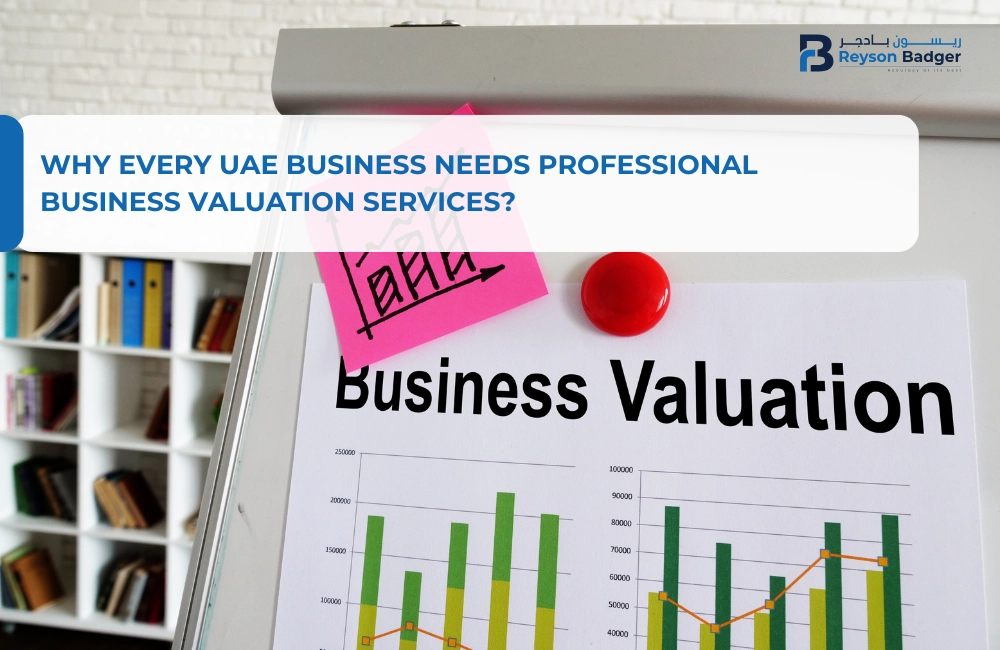


Business valuation services in UAE determine the fair economic value of a company for funding, sale, tax planning, disputes, and reporting. Poor valuation work can lead to weak negotiations, wrong pricing, and avoidable losses.
In the UAE, these reports are shaped by International Valuation Standards (IVS) and by compliance needs tied to the Federal Tax Authority (FTA) and local reporting duties. A clear valuation gives owners, investors, and lenders a sound basis for action. It also supports better decisions in business valuation in Dubai and across the wider market, where credibility and timing matter.
What Are Business Valuation Services?
Business valuation services assess what a company is worth by reviewing financial records, assets, liabilities, market demand, and future earning power. This work gives owners a factual base for pricing, planning, and transaction talks.
It also helps reduce confusion when a business must prove its value to banks, investors, courts, or tax authorities. In the UAE, the result is often used as part of a business valuation report UAE companies rely on for major decisions.
Definition of Business Valuation
Business valuation is the process of estimating a company’s economic worth using accepted methods and evidence. The result should reflect the business as a going concern, not only its book value.
Why Does Business Valuation Matters?
Accurate valuation supports sales, mergers, funding, dispute work, and planning. It helps decision-makers act on facts, not assumptions, when money and ownership are involved.
Key Factors Affecting Business Value
Several drivers shape values, and each one can raise or lower the final figure. Strong valuation work weighs these factors together, rather than using one number in isolation.
- Revenue and profitability: Strong earnings usually support a higher value because they show stable performance and future earning power.
- Assets and liabilities: The balance sheet matters because heavy debts or weak assets can reduce the overall worth.
- Market position: A strong brand or market share can improve value because it shows business strength and customer trust.
- Growth potential: Future expansion plans can increase value when the business has clear demand and room to scale.
- Industry trends: Sector growth, regulation, and demand changes all affect how buyers and investors view the company.
Why UAE Businesses Need Professional Business Valuation Services?
In the UAE, valuation is not only about sale price. It also supports funding, tax planning, shareholder matters, and audit support. Companies that use expert valuation work usually gain better control over pricing, negotiations, and reporting duties.
That matters in a market where investors and counterparties expect clear, defendable figures. It also matters when the business must show sound records for Regulatory and Compliance Requirements linked to the Federal Tax Authority (FTA) and related obligations. A weak estimate can create tax risk, deal delays, and trust issues with stakeholders. A precise report protects the company from avoidable conflict and gives leaders a stronger position.
Supporting Business Growth Strategies
A valuation can show which parts of the company create the most value and which parts need work. That helps owners set growth plans with better focus and less waste.
Improving Financial Decision-Making
Valuations help leaders make better choices about budgets, capital needs, and investment timing. When the value base is clear, financial planning becomes more realistic.
- Assess true company value for funding: Lenders and investors want a value that matches the business’s real earning power and risk profile.
- Inform budgeting and forecasting: Clear valuation data supports stronger plans because it links spend decisions to business worth.
- Support risk evaluation: Owners can spot weak areas early and act before those issues hurt cash flow or growth.
Enhancing Investor Confidence
Independent reports build trust because they show that the figure comes from a structured and objective review. Investors are more likely to engage when the numbers are clear and defensible.
Ensuring Regulatory and Compliance Requirements
Valuation also supports compliance with reporting and tax-related duties in the UAE. A strong report can help with file preparation, audit support, and internal documentation.
- Meet Federal Tax Authority guidelines: A sound valuation helps support tax positions and reduces the chance of questions later.
- Navigate corporate tax and ESR compliance: Value data can be useful when documenting related-party matters and business structure analysis.
- Support audit and financial reporting needs: Auditors often require a clear basis for asset, equity, or transaction values.
Key Situations Where Business Valuation Is Essential
Many UAE companies need valuation at specific points in their life cycle. The most common triggers include mergers, exits, shareholder disputes, fundraising, and group restructuring. These events usually involve price, control, or ownership rights, so the valuation must be credible.
In regulated or bank-funded cases, the report also needs to withstand review by external parties. Businesses that prepare early usually avoid delay and conflict. Those that wait too long often face pressure, weak bargaining power, or dispute risk. A well-timed valuation gives the business a clear position before terms are fixed.
Business Mergers and Acquisitions
Valuation gives both parties a fair base for price talks and deal structure. It also helps reduce conflict when the transaction reaches due diligence or final approval.
- Supports deal structuring: Buyers and sellers can shape terms around a defensible value.
- Mitigates valuation disputes: A formal report lowers the chance of arguments over price.
- Aligns with regulatory standards: A proper process helps the deal hold up under review.
Business Sale or Purchase
A sale or purchase needs a clear value so the parties can agree on a fair price. It also helps when finance is required to close the deal.
Shareholder Disputes and Settlements
An objective valuation helps resolve ownership conflicts with facts rather than emotion. It can support settlement talks and reduce the chance of court action.
- Serves as neutral evidence: The report gives both sides a shared reference point.
- Prevents litigation escalation: Clear figures can reduce the need for prolonged disputes.
- Clarifies ownership value: Shareholders can see what their stake is worth in real terms.
Fundraising and Investment Opportunities
Investors want a clear view of value before they commit funds. A professional report helps them judge risk, return, and dilution impact.
Business Succession Planning
Succession planning needs a fair transfer value, especially in family companies. The report helps owners plan handover without conflict.
- Helps structure ownership changes : Families can plan transfer terms with more certainty.
- Ensures tax and regulatory compliance: A clear value supports cleaner transfer records.
- Facilitates smooth succession: The process becomes easier when all parties accept the same value basis.
Corporate Restructuring
Restructuring often involves asset transfers, new share structures, or business reorganization. Valuation helps set a fair basis for those changes.
| Situation | Purpose of Valuation | Key Benefit |
|---|---|---|
| M&A | Price negotiation and regulatory review | Fair and defensible pricing |
| Shareholder Disputes | Objective value for dispute resolution | Conflict reduction |
| Fundraising | Investment risk and value assessment | Investor confidence |
Benefits of Professional Business Valuation Services in UAE
Professional valuation services give businesses more than a number. They provide a structured view of financial health, market position, and risk exposure. That makes the service useful for owners, lenders, investors, and auditors.
It also supports stronger decision-making in a market where speed and trust are both important. Companies that use expert reports often improve deal terms, reduce conflict, and present a more credible profile to third parties. For many firms, the value lies in the discipline of the process as much as the final figure.
Accurate and Reliable Valuation Reports
Certified professionals use tested methods and real market data to produce reliable reports. That gives management a figure that is easier to defend in talks and filings.
Objective and Independent Assessment
Independence matters because it reduces bias and improves trust. Investors and partners are more likely to accept a report when the reviewer has no hidden interest.
- Avoid internal bias: An outside view lowers the risk of inflated or distorted results.
- Enhance report credibility: Independent work carries more weight in serious negotiations.
- Meet investor expectations: Funders usually want a clean and neutral valuation basis.
Better Negotiation Power
A professional report gives owners support during pricing talks. It replaces guesswork with evidence, which often leads to stronger terms.
Risk Reduction
Valuation can highlight weak cash flow, debt pressure, and ownership risk before they become major problems. That helps companies avoid disputes and penalties.
- Support regulatory compliance: Clear value data can help reduce filing and reporting errors.
- Reduce tax and audit risks: A sound basis lowers the chance of challenges during review.
- Prevent shareholder conflicts: Common value figures reduce room for disagreement.
Improved Strategic Planning
Valuation insight helps leaders decide where to invest and where to hold back. It also supports capital planning and exit planning.
Common Business Valuation Methods Used in UAE
Different businesses need different valuation methods. The right method depends on the company’s size, sector, earnings profile, and purpose of the report. Some businesses fit an income model, while others need asset-based or market-based analysis.
In many cases, valuation experts combine methods to reach a balanced result. That is important because one method alone may miss risk, growth, or asset strength. The chosen method should always match the purpose of the report and the quality of the available data. Good method selection improves the reliability of the final figure.
Income-Based Valuation Method
This method values a company based on the income it can generate in future periods. It works well for businesses with steady earnings and clear forecasts.
- Focuses on earning potential: Future profit is central to the result.
- Uses projections and discount rates: Analysts apply financial models to estimate present value.
- Ideal for profitable and growing companies: Businesses with stable cash flow usually fit this method well.
Market-Based Valuation Method
This method compares the business with similar companies or deals in the market. It works best when enough reliable market data is available.
Asset-Based Valuation Method
This method measures value by comparing assets with liabilities. It is useful for businesses where property, equipment, or stock drive most of the worth.
- Accounts for tangible and intangible assets: The review should include both physical and non-physical value.
- Useful for real estate or manufacturing firms: These sectors often hold significant asset value.
- Reflects liquidation or book value: It can show what the business is worth under a more conservative view.
Discounted Cash Flow (DCF) Method
DCF estimates future cash flow and converts it into today’s value. It is widely used when the business has predictable earnings and strong data.
| Method | Key Features | Typical Use Cases |
|---|---|---|
| Income-Based | Future income focus, earnings discounting | Established, growing companies |
| Market-Based | Peer comparison, deal price reference | Companies in active markets |
| Asset-Based | Net asset value approach | Asset-heavy businesses, restructurings |
| Discounted Cash Flow | Projected cash flow model | Complex and profitable entities |
How Business Valuation Services Help Different Industries
Industry context changes how value should be measured. A startup may rely on future potential, while a real estate firm may depend on asset strength and rental income. Family businesses often need valuation for succession and control matters.
Service firms, in contrast, may depend more on client relationships and goodwill. A strong valuation provider adjusts the method to fit the sector, not the other way around. That approach leads to better results and fewer disputes. It also creates reports that make sense to banks, partners, and regulators.
Startups and SMEs
Young businesses are often valued on growth potential, not just present earnings. That helps them present a stronger case when seeking funding or planning expansion.
Family-Owned Businesses
Family firms often need valuation for succession and ownership transfer. The report can reduce conflict by giving all stakeholders a common value base.
- Facilitates ownership transitions: Clear value supports cleaner share movement.
- Prevents internal conflicts: Families are less likely to argue when the basis is independent.
- Addresses unique governance structures: The valuation can reflect control rights and family arrangements.
Manufacturing Companies
Manufacturing firms often need close review of plant, machinery, inventory, and operating efficiency. These factors can have a major effect on the final value.
Real Estate Businesses
Property-heavy firms need asset-based review with attention to land value, rental income, and market demand. Location and tenant quality can strongly affect the result.
- Accounts for property asset value: Land and buildings often form the core of the business worth.
- Consider market conditions: Property demand and price trends can raise or lower value.
- Evaluates rental income streams: Ongoing income is often a major part of the analysis.
Professional Service Firms
Service firms often depend on contracts, people, and reputation. Their valuation must consider goodwill, client base, and recurring revenue.
Why Choose Professional Business Valuation Services in Dubai, UAE?
Choosing the right provider affects the quality of the entire report. A skilled firm will use sound methods, clear data, and sector knowledge to produce a result that stands up to review.
In Dubai and across the UAE, that matters because reports are often used in funding, dispute, tax, and transaction settings. A provider with weak process control can leave the business with a figure that is hard to defend. The better choice is a team that understands both technical valuation work and local compliance needs. That mix improves trust, speed, and outcome quality.
Industry Expertise
Experienced professionals understand the local market and the sector-specific factors that shape value. That makes their reports more relevant and more practical.
- Knowledge of local market trends: Current market awareness improves the quality of the analysis.
- Familiarity with UAE regulations: Local rule knowledge helps the report stay useful in compliance settings.
- Cross-sector valuation experience: Broad sector exposure helps the provider choose the right method.
Compliance with International Valuation Standards
Reports should follow International Valuation Standards (IVS) and related accounting rules. This makes the output more credible for investors, regulators, and courts.
Comprehensive Financial Analysis
Good valuation work uses full financial review, not surface-level estimates. It should look at records, contracts, operations, and market data together.
- Incorporation of intangible assets: Goodwill and brand value often matter in the final figure.
- Use of advanced valuation tools: Strong models improve accuracy and consistency.
- Detailed operational and market review: A wider review helps explain what drives value.
Tailored Valuation Solutions
A useful report matches the purpose of the assignment. Funding, dispute, and planning cases each need a different focus.
Common Mistakes Businesses Make Without Professional Valuation
Many businesses rely on rough estimates, and that often creates problems later. They may overprice a sale, underprice a stake, or miss important asset value. Poor valuation can also weaken talks with lenders and investors.
In some cases, it can even create tax or audit issues if the business cannot justify the numbers it uses. The cost of a weak estimate is often much higher than the cost of a proper report. A professional process reduces that risk and gives management a stronger base for action.
Overvaluing the Business
Inflated value can scare off buyers and investors. It may also create false confidence inside the business.
- Misguided pricing strategies: Unrealistic prices can slow or block a deal.
- Investor skepticism: Funders may lose trust if the figures look too high.
- Deal breakdown risks: Talks can fail when the price cannot be defended.
Undervaluing Business Assets
Missing asset value can hurt fundraising and ownership transfer. Intangible value is often ignored when owners do not use expert support.
Poor Investment Decisions
Weak valuation data can lead to bad capital allocation and avoidable losses. Leaders may fund the wrong project or miss a better one.
- Inaccurate funding assessments: The business may borrow or invest on the wrong basis.
- Uninformed strategic moves: Plans can fail when the value picture is incomplete.
- Increased risk exposure: Hidden issues are more likely to stay unresolved.
Challenges During Mergers and Acquisitions
Without a defensible report, deal terms are harder to justify. That can lead to delay, dispute, or failed negotiations.
How to Choose the Right Business Valuation Service Provider in UAE?
The right provider should combine technical skill, local knowledge, and clear reporting. Experience matters because valuation is not a simple formula exercise. It requires judgment, data review, and a strong understanding of purpose.
The provider should also explain the process, pricing, and timeline in a clear way. Transparency helps the client compare options and avoid later conflict. A good provider will also stand behind the logic used in the report. That is especially important when the result will be shown to investors, auditors, or banks.
Experience and Credentials
Look for trained professionals with proven UAE valuation experience. Credentials and past work show whether the provider can handle complex assignments.
- Certified valuation credentials: Formal training supports technical quality.
- Track record in UAE market: Local experience improves practical accuracy.
- Client testimonials and references: Past work can help confirm reliability.
Industry Knowledge
The provider should understand the sector, because each industry has different risks and value drivers. That knowledge shapes method choice and final analysis.
Reporting Standards
A credible report should follow IVS, IFRS, and UAE reporting expectations. Clear standards help the result hold up under review.
- Compliance with international standards: This improves trust and acceptance.
- Alignment with UAE laws: Local fit matters when the report is used in practice.
- Clear and comprehensive reports: The client should be able to follow the reasoning.
Transparency and Accuracy
The provider should explain fees, time frames, and methods before work starts. Clear process control reduces later confusion and disputes.
Business Valuation Process: What to Expect
A professional valuation follows a structured workflow. The provider starts by understanding the purpose, then reviews the records, selects the method, and prepares the final report. Each step matters because the quality of the final value depends on the quality of the inputs.
Missing data, weak assumptions, or poor method choice can distort the result. Good firms keep the client informed at each stage and ask for the right documents early. That helps avoid delay and gives a more accurate outcome. It also makes the final report easier to use in real business decisions.
Initial Consultation
The provider meets the client to understand the business, the purpose of the valuation, and the expected use of the report. This step helps set scope and timing.
Financial Data Review
The team reviews financial statements, contracts, asset records, and market data. Strong source data is essential for a reliable result.
- Examine income statements and balance sheets: These records show profit, cost, and equity position.
- Review liabilities and assets: The balance sheet helps show what the business owns and owes.
- Analyze market conditions and trends: External data helps the report reflect real-world conditions.
Valuation Method Selection
The provider chooses the method that best fits the business and the purpose of the work. In some cases, more than one method is used.
Analysis and Reporting
The selected method is applied, then the findings are written into a clear report. The report should explain assumptions, limits, and the final value conclusion.
- Use of income, market, asset, or DCF methods: The method should fit the case, not force the case to fit the method.
- Incorporation of intangible asset values: Brand, goodwill, and client base may affect the result.
- Clear presentation of assumptions and results: Users should see how the value was reached.
Final Valuation Report
The final report should be usable for negotiations, compliance work, or internal planning. A clear document improves confidence and reduces later questions.
Conclusion
Professional valuation gives UAE businesses a clear view of worth, stronger support in funding and deal talks, and better control over compliance and ownership issues. It also helps reduce pricing mistakes, dispute risk, and weak financial choices.
In a market where trust and timing matter, a well-prepared report is a business tool, not just a document. With the right partner, companies gain accuracy, clarity, and confidence in every major decision. By partnering with Reyson Badger, you gain a team known for client-first service, strong regulatory knowledge, timely delivery, and transparent reporting.
FAQs
1. What are Business Valuation Services?
They are professional services that estimate a company’s fair economic value using accepted methods and financial data.
2. Why is Business Valuation important in the UAE?
It supports funding, sales, disputes, tax planning, reporting, and investor trust.