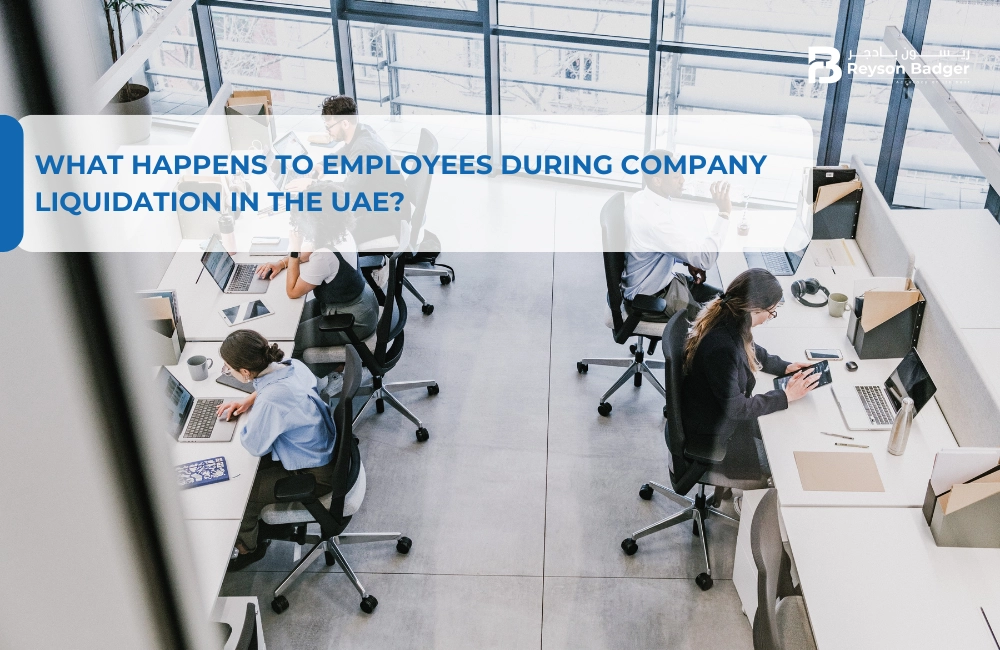


What happens to employees during company liquidation in the UAE depends on the type of closure, but employment contracts usually end once liquidation starts. If employers miss notice, wage settlement, or visa cancellation steps, employees may face delays and unpaid dues. These duties sit under UAE Labour Law (Decree-Law No. 33) and the liquidation rules that govern business closure. Employees, employers, and liquidators must treat the process carefully to protect rights and avoid disputes.
This guide sets out the main employee entitlements, claim priorities, and legal duties that apply during company closure.
What Happens to Employees When a Company is Liquidated?
When a company is liquidated, employment usually ends because the business no longer carries on normal operations. The outcome depends on whether the closure is voluntary or ordered by a court.
In both cases, staff contracts do not continue as usual once the liquidation process starts. We often see this stage linked to Company Liquidation procedures that affect payroll, visas, and final settlements.
Difference Between Voluntary and Compulsory Liquidation
Voluntary liquidation starts when owners decide to close the business. It usually gives more time to plan employee exits, final payroll, and document handover.
Compulsory liquidation is different because a court orders the winding-up, so employee termination can happen faster and with less warning. The timing matters because it affects notice, cash flow, and how fast staff can claim unpaid amounts.
Voluntary Liquidation and Employee Impact
Voluntary closure gives management time to prepare staff communications and settle dues in an orderly way. It also reduces confusion about final payroll and handover dates.
- Employees usually receive advance notice before termination.
- Final dues can be planned and paid in stages.
- Redundancy terms may be discussed before closure.
Compulsory Liquidation and Employee Impact
Court-ordered closure can end employment with very short notice. Staff often need to file claims quickly for unpaid salary and other entitlements.
Timing of Employment Termination
Termination timing depends on the liquidation route and the court or liquidation notice. Some employees may work a short notice period, while others stop immediately.
- Immediate termination can apply in court-ordered cases.
- Voluntary cases often allow a 30 to 90 day notice period.
- Employment may continue only for wind-down tasks in some cases.
| Aspect | Voluntary Liquidation | Compulsory Liquidation |
| Initiating Party | Shareholders or owners | Court order |
| Employment Termination Timing | After notice period | Immediate or very short notice |
| Employee Dues Settlement Planning | Planned and scheduled | Urgent, depends on asset realisation |
Role of the Liquidator Regarding Employees
The liquidator manages the closure process and acts as the main point of contact for employee matters. This includes notice, claim collection, and checking whether the company has enough assets to pay what it owes.
The liquidator also works with labour and immigration authorities when visas and permits must be closed. Where needed, the liquidator may keep some staff for short-term wind-down work.
Employee Notification and Communication
Employees should receive clear written notice once liquidation begins. They also need simple guidance on deadlines, documents, and claim steps.
- Written notice should confirm the liquidation start date.
- Termination timing should be stated clearly.
- Claim filing steps should be shared without delay.
Claims Administration
The liquidator reviews claims for wages, leave, and other unpaid amounts. Payment depends on available assets and the claim ranking under insolvency rules.
Temporary Re-employment During Liquidation
Some staff may stay on briefly to help with closure, stock control, or asset transfer. Their pay is usually treated as part of liquidation costs.
- Only key staff are usually retained.
- Their wages may rank as liquidation expenses.
- Their work can help complete sale or handover tasks.
Coordination with Labour and Immigration Authorities
Visa cancellation must happen after dues are settled and the closure process is ready. The liquidator coordinates with MOHRE and immigration bodies to complete the final steps.
Employee Rights During Company Liquidation
Employees have clear financial rights when a company closes. These rights usually cover unpaid salary, end-of-service benefits, unused leave, and notice pay where relevant.
In many cases, employee claims also receive priority over ordinary unsecured creditors. That priority can make a major difference when assets are limited.
Outstanding Salaries
Employees should receive all unpaid wages up to the last working date. This can include overtime, commission, and other earned amounts.
- Unpaid salary balances must be reviewed.
- Overtime and commission may form part of the claim.
- Payroll deductions must be checked for accuracy.
End-of-Service Benefits
End-of-service gratuity must be calculated under the labour rules and paid if funds are available. Contractual benefits above the legal minimum must also be reviewed.
Accrued Leave and Other Contractual Dues
Unused annual leave is usually cashed out at termination. Other agreed benefits, such as repatriation costs, may also apply.
- Annual leave must be valued and paid.
- Other leave balances should be checked carefully.
- Repatriation costs may apply in some cases.
Notice Period Entitlement
If notice applies, the employee should work the period or receive payment in lieu. Court-ordered liquidation can change this position if immediate termination is required.
Priority of Employee Claims
Employee claims often rank as preferential claims in insolvency. This improves the chance of recovery before many other creditors are paid.
- Recent unpaid wages may receive priority.
- Holiday pay can rank ahead of unsecured claims.
- Gratuity and statutory dues may also be protected.
| Entitlement | Description | Priority Status |
| Outstanding Salary | Unpaid wages and commission due at liquidation date | Preferential Creditor |
| End-of-Service Gratuity | Statutory severance pay as per UAE Labour Law | Preferential Creditor |
| Accrued Leave | Payment for untaken annual and other leave | Preferential Creditor |
| Notice Period Pay | Payment in lieu or required notice period work | May be unsecured beyond statutory caps |
How Employees Can Protect Their Interests?
Employees can improve their chances of recovery by keeping records and acting fast. The key is to support every claim with documents that show salary, leave, and contract terms.
Clear records also reduce disputes during the review stage. If there is a delay, professional advice can help protect the claim position.
Keep Employment Documents Safe
Employees should keep copies of all records that support their claim. These papers help confirm salary, leave, and service history.
- Employment contract and amendments
- Payroll and wage slips
- Leave and attendance records
Submit Claims Promptly
Claims should be filed as soon as the liquidator gives instructions. Delay can reduce the chance of recovery or slow payment.
Maintain Communication with the Liquidator
Employees should stay in touch so they receive updates on the process. Updated contact details help avoid missed notices.
- Provide up-to-date contact details
- Attend information meetings if held
- Confirm claim status regularly
Seek Legal or Professional Advice
A qualified adviser can explain rights, ranking, and next steps. This is especially useful when salary or gratuity is disputed.
Employer Responsibilities During Liquidation
Employers must handle liquidation with care because employee claims and visa matters remain active until the end. They must issue notices, settle dues, and keep records that support the closure file.
They also need to work with labour and immigration bodies so the business can close cleanly. Delays can create penalties, disputes, and blocked visa cancellations.
Notify Employees About Liquidation
Employees should receive formal written notice before contracts end. The notice should explain the closure date and next steps.
Settle Employee Dues Promptly
All final dues should be calculated and paid on time. Under the regulations, settlement is expected within 14 calendar days of contract termination.
- Calculate all financial entitlements accurately.
- Make full payments within legal deadlines.
- Avoid penalties for late settlement.
Maintain Legal Compliance
Employers must follow UAE Labour Law and close employee records properly. They also need to keep evidence of settlement in case of a later dispute.
Coordinate Visa Cancellations
Visa cancellation comes after dues are cleared and the closure steps are ready. Employers should work with MOHRE and the immigration authorities to finish this stage.
- Submit cancellation requests on time.
- Ensure no unpaid obligations remain.
- Liaise with the relevant government bodies.
Conclusion
Employee treatment during company liquidation depends on clear notice, correct settlement, and proper claim handling. When employers and liquidators follow the rules, staff can recover wages, gratuity, and leave balances with less delay.
Businesses that close without a proper process create avoidable disputes and compliance risk. Careful planning supports a cleaner exit for all parties, and Reyson Badger remains ready to support employers and stakeholders through compliant closure, employee settlement, and final documentation via Reyson Badger.
Frequently Asked Questions
1. What typically happens to employee contracts when a company in the UAE is liquidated?
Employment contracts usually end when liquidation starts, either immediately or after notice, depending on the case.
2. Do employees in the UAE have priority over other creditors for unpaid wages and end-of-service benefits during liquidation or bankruptcy?
Yes. Employee claims often rank as preferential claims before many unsecured creditors.
3. Which employee entitlements must UAE employers settle when a business is closed or liquidated?
Employers should settle salary, gratuity, accrued leave, notice pay, and other contractual dues.
4. Is a notice period always observed when employment ends due to compulsory liquidation or court-ordered winding-up in the UAE?
No. Court-ordered liquidation can lead to immediate termination with little or no notice.
5. How are accrued annual leave and other contractual dues treated for employees when a UAE company closes?
Unused annual leave is usually encashed, and valid contractual dues should be reviewed and paid.
6. What is the role of the liquidator with respect to employee communication and payment of entitlements?
The liquidator notifies employees, receives claims, and coordinates payment from available assets.
7. How quickly must employee dues be paid after contract termination in UAE company closure processes?
The usual target is within 14 calendar days, subject to the closure process and available funds.
8. How do voluntary and compulsory liquidation differ in terms of timing and management of employee redundancies?
Voluntary liquidation allows planned exits, while compulsory liquidation is often faster and more abrupt.
9. What steps should employees take to document and submit their claims if their employer in the UAE is liquidated?
They should keep records, follow the liquidator’s instructions, and file claims without delay.
10. How do UAE immigration and labour authorities (such as MOHRE and GDRFA) feature in the process of settling employee rights during liquidation?
They help with labour compliance and visa cancellation after dues are settled.