
E-invoicing Services in Sharjah
The UAE is moving towards mandatory electronic invoicing, making it important for businesses in Sharjah to prepare their accounting and invoicing systems. Whether you operate a small business, manufacturing company, trading firm or professional service organisation, understanding the new requirements can help you avoid last-minute changes and compliance issues.
At Reyson Badger, we provide e-invoicing consultancy in Sharjah to help businesses understand the requirements, assess their existing systems and prepare for implementation. From readiness assessments to ASP onboarding and system integration, we guide you through each stage of the process.
What Is E-Invoicing in Sharjah?
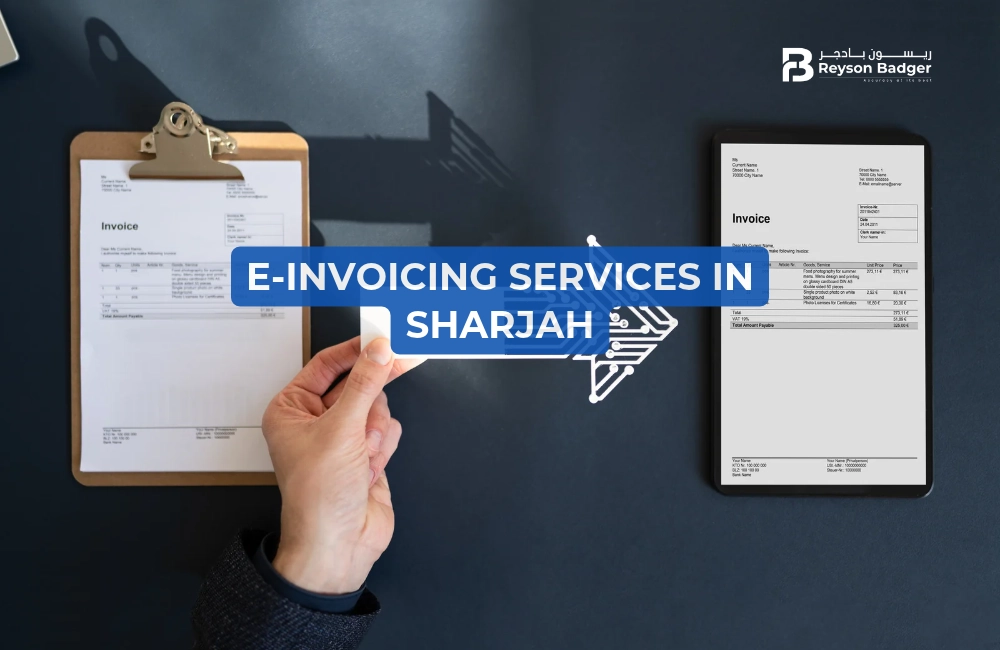
E-invoicing, or electronic invoicing, is the process of creating, sending and receiving invoices in a structured digital format. Unlike a traditional PDF invoice or paper document, an e-invoice contains organised data that can be automatically processed by accounting systems and exchanged through approved service providers.
Traditional Invoicing vs Structured E-Invoicing
| Traditional Invoicing | Structured E-Invoicing |
|---|---|
| Usually created as paper documents, PDFs or Word files | Created in a structured electronic format |
| Often requires manual data entry | Allows automated data processing |
| Information may need to be entered again into accounting systems | Data can be exchanged between connected systems |
| Validation may depend on manual checks | Supports automated data validation |
| Not sufficient on its own to meet UAE e-invoicing requirements | Designed to meet the UAE's structured e-invoicing requirements |
The UAE uses a Peppol-based system to support the secure exchange of structured electronic invoices. Under this model, the supplier sends invoice data through its Accredited Service Provider (ASP), which communicates with the buyer's ASP before the information reaches the relevant parties and the Federal Tax Authority (FTA).
This approach helps businesses exchange invoice information in a standardised format rather than relying only on emails, PDFs or manual document handling.
UAE E-Invoicing Requirements for Businesses in Sharjah
Businesses in Sharjah must follow the UAE's federal e-invoicing framework. The requirements are not limited to businesses operating in Dubai or Abu Dhabi. Mainland and Free Zone businesses in Sharjah are generally subject to the same rules, depending on their business activities and applicable exclusions.
UAE E-Invoicing Implementation Phases
The UAE is introducing mandatory e-invoicing in three phases. Businesses must appoint an Accredited Service Provider before their respective implementation deadlines and ensure that their systems are ready for the mandatory go-live date.
| Business Category | ASP Appointment Deadline | Mandatory Go-Live Date |
|---|---|---|
| Businesses with annual revenue of AED 50 million or more | 30 October 2026 | 1 January 2027 |
| Businesses with annual revenue below AED 50 million | 31 March 2027 | 1 July 2027 |
| Government entities | 31 March 2027 | 1 October 2027 |
The voluntary implementation phase began on 1 July 2026. Businesses can use this period to test their systems and prepare for mandatory implementation.
Which Businesses Are Covered?
The UAE e-invoicing system applies to businesses carrying out in-scope business transactions in the country, subject to the specified exclusions. This includes businesses that are not registered for VAT but conduct transactions covered by the system.
The framework covers transactions such as:
- Business-to-Business (B2B) transactions
- Business-to-Government (B2G) transactions
- Government-to-Business (G2B) transactions
- Government-to-Government (G2G) transactions
Business-to-Consumer (B2C) transactions are generally outside the initial mandatory e-invoicing scope. However, a business that mainly serves individual customers may still have obligations for its in-scope business purchases or other covered transactions.
Role of Accredited Service Providers (ASPs)
An Accredited Service Provider is an approved service provider that helps businesses create, validate, exchange and report structured electronic invoices through the UAE e-invoicing system.
Businesses covered by the requirements must appoint an ASP to manage their e-invoice exchange. Choosing a suitable provider is important because the ASP must work with the company's accounting or ERP system and support the required invoice data standards.
Invoice Formats and Compliance Requirements
The UAE e-invoicing system uses structured XML-based invoice data in line with the PINT-AE specifications. A PDF, scanned invoice, Word document or ordinary email attachment does not qualify as a structured e-invoice by itself.
Businesses must ensure that their invoice information is complete, accurate and correctly formatted. This includes relevant supplier and buyer details, tax information, invoice values and other mandatory data fields. Their systems must also support invoice validation, exchange and applicable reporting requirements.
Our E-Invoicing Consultancy Services in Sharjah
Every business has different invoicing processes, accounting systems and operational needs. Our e-invoicing consultancy services in Sharjah are designed to help businesses understand their requirements and prepare their systems for the UAE framework.
E-Invoicing Readiness Assessment
Before implementing e-invoicing, businesses need to understand whether their current systems and processes can support the new requirements.
We review your existing invoicing procedures, accounting software and ERP systems to identify areas that may need improvement. Our assessment also considers how your business creates, sends, receives and stores invoices.
This helps identify preparation gaps and establish a clear plan for implementation.
E-Invoicing Implementation Support
Implementing e-invoicing involves more than selecting software. Businesses must prepare their internal processes, configure systems and ensure that invoice information can be exchanged correctly.
We support businesses with implementation planning, system configuration requirements and coordination with relevant technology providers. Our guidance helps make the transition more organised and reduces the risk of delays.
ASP Selection and Onboarding
Choosing the right Accredited Service Provider is an important part of e-invoicing implementation. Different providers may offer different integration options, service features and pricing structures.
We help businesses understand ASP requirements, evaluate suitable providers and prepare for onboarding. We also guide them through the information and system requirements needed to establish the connection.
ERP and Accounting Software Integration
Your existing accounting or ERP system may need adjustments to support structured e-invoicing. This depends on the software, its current capabilities and the way your business manages invoices.
We assess your existing systems and help plan the required integration with the selected ASP. This includes reviewing data exchange requirements, system compatibility and the changes needed to support electronic invoice processing.
Invoice Data Mapping and Validation
Accurate invoice information is essential for successful e-invoicing. Missing or incorrectly formatted data can lead to validation errors and rejected invoices.
We help review mandatory invoice fields and map relevant information from your accounting or ERP system to the required PINT-AE format. This preparation supports accurate invoice creation and helps identify data issues before submission.
E-Invoicing Compliance Services
Businesses must understand their responsibilities under the UAE e-invoicing framework and ensure that their systems follow the applicable requirements.
Our e-invoicing compliance services include guidance on invoice data requirements, reporting processes and system preparation. We also help businesses understand the importance of maintaining accurate invoice records and addressing validation or exchange issues.
How Our E-Invoicing Process Works
A structured implementation process helps businesses move from their existing invoicing methods to the UAE e-invoicing system with fewer disruptions.
Step 1: Initial Business and System Assessment
We begin by understanding your business activities, transaction types, invoicing volume and existing accounting systems. This helps us identify your requirements and the scope of work.
Step 2: E-Invoicing Readiness and Gap Analysis
We review your invoicing processes, software capabilities and invoice data. Any gaps that could affect compliance or system integration are identified and included in the preparation plan.
Step 3: ASP Selection and Onboarding Support
We help you evaluate suitable Accredited Service Providers and understand their services. Once you select a provider, we support the onboarding process and coordinate the required information.
Step 4: ERP and Accounting Software Integration
The next step is to prepare your accounting or ERP system for structured invoice exchange. We help coordinate the integration requirements with your selected ASP or technology provider.
Step 5: Invoice Testing and Validation
Before going live, invoice data and exchange processes should be tested. We help identify incorrect information, formatting issues and validation errors so they can be resolved.
Step 6: Go-Live Preparation and Ongoing Support
Once the necessary checks are completed, your business can prepare to move to the e-invoicing system. We provide guidance on the final readiness requirements and help address compliance or process-related concerns as they arise.
The time required for implementation depends on business size, the number of systems involved, the selected ASP and the level of integration required. A realistic timeline can be confirmed after the initial assessment.
Industries We Support with E-Invoicing in Sharjah
E-invoicing requirements can affect businesses across different industries. Our consultancy approach considers the invoicing processes, transaction types and accounting needs of each business.
- Trading and Distribution Companies: These businesses often manage a high volume of supplier and customer invoices. E-invoicing preparation helps organise invoice data and improve exchange between business partners.
- Manufacturing and Industrial Businesses: Manufacturers may handle invoices for raw materials, production supplies, finished goods and other business transactions. Their systems need to support accurate invoice information across these activities.
- Construction and Contracting Companies: Construction businesses deal with contractors, suppliers, subcontractors and project-related transactions. Proper invoice data management can help improve coordination and record keeping.
- Professional Service Providers: Consultancy firms, legal practices, marketing agencies and other service providers can prepare their invoicing processes for structured electronic exchange.
- Retail and Wholesale Businesses: These businesses may have different invoicing requirements depending on whether they deal with individual consumers or other businesses. Their in-scope B2B transactions must be considered when preparing for e-invoicing.
- Logistics and Transportation Companies: Logistics providers often manage invoices for freight, transportation, warehousing and related services. Their systems should support accurate data exchange with business customers.
- Small and Medium-Sized Enterprises (SMEs): Smaller businesses may have limited accounting resources or rely on basic invoicing software. Early preparation can help them understand the requirements and choose suitable solutions.
Common E-Invoicing Challenges Faced by Sharjah Businesses
Moving to structured electronic invoicing can create challenges, particularly for businesses that still depend on manual processes or older accounting systems.
| Common Challenge | How Businesses Can Address It |
|---|---|
| Incompatible accounting or ERP systems | Review existing software and identify required upgrades or integration options |
| Incorrect or incomplete invoice data | Check customer, supplier, tax and invoice information before implementation |
| Difficulty understanding UAE requirements | Seek professional guidance on applicable rules and deadlines |
| Challenges in selecting an ASP | Compare accredited providers based on integration, support and service requirements |
| Delays in system integration | Start planning early and coordinate with the ASP and technology provider |
| Invoice validation and reporting issues | Test invoice data and exchange processes before going live |
Identifying these issues early can make implementation easier and reduce the risk of problems after the system becomes mandatory.
Benefits of Professional E-Invoicing Consultancy in Sharjah
Professional e-invoicing consultancy helps businesses understand their responsibilities and prepare their systems in an organised way. Instead of making changes at the last minute, businesses can follow a clear implementation plan.
Key benefits include:
- Improved invoice accuracy: Structured data and validation checks help identify missing or incorrect invoice information.
- Better regulatory preparation: Businesses can understand the UAE requirements and prepare for their applicable deadlines.
- Streamlined invoicing processes: Automated data exchange can reduce manual work and repeated data entry.
- Better financial records: Digital invoice information makes it easier to organise and retrieve transaction records.
- Improved system integration: Connecting accounting software with an ASP supports smoother invoice exchange.
- Reduced implementation difficulties: Early assessments and testing help identify potential problems before go-live.
Why Choose Reyson Badger for E-Invoicing Services in Sharjah?
Preparing for UAE e-invoicing requires an understanding of both regulatory requirements and business operations. Reyson Badger helps businesses approach this transition with a clear plan based on their existing systems and invoicing needs.
Our support covers readiness assessments, implementation planning, ASP selection, system integration coordinationand invoice data preparation. We focus on helping businesses understand what changes are required and how to prepare for them.
Whether you are a small business reviewing your accounting software or a larger organisation managing multiple invoicing processes, we help you identify the steps needed to prepare for e-invoicing. With a business-focused approach, we aim to make the implementation process easier to understand and manage.
Get Professional E-Invoicing Consultancy in Sharjah
Preparing for mandatory e-invoicing is an important step for businesses operating in Sharjah. Reviewing your existing systems, understanding the applicable deadlines and planning the required changes early can help make the transition smoother.
Reyson Badger supports businesses with e-invoicing readiness assessments, implementation guidance, ASP onboarding and system integration coordination. Contact Reyson Badger today to discuss your business requirements and prepare for UAE e-invoicing compliance.
Frequently Asked Questions About E-Invoicing in Sharjah
1. What are e-invoicing services in Sharjah?
E-invoicing services help businesses prepare to create, send, receive and manage structured electronic invoices under the UAE framework. These services may include readiness assessments, ASP onboarding, system integration and compliance guidance.
2. Is e-invoicing mandatory for businesses in Sharjah?
Yes. Businesses in Sharjah that fall within the UAE e-invoicing framework must follow the applicable implementation requirements. Their deadlines depend on annual revenue and whether they are a government entity.
3. Which businesses need to implement e-invoicing in the UAE?
The framework generally covers persons conducting business in the UAE for in-scope business transactions, subject to specified exclusions. It is not limited to VAT-registered businesses or mainland companies.
4. What is the role of an Accredited Service Provider (ASP)?
An ASP helps businesses create, validate, exchange and report structured electronic invoices through the UAE e-invoicing system. Businesses within scope must appoint an accredited provider according to their applicable deadline.
Latest Blogs
How to Choose the Right E-Invoicing Service Provider in the UAE: Key Factors to Consider
Choosing an e-invoicing provider involves more than comparing software features and prices.
READ MORE →
What Happens If a Company Fails to Conduct an Annual Audit in Dubai?
Learn the consequences of missing a mandatory annual audit in Dubai and how businesses can avoid audit-related compliance issues.
READ MORE →
How to Determine the Value of a Business in Dubai: Key Valuation Factors
Business valuation services provide an organised way to examine these factors and support important business decisions.
READ MORE →
Accounting Software for Corporate Tax Compliance
Learn how accounting software supports UAE Corporate Tax compliance through accurate bookkeeping, financial reporting, transaction tracking, and record management.
READ MORE →
E-Invoicing in UAE: What Businesses Should Prepare Before Implementation
E-invoicing in UAE is not simply a change from paper invoices to digital invoices. It changes how invoice information is created, structured, validated, exchanged, reported, and stored
READ MORE →
Student Visa Rejection Reasons in UAE and How to Avoid Them
Understand visa rejection reasons and avoid common application mistakes
READ MORE →
How Bank Statements Help Ensure Accurate Corporate Tax Filing in the UAE?
Learn how bank statements help UAE businesses verify transactions, reconcile financial records, and improve Corporate Tax filing accuracy.
READ MORE →
How the Right UAE E-Invoicing Provider Cuts Invoice Errors?
Choosing the right E-Invoicing Services in UAE can be equally important because the provider needs to work with the business's accounting systems, data, processes, and compliance requirements.
READ MORE →
What is an Independent Audit and Why is Independence Important?
Learn what an independent audit involves, why auditor independence matters, and how it supports reliable financial reporting and business transparency.
READ MORE →
How Bookkeeping Helps UAE Businesses Maintain Accurate Financial Records?
Bookkeeping focuses mainly on recording and maintaining financial information, while financial management uses that information to support budgeting.
READ MORE →