Company Formation in Saudi Arabia vs UAE: Which is Better for Your Business?
03-Mar-2026
Company Formation in Jeddah Made Simple
Launch your business in Jeddah with expert guidance on licensing, registration, compliance, and 100% foreign ownership opportunities.
Company Formation in Jeddah
Company Formation in Jeddah has become increasingly attractive for both local entrepreneurs and international investors seeking access to one of the largest economies in the Middle East. Located on the Red Sea coast, Jeddah serves as Saudi Arabia's commercial gateway, connecting businesses to regional and global markets through its strategic trade routes and world-class logistics infrastructure.
Driven by the ambitious reforms of Vision 2030, Saudi Arabia has significantly improved its investment environment by introducing investor-friendly regulations, expanding foreign ownership opportunities, streamlining licensing procedures, and enhancing digital government services.
Today, foreign investors can establish businesses in many sectors with 100% ownership, making company formation in Jeddah an attractive option for companies seeking growth opportunities in the Gulf Cooperation Council (GCC) region.
Whether you are planning a startup, opening a branch office, launching a manufacturing facility, or establishing a regional headquarters, understanding the company formation process is essential for a successful business setup in Jeddah.
Why Choose Jeddah for Company Formation?
Jeddah is often regarded as Saudi Arabia's commercial capital due to its strategic location, strong infrastructure, and international business connectivity.
Strategic Gateway to International Trade
Home to the renowned Jeddah Islamic Port, the city handles a significant portion of Saudi Arabia's imports and exports. Businesses operating in Jeddah enjoy direct access to the Red Sea Trade Corridor and global shipping networks.
Access to GCC Markets
Companies established in Jeddah can efficiently serve customers across the GCC, including:
- United Arab Emirates
- Bahrain
- Kuwait
- Qatar
- Oman
Business-Friendly Environment
Saudi Arabia continues to simplify company registration through government digitization initiatives and investment reforms spearheaded by the Ministry of Investment of Saudi Arabia.
World-Class Infrastructure
Jeddah offers:
- Modern transport networks
- International airports
- Industrial zones
- Advanced telecommunications
- Commercial office spaces
- Logistics and warehousing facilities
Vision 2030 Incentives
Vision 2030 encourages foreign direct investment through:
- Regulatory reforms
- Economic diversification
- Privatization initiatives
- Innovation-focused programs
- Industrial development incentives
Understanding Company Formation in Jeddah
Company formation refers to the legal process of establishing a business entity in Saudi Arabia. The process typically involves:
- Business activity selection
- Company registration
- Investment licensing
- Government approvals
- Tax registration
- Corporate banking setup
- Employment registrations
- Ongoing compliance obligations
The exact requirements depend on the company's ownership structure, business activities, and legal form.
Legal Business Structures Available in Jeddah
Limited Liability Company (LLC)
An LLC is the most popular business structure for investors in Saudi Arabia.
Benefits
- Separate legal identity
- Limited shareholder liability
- Flexible ownership structure
- Suitable for SMEs and large businesses
- Eligible for foreign ownership in many sectors
Suitable For
- Trading businesses
- Consulting firms
- Technology companies
- Manufacturing operations
- Service providers
Joint Stock Company (JSC)
A Joint Stock Company is typically used by larger enterprises seeking substantial investment.
Benefits
- Ability to raise capital
- Shareholder expansion opportunities
- Strong corporate governance framework
Suitable For
- Large-scale industrial projects
- Financial institutions
- Publicly listed companies
Branch of a Foreign Company
Foreign corporations can establish a branch office to expand into Saudi Arabia.
Benefits
- Full control by parent company
- Direct market access
- Brand continuity
Requirements
- Parent company incorporation documents
- Board resolutions
- Foreign investment approvals
Regional Headquarters (RHQ)
Saudi Arabia actively encourages multinational companies to establish Regional Headquarters.
Benefits
- Government incentives
- Strategic regional management
- Access to public sector opportunities
Suitable For
- Multinational corporations
- International groups managing GCC operations
Sole Establishment
A Sole Establishment is owned by a single individual.
Benefits
- Simplified management
- Direct ownership
Limitations
- Limited scalability
- Greater personal responsibility
Joint Venture (JV)
Joint ventures combine the expertise of multiple parties.
Benefits
- Shared investment risk
- Local market knowledge
- Strategic partnerships
Step-by-Step Process for Company Formation in Jeddah
Step 1 - Business Planning and Pre-Incorporation
Before registration, investors should:
- Define business activities
- Conduct market research
- Identify licensing requirements
- Develop financial projections
- Evaluate foreign ownership eligibility
Business activities must align with classifications approved by the Ministry of Investment.
Step 2 - Reserve Trade Name
The company name must comply with Saudi naming regulations.
Key considerations include:
- Uniqueness
- Regulatory compliance
- Activity relevance
- Arabic language requirements where applicable
Trade name reservations are generally completed through government portals.
Step 3 - Prepare Incorporation Documents
Common documents include:
- Passport copies
- Shareholder details
- Articles of Association
- Board resolutions
- Power of Attorney
- Parent company documents (for branches)
Proper document legalization and attestation may be required for foreign entities.
Step 4 - Obtain MISA Investment License
Foreign investors typically require approval from the Ministry of Investment.
Key Requirements
- Business activity approval
- Shareholder information
- Corporate documents
- Financial records
The MISA license serves as the foundation for foreign company formation in Saudi Arabia.
Step 5 - Register with Ministry of Commerce
The next step is obtaining the company's Commercial Registration (CR).
The Ministry of Commerce oversees company incorporation and issues the Commercial Registration certificate.
The CR officially establishes the company's legal existence.
Step 6 - Complete Government Registrations
Following incorporation, businesses must register with several government authorities.
ZATCA Registration
Register with the Zakat, Tax and Customs Authority for:
- Corporate taxation
- VAT obligations
- Tax compliance
HRSD Registration
The Ministry of Human Resources and Social Development oversees:
- Labour compliance
- Employment regulations
- Saudization requirements
GOSI Registration
Registration with the General Organization for Social Insurance is mandatory for employee social insurance contributions.
National Address Registration
Businesses must obtain a registered National Address through Saudi Post systems.
Step 7 - Open Corporate Bank Account
Corporate banking setup generally requires:
- Commercial Registration
- MISA license
- Company constitutional documents
- Shareholder identification
- Compliance and KYC verification
Banks conduct extensive due diligence before account activation.
Step 8 - Secure Office Space
Most business activities require physical office premises.
Requirements often include:
- Lease agreement
- Municipality approvals
- National Address registration
Virtual office solutions may not be accepted for all activities.
Step 9 - Obtain Employee Visas
Once operational, companies may sponsor employees through:
- General Manager Visa
- Investor Visa
- Employment Visas
Businesses must also comply with Saudization policies under the Nitaqat framework.
Documents Required for Company Formation in Jeddah
Document | Purpose |
Passport Copy | Shareholder identification |
Incorporation Certificate | Parent company verification |
Board Resolution | Business authorization |
Power of Attorney | Representative appointment |
Articles of Association | Company constitution |
Lease Agreement | Office proof |
Additional documents may be required depending on the selected legal structure and activity.
Cost of Company Formation in Jeddah
The cost of company formation varies significantly depending on the business model and licensing requirements.
Major cost components include:
- Government fees
- MISA licensing fees
- Commercial Registration fees
- Municipality fees
- Office rental costs
- Visa expenses
- Banking-related charges
- Professional consultancy fees
- Legal documentation expenses
Businesses operating in regulated sectors may incur additional licensing costs.
Timeline for Company Registration in Jeddah
Stage | Estimated Duration |
Planning | 1-2 Weeks |
Licensing | 1-3 Weeks |
Registration | 1 Week |
Government Setup | 1-2 Weeks |
Banking | 1-4 Weeks |
Most straightforward company formations can be completed within one to two months, depending on documentation quality and regulatory approvals.
Key Government Authorities Involved in Company Formation
Ministry of Investment (MISA)
Responsible for:
- Foreign investment licensing
- Investment approvals
- Foreign ownership applications
Ministry of Commerce (MOC)
Responsible for:
- Company registration
- Commercial Registration issuance
- Corporate governance administration
Zakat, Tax and Customs Authority (ZATCA)
Responsible for:
- Corporate taxation
- VAT administration
- E-invoicing compliance
Human Resources and Social Development (HRSD)
Responsible for:
- Employment regulations
- Labour compliance
- Saudization implementation
General Organization for Social Insurance (GOSI)
Responsible for:
- Employee insurance registration
- Social security compliance
Taxation System for Companies in Jeddah
Corporate Income Tax
Saudi Arabia imposes a 20% corporate income tax on the net adjusted profits attributable to non-Saudi and non-GCC ownership. Saudi and GCC national investors are not subject to corporate income tax; instead, they are liable for Zakat, calculated at 2.5% of the Zakat base. In mixed-ownership entities, each portion is assessed separately, the non-Saudi share under corporate tax, and the Saudi/GCC share under Zakat.
Note for Large Multinational Groups: Saudi Arabia has committed to the OECD Pillar Two framework, which introduces a global minimum effective tax rate of 15% for multinational groups with annual revenue exceeding EUR 750 million. Companies of this size should factor this into their tax planning when structuring their Saudi entity.
Applicable rates depend on ownership structures and business activities.
Value Added Tax (VAT)
VAT is currently applied at 15%.
Businesses meeting registration thresholds must register and file periodic VAT returns.
Withholding Tax
Withholding tax may apply to payments made to non-resident entities, including:
- Royalties
- Technical services
- Management fees
- Certain contractual payments
Zakat Obligations
Saudi and GCC-owned entities are subject to Zakat at a rate of 2.5% of the Zakat base, which is calculated based on net worth including equity, retained earnings, and certain reserves. In mixed-ownership companies, only the Saudi/GCC-owned portion is assessed for Zakat, while the foreign-owned portion remains subject to the 20% corporate income tax.
Regulatory and Compliance Requirements After Incorporation
Annual Financial Statements
Companies must maintain accurate accounting records and financial statements.
Audited Financial Statements
Certain entities are required to undergo statutory audits.
Corporate Tax Compliance
Businesses must file required tax returns and maintain supporting documentation.
VAT Filing
VAT-registered entities must submit periodic returns and maintain VAT records.
Electronic Invoicing (Fatoora)
Saudi Arabia mandates electronic invoicing through the Fatoora framework.
Wage Protection System (WPS)
Employee salary payments must comply with Wage Protection System requirements.
Saudization (Nitaqat) Requirements
Businesses must maintain appropriate Saudi workforce ratios based on sector classifications.
Benefits of Company Formation in Jeddah
100% Foreign Ownership Opportunities
Many sectors now permit complete foreign ownership.
Strategic Access to GCC Markets
Jeddah provides access to regional markets and international trade routes.
Vision 2030 Incentives
Businesses benefit from government-driven economic reforms.
No Personal Income Tax
Saudi Arabia does not impose personal income tax on individuals.
World-Class Infrastructure
The city offers advanced logistics, transportation, and commercial facilities.
Access to Global Trade Routes
The Red Sea location supports international trade operations.
Strong Banking Ecosystem
Businesses can access sophisticated banking and financial services.
Best Industries for Investment in Jeddah
Technology and Artificial Intelligence
Saudi Arabia continues to invest heavily in digital transformation initiatives.
Healthcare and Medical Services
Growing population demand supports healthcare expansion.
Education and Training
Education modernization creates opportunities for private providers.
Manufacturing
Industrial diversification remains a major Vision 2030 objective.
Logistics and Supply Chain
Jeddah's port infrastructure creates substantial logistics opportunities.
Tourism and Hospitality
Religious and leisure tourism continue to drive growth.
Renewable Energy
Saudi Arabia is investing significantly in sustainable energy projects.
Retail and E-Commerce
Consumer spending and digital commerce continue to expand.
Common Challenges During Company Formation in Jeddah
Regulatory Approvals
Complex licensing requirements may delay incorporation.
Solution: Conduct activity reviews before application submission.
Documentation Issues
Incomplete or improperly legalized documents often cause delays.
Solution: Verify document requirements early.
Banking Delays
Corporate account opening can take longer than expected.
Solution: Prepare complete KYC documentation.
Visa Processing
Employment visa approvals may vary based on quotas and compliance status.
Solution: Plan workforce requirements in advance.
Compliance Misunderstandings
Tax, labour, and corporate obligations can be complex.
Solution: Seek professional compliance guidance.
Saudization Obligations
Nitaqat requirements affect hiring strategies.
Solution: Develop workforce plans aligned with Saudization targets.
Why Choose Reyson Badger for Company Formation in Jeddah?
Setting up a company in Jeddah requires navigating multiple regulatory procedures, licensing requirements, and government approvals. Reyson Badger provides comprehensive business setup support to help investors establish their presence in Saudi Arabia efficiently and compliantly.
With experience assisting local and foreign investors, Reyson Badger offers support throughout the company formation journey, including:
- MISA investment license assistance
- Commercial Registration (CR) processing
- Company incorporation documentation
- Government liaison and PRO services
- Corporate bank account coordination
- Tax and VAT registration support
- Accounting and compliance advisory
- Visa and workforce setup assistance
- Ongoing corporate compliance support
Whether you are establishing an LLC, opening a branch office, or launching a regional operation, Reyson Badger helps streamline the company formation process in Jeddah, reducing administrative burdens and helping businesses focus on growth and market entry.
Company Formation in Jeddah vs Other Saudi Cities
Jeddah vs Riyadh
Factor | Jeddah | Riyadh |
Focus | Trade & Logistics | Government & Corporate HQ |
Market Access | International Trade | National Decision-Making |
Port Access | Strong | Limited |
Investor Appeal | Commercial Gateway | Administrative Hub |
Jeddah vs Dammam
Factor | Jeddah | Dammam |
Trade Routes | Red Sea | Arabian Gulf |
Logistics | International Shipping | Industrial Logistics |
Industry Focus | Commerce & Services | Energy & Manufacturing |
Jeddah vs NEOM
Factor | Jeddah | NEOM |
Maturity | Established Market | Emerging Development |
Infrastructure | Fully Developed | Rapidly Expanding |
Business Environment | Proven Commercial Hub | Innovation-Oriented |
Conclusion
Company Formation in Jeddah offers investors access to one of the Middle East's most dynamic commercial environments. Supported by Vision 2030 reforms, foreign ownership opportunities, strong infrastructure, and streamlined government processes, Jeddah remains a leading destination for entrepreneurs, SMEs, and multinational corporations seeking expansion in Saudi Arabia.
By understanding the legal structures, licensing procedures, tax obligations, and compliance requirements discussed in this guide, businesses can establish a strong foundation for long-term success. Whether you are launching an LLC, opening a branch office, or establishing a regional headquarters, careful planning and professional guidance can help ensure a smooth and compliant company formation journey in Jeddah.
Frequently Asked Questions
Is Jeddah a good location for foreign investors?
Yes. Jeddah offers strong infrastructure, international trade access, and investment-friendly regulations.
Can foreigners own 100% of a company in Jeddah?
Yes, many sectors allow full foreign ownership subject to licensing requirements.
How long does company formation take in Jeddah?
Typically between four and eight weeks depending on approvals and documentation.
What is the minimum capital requirement for company registration?
Requirements vary by activity, legal structure, and licensing category.
Do I need a local Saudi sponsor?
Not necessarily. Many business activities permit full foreign ownership.
What licenses are required to start a business in Jeddah?
Common requirements include MISA approval, Commercial Registration, municipality permits, and sector-specific licenses.
Company Formation in Saudi Arabia
Business Setup in Saudi Arabia
- Iqama Services in Saudi Arabia
- Bank Account Opening in Saudi Arabia
- Dedicated GRO Services in Saudi Arabia
- Premium Residency in Saudi Arabia
- ZATCA Registration in Saudi Arabia
- MLSD Registration in Saudi Arabia
- GOSI Registration in Saudi Arabia
- Baladiyah approval in Saudi Arabia
- Company Formation in Dammam
- Company Formation in Riyadh
- Company Formation in Jeddah
- Saudisation Consultancy & Employee Transfer Services in Saudi Arabia
- Commercial Registration in Saudi Arabia
- MISA License in Saudi Arabia
- Company Formation in Jeddah
Company Formation in UAE
- Company Formation in UAE Offshore
- Company Formation in UAE Mainland
- Free Zone Company Formation
- Company Formation in Dubai International Academic City (DIAC)
- Company Formation in Gold and Diamond Park (DGDP)
- Company Formation in Dubai Design District
- Company Formation in Dubai Industrial City (DIC)
- Company Formation in Dubai Healthcare City (DHCC)
- Company Formation in Dubai International Financial Centre (DIFC)
- Company Formation in Dubai Internet City (DIC)
- Company Formation in Dubai Logistics City
- Company Formation In Dubai Media City(DMC)
- Company Formation in Dubai Multi Commodities Center (DMCC)
- Company Formation in Dubai Silicon Oasis Authority (DSOA)
- Company Formation in Dubai Outsource City (DOC)
- Company Formation in Dubai Studio City
- Company Formation in Dubai Techno Park (DTP)
- Company Formation in Dubai South Free Zone
- Company Formation in Dubai Science Park (DSP)
- Company Formation in Jebel Ali Free Zone Authority (JAFZA)
- Company Formation in Rakez Freezone
- Company Formation Services in Jebel Ali Free zone
- Company Formation in Dubai Wholesale City
- Company Formation in Dubai Freezone
- Company Formation in Dubai Production City (DPC)
- Company Formation in Dubai Humanitarian
- Company Formation in Energy and Environmental Park
- Ras Al Khaimah Mainland Company Formation
- Company Formation in Dubai Flower Centre (DFC)
- Umm Al Quwain Mainland Company Formation
- Company Formation in Dubai Auto Zone (DAZ)
- Company Formation in Creative City Free Zone Authority
- Company Formation in Dubai Textile City(DTC)
- Company Formation in Fujairah Mainland
- E-Commerce Company Formation UAE


Request a Quote
We’ll get back to you shortlyLatest Blogs
07
Jul
Voluntary vs Compulsory Company Liquidation: Key Differences
Understand Corporate Tax Voluntary vs Compulsory Company Liquidation in UAE, including the legal process and tax implications.
READ MORE →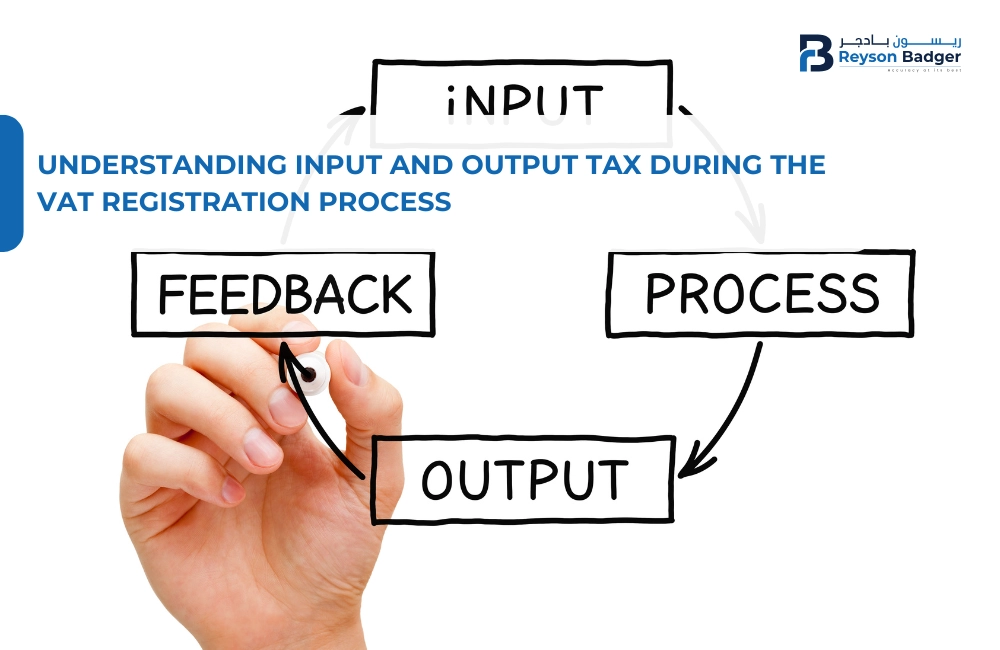
01
Jul
Understanding Input and Output Tax During the VAT Registration Process
A beginner-friendly guide explaining input and output tax, their role in the VAT registration process, and how businesses can manage VAT compliance effectively.
READ MORE →
25
Jun
Corporate Tax Filing Preparation Tips for UAE Businesses
Practical tips to help UAE businesses prepare for corporate tax filing and meet compliance requirements.
READ MORE →
06
Jul
Do All Companies Need an Audit in the UAE? Eligibility Explained
READ MORE →
25
Jun
Choosing the Right Audit Firm in Dubai: 10 Factors Every Business Should Consider
READ MORE →
12
Jun
How UAE Accounting Services Help Businesses Stay 100% FTA Compliant
Discover how expert accounting services in UAE reduce filing errors, prevent FTA penalties, and keep your business audit-ready and compliant.
READ MORE →
11
Jun
Do UAE E-Invoicing Need QR Codes? Explained Simply
The right E-invoicing Services in UAE, businesses can ensure smooth compliance, improve efficiency, and stay ready for the future of digital taxation in the UAE.
READ MORE →
10
Jun
The Importance of Audit Services in UAE for Manufacturing Businesses
READ MORE →
10
Jun
How to Close a Business in Dubai: Complete Guide to Company Liquidation
Learn how to close a business in Dubai with this complete guide to company liquidation. Understand the legal requirements, liquidation process, document preparation, license cancellation procedures, and compliance obligations to ensure a smooth and hassle-free business closure in the UAE.
READ MORE →
16
Jun
Anti-Money Laundering Regulations in UAE: How AML Compliance Services Keep You Protected
AML Compliance Services in the UAE help businesses meet anti-money laundering rules, reduce financial crime risk, and avoid regulatory penalties.
READ MORE →