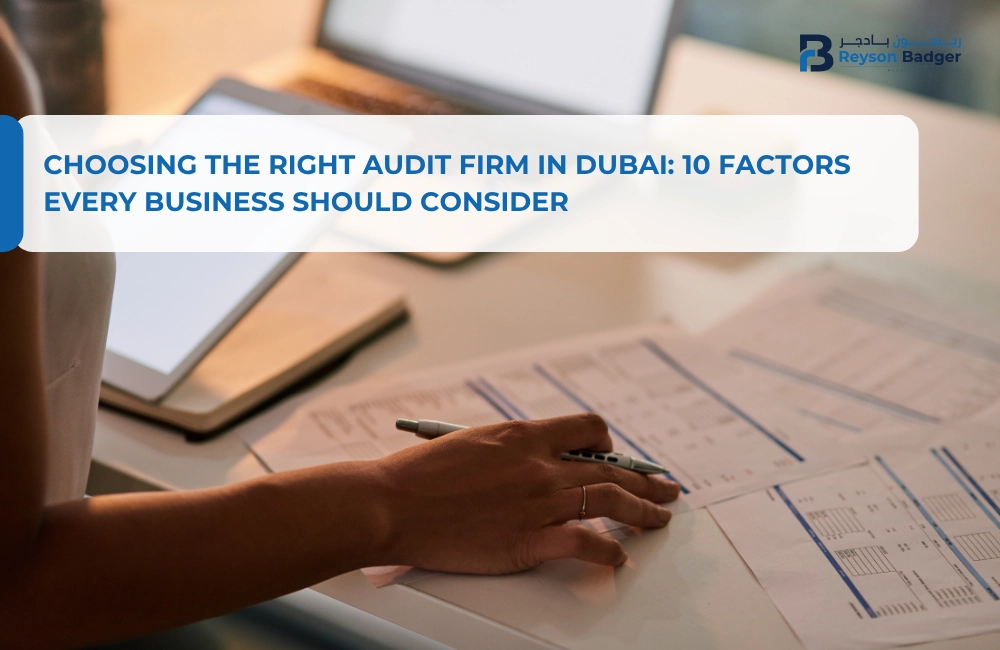


Choosing an audit firm is an important decision for any business operating in Dubai. An audit is not only about checking financial statements. The right auditor can help a business improve financial accuracy, meet regulatory requirements, identify potential risks, and build greater confidence among owners, investors, lenders, and other stakeholders.
With many auditors in Dubai offering audit and accounting services, businesses may find it difficult to decide which one is the right fit. Cost is often considered first, but it should not be the only factor. The firm's experience, regulatory knowledge, audit methodology, communication, service scope, and ability to understand the business are equally important. If you are considering how to choose the right audit firm in Dubai, this guide explains ten important factors to evaluate before making your decision.
Why Choosing the Right Audit Firm Matters
An audit provides an independent review of a company's financial information. The quality of that review depends greatly on the competence, experience, and approach of the audit firm.
A suitable audit firm can help identify inconsistencies, weaknesses in financial controls, and areas that require further attention. It can also make the audit process more organised and easier for the management team.
For businesses operating in the UAE, compliance is another important consideration. Companies may have specific financial reporting, accounting, tax, licensing, and regulatory responsibilities depending on their activities and legal structure.
This makes UAE Audit Compliance an important factor when selecting an auditor. A firm that understands the local regulatory environment can provide more relevant guidance and help businesses prepare appropriate financial information and documentation.
The right audit relationship can also provide value beyond the annual audit. Good auditors can highlight financial trends and control weaknesses that may help management make better business decisions.
10 Factors to Consider When Choosing an Audit Firm in Dubai
1. Verify Licensing and Regulatory Approvals
One of the first things a business should check is whether the audit firm and its professionals have the appropriate approvals and qualifications for the services being provided. Businesses should not assume that every company offering accounting or financial services is authorised to conduct every type of audit.
Working with Approved Auditors in Dubai can provide greater confidence that the firm has the relevant professional standing and is able to undertake the required audit engagement.
Before appointing an auditor, verify the firm's credentials, applicable registrations, professional qualifications, and whether it meets the requirements relevant to your business and audit. This is particularly important when audited financial statements are required for regulatory, banking, licensing, shareholder, or other formal purposes.
2. Look for Industry-Specific Experience
Every industry has different financial processes and risks. A trading company may deal with inventory, imports, exports, and supplier balances. A real estate business may have property-related transactions and revenue recognition considerations. Professional service companies may have different issues involving contracts, receivables, and staff costs.
An auditor who understands your industry can usually identify relevant risks more efficiently and ask more meaningful questions during the audit.
When evaluating an Audit Firm in Dubai, ask whether the firm has experience working with businesses similar to yours.
Industry experience does not necessarily mean the auditor has worked with the exact same company type. Rather, it shows that the audit team may already understand common transactions, risks, controls, and reporting challenges within the sector.
3. Check Their Knowledge of UAE Audit Compliance Requirements
Regulatory knowledge is one of the most important factors when choosing an audit firm.
Your auditor should understand the UAE regulatory and financial reporting environment relevant to your company. They should also be able to explain what information and documentation are required during the audit.
A strong understanding of UAE Audit Compliance can help businesses avoid unnecessary delays and identify compliance issues earlier. Ask the audit firm how it keeps its team updated on changes in regulations, accounting standards, tax requirements, and other relevant developments.
The goal is not simply to complete an audit. It is to work with an audit team that understands the compliance environment in which your business operates.
4. Evaluate Reputation and Track Record
An audit firm handles sensitive financial information, so trust matters.
Before appointing auditors in Dubai, look at their professional reputation and experience in the market. You can review its website, client sectors, testimonials, professional presence, and available references.
However, do not judge an audit firm only by how many clients it claims to have. Look for evidence that its services are relevant to businesses of your size and industry.
A good reputation is supported by professional conduct, clear communication, reliable service, and consistent audit quality.
You can also ask prospective auditors about similar assignments they have handled and the type of businesses they normally serve.
5. Review the Qualifications and Expertise of the Audit Team
The firm's name is important, but the people actually performing the audit are equally important. Ask about the qualifications and experience of the professionals who will work on your engagement. Professional certifications, accounting knowledge, audit experience, and familiarity with applicable standards can all contribute to the quality of the engagement.
It is also useful to understand whether the team receives regular technical training. Accounting and regulatory requirements can change, and auditors need to stay informed.
A technically strong audit team is better positioned to understand complex transactions, identify unusual items, and communicate issues clearly to management.
6. Consider the Range of Audit and Assurance Services
Your business may need more than one type of financial service over time.
Depending on your requirements, you may need external audit, internal audit, risk assessment, financial review, or tax-related compliance support.
Choosing a firm with a suitable range of services can make it easier to access additional professional support as your business develops.
For example, an external audit may provide an independent assessment of financial statements, while internal audit can focus more closely on processes, controls, risks, and operational improvements. Before signing an engagement, understand exactly which services the firm provides and which services are included in the proposed scope.
7. Examine Their Technology and Audit Methodology
Modern businesses generate large amounts of financial data. An audit firm should have appropriate systems and processes to work with that information efficiently. Ask whether the firm uses digital audit tools, secure document-sharing systems, analytical procedures, and other technology that can improve the audit process. Technology can make it easier to organise documents, analyse transactions, identify unusual entries, and communicate requests between the audit team and the client.
However, technology should support professional judgement rather than replace it. A strong audit methodology combines appropriate technology with experienced professionals and clear review procedures.
8. Look for Transparency in Pricing and Engagement Terms
Price is an important consideration, but the cheapest audit firm may not always provide the best value.
Before making a decision, understand what is included in the quoted fee. Ask about the scope of work, expected deliverables, timelines, additional services, documentation requirements, and circumstances that could result in additional charges.
A clear engagement letter should explain the responsibilities of both the business and the auditor. Transparent pricing reduces the possibility of misunderstandings later and helps management compare different audit firms fairly. Instead of asking only, "How much will the audit cost?", consider asking, “What exactly will we receive for this fee?”
9. Assess Communication and Client Support
An audit requires cooperation between the business and the audit team.
The auditor will request financial statements, invoices, contracts, bank records, schedules, supporting documents, and explanations for certain transactions. If communication is slow or unclear, the audit process can become unnecessarily difficult. Before appointing a firm, consider how responsive its team is during the initial discussions.
Do they explain technical matters in a way you can understand? Do they respond within a reasonable time? Is there a clear contact person for the engagement?
Good communication can make a significant difference, particularly when the auditor identifies an issue that requires management's attention.
10. Consider Whether the Firm Can Support Business Growth
Your business may look very different in two or three years.
You may expand into new markets, open additional branches, increase your workforce, attract investors, change your legal structure, or handle more complex transactions.
An audit firm that understands your long-term objectives can potentially provide more value as your business develops.
The right auditor should not only focus on completing the current engagement. Where appropriate, they can highlight control weaknesses, financial reporting concerns, and areas that management may want to review. This can turn an audit relationship from a yearly compliance exercise into a longer-term professional relationship.
Common Mistakes Businesses Make When Selecting an Audit Firm
Choosing an auditor based only on price is one of the most common mistakes businesses make.
A low fee may look attractive initially, but businesses should also consider the firm's experience, service quality, regulatory knowledge, communication, and audit methodology.
Another mistake is ignoring industry expertise. An auditor who has little experience with your type of business may take longer to understand its transactions and risks.
Businesses should also avoid overlooking regulatory approvals. Before appointing an auditor, verify that the firm and relevant professionals have the credentials required for the engagement.
Finally, do not ignore communication. An audit involves regular interaction, so poor responsiveness can create delays and frustration even when the firm has strong technical capabilities.
Why Reyson Auditing Can Be the Right Choice for Your Business
Reyson Auditing provides audit support designed around the financial, regulatory, and operational requirements of businesses in the UAE.
Our audit professionals focus on understanding the client's business, reviewing financial information carefully, and conducting audit engagements in line with applicable requirements.
We provide tailored audit solutions for businesses across different industries and can support companies with their wider compliance and financial reporting needs.
For businesses looking for an Audit Firm in Dubai, our approach focuses on accuracy, transparency, professional communication, and practical support throughout the audit process.
The objective is not simply to complete an audit. It is to help businesses maintain reliable financial information and address relevant areas of risk and compliance.
Conclusion
Selecting an audit firm should be based on more than the quoted fee. Businesses should consider regulatory approvals, industry experience, UAE compliance knowledge, reputation, team qualifications, service scope, technology, pricing transparency, communication, and long-term support.
If you are researching how to choose the right audit firm in Dubai, start by understanding what your business actually needs from an auditor. Then compare firms based on their ability to meet those requirements. Working with the Best Audit Firm in Dubai for your specific needs can make the audit process more organised while providing greater confidence in your financial reporting and compliance.
For businesses seeking professional audit support in Dubai, Reyson Badger can help assess your requirements and provide an audit approach suited to your business.
Frequently Asked Questions
What should I look for when comparing audit services in Dubai?
Different audit companies in Dubai may vary in experience, industry knowledge, and pricing for their audit services. Before making a decision, compare what each provider includes and choose one that best fits your business needs.
Why should I work with Approved Auditors in Dubai?
Working with appropriately approved and qualified auditors helps ensure that the audit is performed by professionals who meet the relevant requirements for the engagement. This can be particularly important when audited financial statements are needed for formal or regulatory purposes.
What qualities should the Best Audit Firm in Dubai have?
The right audit firm should have relevant professional qualifications, regulatory knowledge, industry experience, strong communication, transparent pricing, suitable audit methodology, and a commitment to professional quality.
How does an audit firm help with UAE Audit Compliance?
An audit firm reviews relevant financial information and supporting records and can identify issues that require attention. An experienced auditor can also help businesses understand applicable reporting and compliance requirements relevant to their circumstances.
What questions should I ask before hiring auditors in Dubai?
Ask about their qualifications and approvals, experience with your industry, audit methodology, team assigned to the engagement, scope of services, expected timeline, fees, additional charges, communication process, and the documents you will need to provide.