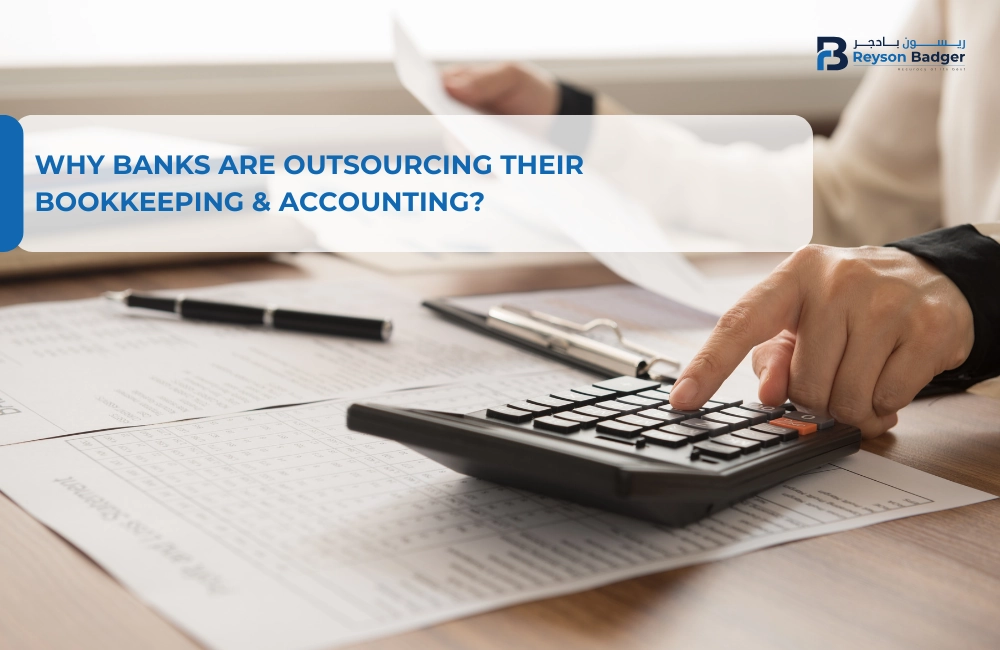


Modern banks rely heavily on software solutions to keep their systems running smoothly. Without outside help, they must dedicate significant resources to this process, which is why many have started outsourcing their bookkeeping and accounting to third parties.
Banks need secure servers where they maintain records of their accounting-related data. Since this data is a core element of any bank’s day-to-day operations, it is important that banks can access this data at all times. Outsourcing the management of this data to a third party allows banks to focus on other aspects of their operations.
Modern day bookkeeping is largely digital. There are 3 types of bookkeeping solutions that banks can choose from when they outsource their bookkeeping and accounting:
? Server Based Bookkeeping: Documents are scanned and sent by the bank's staff over the internet. A secure FTP server is used to store these documents, ensuring data security
? Remote Access Bookkeeping: Instead of sending documents, banks can grant remote access of their systems. Remote access bookkeeping offers more security since sensitive information isn’t being sent back and forth over the internet. This option is ideal for banks that maintain their data servers.
? ASP (Application Service Provider) Bookkeeping: Banks that use online accounting software can also get their accounts updated by giving dedicated login credentials which allows for updating the books. The documents can be directly shared through the platform.
Why Banks Are Outsourcing Bookkeeping and Accounting?
The banking sector in the UAE operates in one of the most heavily regulated financial environments in the world. With increasing compliance requirements from the Central Bank of UAE (CBUAE), Federal Tax Authority (FTA), and Financial Intelligence Unit (FIU), banks are under constant pressure to maintain accurate, up-to-date financial records while simultaneously focusing on core banking operations. Outsourcing bookkeeping and accounting allows banks to reduce operational costs, access specialist financial expertise, and ensure their records remain compliant with UAE regulations without the overhead of maintaining a large in-house finance team. As transaction volumes grow and reporting obligations become more complex, outsourcing has become a strategic decision rather than just a cost-saving measure.
Key Benefits of Outsourcing Bookkeeping for Banks in UAE
Cost Savings Without Compromising Quality
Maintaining a full in-house bookkeeping and accounting team for a bank involves significant fixed costs salaries, benefits, training, software licences, and office space. Outsourcing converts these fixed costs into a flexible, scalable expense that matches the bank's actual transaction volume and reporting needs. Banks in the UAE that outsource bookkeeping typically reduce their accounting overhead significantly while gaining access to a broader range of expertise than a single in-house hire could provide.
Access to Specialist UAE Accounting Expertise
Outsourced bookkeeping providers who specialise in the UAE banking sector understand the specific compliance requirements of CBUAE reporting, VAT treatment for financial services, corporate tax obligations under Federal Decree-Law No. 47 of 2022, and AML/CFT record-keeping standards. This specialist knowledge reduces the risk of compliance errors that could attract regulatory attention or penalties.
Real-Time Financial Reporting and Visibility
Modern outsourced bookkeeping solutions give bank management real-time access to financial data, transaction records, and management reports without waiting for an internal team to compile monthly summaries. This improves decision-making speed and gives senior management a clearer picture of the bank's financial position at any point in time.
Scalability as Transaction Volumes Grow
Banks experience fluctuating transaction volumes peak periods around quarter-end, regulatory filing deadlines, and product launches can dramatically increase the accounting workload. An outsourced bookkeeping team scales up or down with these demands without the bank needing to hire additional permanent staff or invest in temporary solutions that create inconsistency in records.
Data Security and Confidentiality
Professional bookkeeping outsourcing firms serving the UAE banking sector implement strict data security protocols encrypted data transfer, secure server access, role-based permissions, and confidentiality agreements. These controls often exceed what a small in-house team can implement independently, reducing the risk of data breaches or unauthorised access to sensitive financial records.
Risks of Bookkeeping In-House for Banks
While some banks prefer to keep bookkeeping entirely in-house, this approach carries several risks that are particularly acute in the UAE's regulatory environment.
Staff Turnover Disrupts Financial Records
When an experienced in-house accountant or bookkeeper leaves a bank, they take institutional knowledge of account structures, reconciliation procedures, and ongoing transactions with them. Without proper handover documentation which is rarely comprehensive the incoming replacement must spend weeks or months reconstructing records and understanding the bank's specific accounting setup. This creates gaps that can cause compliance issues during regulatory reviews or audits.
Risk of Errors in High-Volume Transaction Environments
Banks process thousands of transactions daily across multiple products, currencies, and counterparties. Manual bookkeeping in this environment is highly error-prone, and a single miscategorisation can cascade into incorrect financial statements, wrong VAT returns, and inaccurate regulatory reports. Professional outsourcing firms use automated systems and quality-control checks to significantly reduce error rates in high-volume environments.
Cost of Technology and System Upgrades
Accounting software, data security infrastructure, and financial reporting systems require regular investment and maintenance. Banks that outsource bookkeeping transfer the cost and responsibility of these upgrades to the service provider ensuring they always work with current, compliant systems without capital expenditure on technology they may not fully utilise.
Compliance Gaps During Peak Periods
Filing deadlines for VAT returns, corporate tax returns, and CBUAE statistical reports often coincide with period-end close activities, creating peak workload periods that stretch in-house teams. Outsourced providers plan for these peaks and have the capacity to handle them without the errors and delays that overloaded in-house teams often experience.
How Reyson Badger Supports Banks with Bookkeeping and Accounting in UAE?
Reyson Badger provides specialist bookkeeping and accounting outsourcing services for banks and financial institutions across Dubai and the UAE. Our team has in-depth knowledge of UAE banking compliance requirements including CBUAE reporting, VAT treatment for financial services, corporate tax obligations, and AML/CFT record-keeping standards.
We offer flexible outsourcing models remote, onsite, or hybrid tailored to your bank's transaction volumes, reporting requirements, and data security preferences. Our services cover daily transaction recording, account reconciliations, management reporting, VAT return support, corporate tax filing support, and regulatory compliance documentation. If you would like to discuss how our bookkeeping and accounting outsourcing services can support your bank's compliance and operational efficiency, contact our team in Dubai for a no-obligation review of your current setup.
FAQs
1. Why are banks in UAE outsourcing their bookkeeping and accounting?
Banks in the UAE are outsourcing bookkeeping and accounting to reduce costs, access specialist compliance expertise, improve financial reporting accuracy, and manage increasing regulatory obligations from CBUAE, FTA, and FIU without expanding their in-house finance teams.
2. Is outsourced bookkeeping secure for banks in UAE?
Yes, when working with a professional outsourcing provider that implements encrypted data transfer, secure server access, role-based permissions, and confidentiality agreements. Banks should confirm data security protocols before engaging any outsourcing partner.