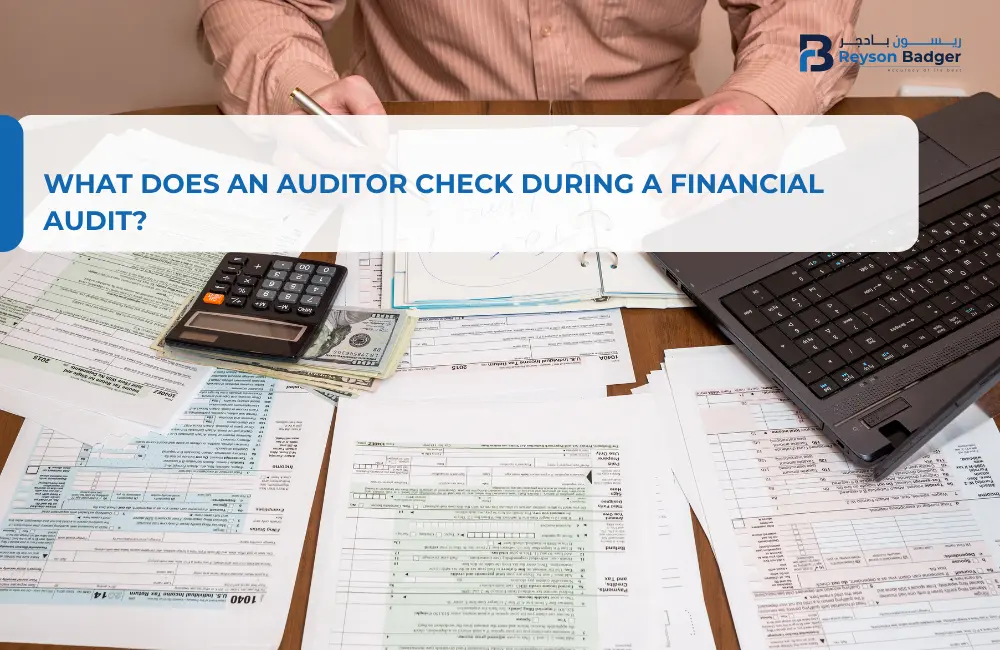


A financial audit involves examining a company's financial records, transactions, and supporting documents to assess whether its financial statements are accurate and fairly presented. Auditors review different areas of a business's financial activities to identify material errors, inconsistencies, and potential reporting risks.
For businesses in Dubai and across the UAE, understanding what auditors check during an audit can help simplify preparation and ensure that relevant documents are available when required. From bank reconciliations and expense records to internal controls and financial disclosures, each area provides evidence that supports the audit process.
What Does an Auditor Check During a Financial Audit?
The checks performed during a financial audit depend on the company's size, industry, financial activities, and identified risks. The following are some of the main areas auditors typically examine.
1. Financial Statements and Accounting Records
Auditors examine financial statements, including the balance sheet, income statement, and cash flow statement, to assess whether the reported information is fairly presented. They also review general ledgers, trial balances, and journal entries to verify significant figures and identify inconsistencies.
2. Bank Statements and Reconciliation Reports
Auditors compare bank statements with the balances recorded in the company's accounting system. They investigate differences, review outstanding transactions, and check whether bank reconciliations have been prepared accurately.
3. Sales and Revenue Transactions
Sales invoices, customer contracts, receipts, and credit notes may be examined to verify recorded revenue. Auditors also assess whether revenue has been recognised in the appropriate accounting period and in accordance with the applicable financial reporting framework.
4. Business Expenses and Purchase Records
Auditors review supplier invoices, purchase orders, receipts, payment records, and expense claims to determine whether expenses are supported by appropriate evidence and recorded correctly. They may also check expense classifications and investigate unusual or significant transactions.
5. Assets, Liabilities, and Outstanding Balances
The audit may include reviewing cash balances, inventory, fixed assets, accounts receivable, accounts payable, and outstanding loans. Auditors assess whether these balances are supported by evidence and whether significant valuation or completeness issues require attention.
6. Tax Records and Supporting Documents
Where relevant to the engagement, auditors may examine VAT records, corporate tax calculations, tax-related balances, and supporting documents. For UAE businesses, maintaining consistent accounting and tax records can help explain differences between financial reporting figures and tax filings.
7. Internal Controls and Financial Procedures
Auditors review relevant financial controls, such as payment approvals, access to accounting systems, segregation of duties, and account reconciliation procedures. Depending on the audit scope, they may test selected controls to assess whether they help prevent or detect material errors.
8. Related-Party Transactions and Financial Disclosures
Transactions involving company owners, directors, group entities, and other related parties may require additional review. Auditors also examine relevant financial statement notes, accounting policies, estimates, and disclosures to assess whether material information has been presented appropriately.
What Documents Should a Business Prepare for an Audit?
Preparing documents in advance can help businesses respond to audit requests more efficiently. Depending on the engagement, auditors may request:
- Financial statements and trial balances
- General ledgers and journal entries
- Bank statements and reconciliation reports
- Sales invoices and customer agreements
- Supplier invoices, receipts, and payment vouchers
- Asset registers and inventory records
- Loan agreements and outstanding balance details
- Payroll records and relevant employee expense documents
- Applicable VAT and corporate tax records
- Contracts and related-party transaction details
The exact document requirements vary depending on the business and the nature of the audit.
What Happens If an Auditor Finds Errors?
When auditors identify discrepancies, they investigate the underlying transactions and request additional supporting evidence where necessary. They assess whether the issue is a recording error, a difference requiring explanation, or a potential material misstatement in the financial statements.
Management may need to correct identified misstatements or provide further explanations. If material misstatements remain uncorrected, they may affect the auditor's opinion. An audit provides reasonable assurance rather than a guarantee that every error or instance of fraud will be detected.
How Can UAE Businesses Prepare for an Audit?
Businesses can make the audit process more efficient by maintaining accurate accounting records throughout the year. Bank accounts should be reconciled regularly, financial transactions should have appropriate supporting documents, and outstanding balances should be reviewed before the audit begins.
Companies should also organise relevant tax records, maintain updated asset registers, and respond promptly to requests for information. These steps help auditors obtain the evidence needed to complete their work and reduce delays caused by missing documents.
Conclusion
During a financial audit, auditors examine financial statements, accounting records, bank reconciliations, revenue, expenses, assets, liabilities, internal controls, and relevant disclosures. Understanding these checks helps businesses prepare their documentation and address potential reporting issues more effectively.
For businesses operating in Dubai and across the UAE, maintaining well-organised financial records is an important part of sound financial management. Companies seeking professional support can explore Reyson Badger's financial audit services in Dubai to understand the audit process and discuss their specific requirements.
How Reyson Badger Supports Businesses with Financial Audit Requirements?
At Reyson Badger, we understand the importance of accurate financial records and reliable reporting for businesses operating in Dubai and across the UAE. We help businesses understand their financial audit requirements, review relevant financial information, and prepare the necessary supporting documents according to the agreed audit scope.
Our approach focuses on helping businesses understand the audit process, maintain organised financial records, and address documentation or reporting issues that require attention. We work with businesses to understand their specific requirements and provide relevant support throughout the audit engagement.
If your business needs guidance on its audit requirements, contact Reyson Badger to discuss how our team can support your business in Dubai and across the UAE.