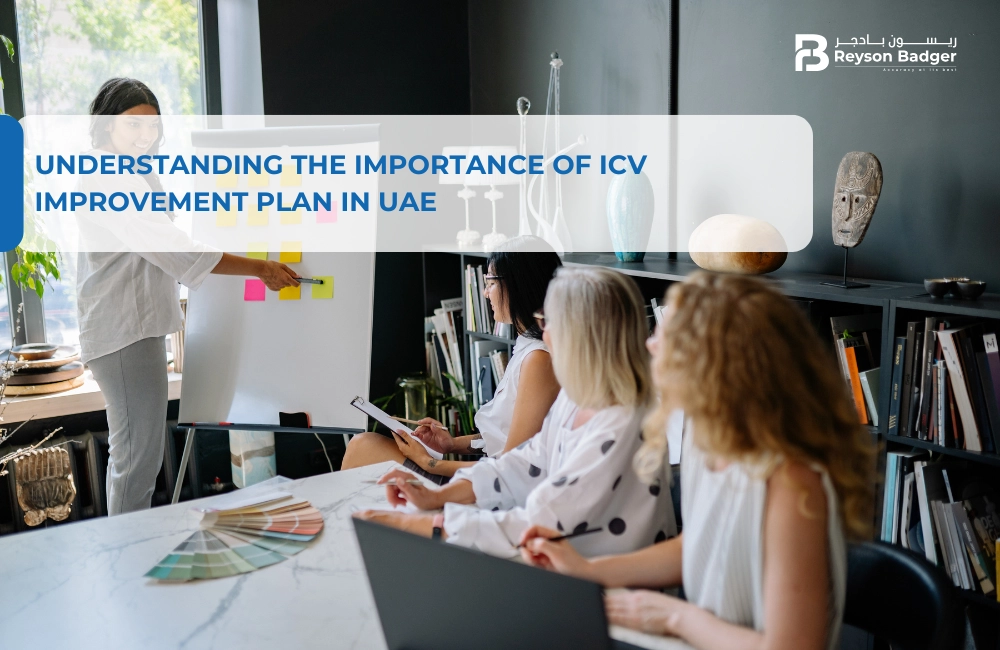


The importance of ICV Improvement Plan in UAE is closely tied to how your business competes for contracts, improves its ICV score, and supports local economic contribution. Under the UAE's National In-Country Value program, led at federal level by the Ministry of Industry and Advanced Technology (MoIAT), an ICV improvement plan isn't just a supporting document in some tenders, it can affect how your bid is viewed and whether you stay commercially competitive.
An in-country value, or ICV, improvement plan sets out how you intend to raise your contribution inside the UAE over a defined period. If your plan is weak, unrealistic, or disconnected from your financial records, you may lose tender marks, face questions during bid review, or struggle to justify future score growth. This blog explains what the plan is, where it fits, and why it matters alongside your ICV Certificate in UAE.
What is an ICV Improvement Plan?
An ICV Improvement Plan is a documented action plan that shows how your company intends to improve its ICV score over a stated period. It usually covers the practical steps you plan to take, such as increasing UAE-based spending, strengthening Emiratization, investing in assets, or improving local supplier participation.
The plan matters because some procuring entities don't look only at your current score. They also want to see whether your business can raise its contribution over the life of the contract. If your score stays flat and your plan doesn't show believable progress, your business may look less attractive than a competitor with a stronger roadmap.
In practical terms, an effective ICV improvement plan usually includes:
- Your current ICV position based on audited financial information
- Areas where local spend can increase
- Hiring, training, or Emiratization steps that can improve contribution inside the UAE
- Capital investment, operational upgrades, or other measurable actions
A timeline for delivery and internal follow-upIf these actions aren't backed by records, budgets, and management commitment, the plan can become a paper exercise. That's where businesses often run into trouble, because a promising bid can weaken quickly if the planned ICV gains can't be evidenced later.
Who requires ICV Improvement Plan?
An ICV Improvement Plan may be required where the tender terms specifically ask for it, including in procurement environments that place weight on ICV performance, such as certain Abu Dhabi National Oil Company, or ADNOC, tenders. If the bid documents ask for an improvement plan, you can't treat it as optional, because an incomplete submission can weaken your commercial position or make your response non-responsive.
In practice, you should check the exact tender instructions, scoring methodology, and contract conditions before submission. Different entities may ask for different levels of detail, and using a generic plan across bids can create gaps that are easy for evaluators to spot.
Understanding ICV Certification in the UAE
An ICV Certificate in UAE is the formal certificate used to reflect your company's ICV score based on the applicable program methodology and your audited financial statements. In the federal program, MoIAT is the key authority associated with the National ICV Program, and businesses should always follow the current procedural requirements issued through the official program channels.
Your certificate and your improvement plan work together. The certificate shows your current position, while the improvement plan shows where your business says it's going next. If the certificate is strong but your plan is weak, buyers may question future contribution. If the plan is ambitious but the certificate data doesn't support it, you may face credibility issues during evaluation.
Businesses should also check the current certificate verification method used in the program workflow, including any digital verification steps such as QR code validation or linked official platforms where applicable. Because procedures can change, you shouldn't rely on outdated tender assumptions or old templates from another bidder.
Types of ICV Improvement Plans in UAE?
There are generally two types of ICV Improvement Plans referred to in UAE tender practice:
- Agreement-based Improvement Plan: This type is linked to a specific contract or project. It may require project spending to be reviewed for verification, and the ICV commitments are measured against the obligations set for that agreement. If your project records don't support what was promised, you may face delayed release of retained value or disputes over milestone achievement.
- Company-based Improvement Plan: This type is tied more closely to the company's broader annual ICV position and certificate cycle. It focuses on how the business will improve over the term of the agreement, not just on one project line item. If your annual financials, hiring plans, and procurement pattern don't align with the plan, the gap becomes visible when the next certificate or tender review comes around.
The Importance of ICV Improvement Plans in the UAE
An ICV improvement plan can carry serious weight in bid evaluation because it shows how your business intends to increase its UAE contribution after award, not just what your current certificate says today. That's important when buyers want to see future local spend, hiring intent, asset growth, and stronger participation in the national economy.
A certificate reflects a point in time. Your improvement plan shows direction. If you submit only a decent current score without a credible path for improvement, another bidder with a clearer plan may look stronger even if today's scores are close.
This is also where topics such as Emiratization, local procurement, training, and capital investment become commercially relevant. If your company can show how it will buy more from UAE suppliers, build internal capability, or increase value retained inside the country, your bid tells a better long-term story.
The broader policy context matters too. The National ICV Program has been associated with industrial growth priorities in the UAE, including initiatives often discussed alongside Operation 300bn and Make it in the Emirates. If your business ignores that direction, you risk presenting an outdated procurement profile while competitors show stronger alignment with current national priorities.
So even if your ICV Certificate in UAE already shows a reasonable score, you can still be at a disadvantage if the improvement plan doesn't show measurable growth in the years after contract award.
Importance of ICV Improvement Plan in UAE
The importance of ICV Improvement Plan in UAE comes down to three things, tender competitiveness, score development, and commercial credibility. If your business wants to win contracts in sectors where ICV matters, you need more than a certificate copy. You need a plan that shows evaluators how your company will improve its local contribution over time.
This matters because buyers don't want promises that sit only in a presentation. They want to see actions linked to spend categories, workforce decisions, and investment timing. If those links aren't there, your business may lose ground to a bidder that looks more prepared and easier to monitor after award.
A strong plan also helps internally. It gives your finance, procurement, HR, and leadership teams a shared target. If those teams work in isolation, you often end up with inconsistent numbers, weak supporting records, and a score-improvement plan that doesn't survive detailed review.
Why Enhancing Your ICV Score Matters
Enhancing your ICV score matters because a stagnant score can limit how competitive your bid looks in ICV-sensitive procurement. If your business keeps renewing the same certificate position without visible improvement, evaluators may assume your local contribution has plateaued.
A higher score can support better tender positioning, but the real advantage is consistency. When your score, records, and improvement plan all tell the same story, you're easier to assess and harder to challenge during review. If they don't match, extra clarification requests can slow your bid and create doubt at the worst time.
Score enhancement can also reduce internal waste. For example, if you identify that too much spend sits outside eligible local channels, you can adjust procurement earlier. If you ignore that issue, the problem usually appears only when the next certificate review or tender deadline is already close.
Key Strategies to Improve ICV Score
You improve ICV score by focusing on the categories that usually influence how much value your business retains inside the UAE. The right strategy depends on your sector, cost structure, and tender profile. If you copy another company's approach without checking your own numbers, you can spend money in the wrong place and see little score movement.
Local Procurement and Supplier Engagement
One of the first areas to review is your supplier base. If your business can shift qualifying spend toward UAE-based suppliers and service providers where commercially viable, your ICV position may improve over time. If procurement decisions stay disconnected from ICV goals, you may keep missing score opportunities contract after contract.
Workforce Localization and Training
Hiring, retaining, and developing UAE national talent can matter in the wider ICV context, especially where Emiratization is commercially relevant to the buyer's expectations. Training plans also help because they show that your business isn't relying on a short-term headcount fix. If you hire without retention or documentation, the claimed improvement may not hold up later.
Infrastructure and Capital Investments
Capital expenditure on machinery, facilities, or production capability can support stronger local value creation where it fits the business model. This is particularly relevant if your company is trying to show longer-term commitment to UAE operations. If investments are booked poorly or timed badly, you may bear the cost without getting the expected certificate benefit.
Innovation and Sustainability Initiatives
Some businesses also look at innovation, R&D direction, and sustainability initiatives as part of a stronger market position, especially where industrial policy discussions involve themes such as advanced manufacturing or Green ICV. You should still verify the current scoring treatment before making spending decisions. If you assume a category improves your score without checking the latest rules, your budget may move faster than your actual result.
ICV Score Formula Components
Your ICV score is built from financial and operational components under the applicable program methodology. You should always verify the current official formula and version in force before acting, because businesses can make costly planning mistakes if they rely on outdated slides, old workshop notes, or competitor assumptions about "ICV 3.0".
The table below gives a practical planning view of common components businesses review when preparing an improvement plan. It isn't a substitute for the current official methodology, and you shouldn't treat it as a published weighting schedule.
| ICV score component | What it usually covers | What can improve it | What happens if you ignore it |
| Local supplier spend | Eligible spending retained within the UAE economy | Review supplier mix, contract categories, and purchasing channels | Your business may keep losing score potential on everyday procurement decisions |
| Workforce contribution | Employee cost patterns and local employment contribution | Plan hiring, retention, and documented training with business need | Headcount growth without evidence can fail to support your claimed improvement |
| Emiratization-related impact | UAE national participation where relevant to the program and buyer expectations | Build realistic recruitment and development steps instead of last-minute hiring | You may miss both score opportunity and tender credibility |
| Capital investment | Assets and long-term business investment in the UAE | Align CAPEX planning with operations and certificate timing | Late or poorly recorded investment may not support the expected score movement |
| Profit retention and local value creation | How much value remains linked to UAE operations | Improve margin visibility, documentation, and local operating substance | Weak records can reduce confidence in the numbers behind the plan |
| Innovation or sustainability direction | Business initiatives that may support industrial growth objectives | Verify current treatment before committing spend based on assumed score benefit | You can invest heavily without seeing the tender or certificate outcome you expected |
Impact of High ICV Score on Tender Evaluation
A high ICV score doesn't guarantee award, but it can improve how your bid is positioned where ICV is part of the evaluation model. What matters most is that your score, certificate, and improvement plan are consistent. If one part is stronger than the others, evaluators may question whether the advantage is real or sustainable.
| Bid factor | Bidder with stronger ICV position | Bidder with weaker ICV position |
| Current ICV Certificate in UAE | Shows a stronger starting point for local contribution | Starts from a weaker baseline and may need more explanation |
| Improvement plan quality | Provides measurable steps, timelines, and supporting logic | Looks generic, unclear, or disconnected from actual spending patterns |
| Evaluator confidence | Higher confidence that commitments can be tracked after award | More questions during review, which can slow evaluation |
| Commercial competitiveness | Better positioned where ICV meaningfully affects tender scoring | May lose ground even if pricing is otherwise acceptable |
| Post-award credibility | Easier to monitor against declared milestones | Higher risk of mismatch between promises and delivery |
Overcoming Challenges in ICV Enhancement
Most ICV improvement problems aren't caused by lack of intent. They're caused by weak coordination between finance, procurement, HR, and operations. If those teams don't use the same assumptions, your business can submit a plan that sounds strong but doesn't match the records used for certification.
Another common issue is timing. Companies often begin reviewing their ICV position only when a tender deadline is close. That leaves little room to adjust supplier strategy, hiring, or investment decisions. If you leave it too late, you're forced into reactive bidding instead of planned score improvement.
Documentation is another pressure point. Even when the business is making the right moves, poor record keeping can weaken the outcome. If invoices, payroll support, or CAPEX records aren't clear, the claimed improvement may be difficult to evidence later.
Creating a Strategic Plan for ICV Improvement
A practical ICV improvement plan starts with your current numbers, not with broad promises. You should review the latest audited financial statements, current certificate position, procurement categories, payroll structure, and planned investments before setting any target. If the baseline is wrong, every projected gain after that becomes unreliable.
A useful planning sequence often includes:
- Reviewing the latest ICV Certificate in UAE and underlying financial records
- Identifying low-performing spend and workforce areas
- Setting realistic targets for the next certificate or tender cycle
- Assigning responsibilities across procurement, HR, finance, and leadership
- Tracking progress before the next tender submission, not after it This is also where timeline expectations matter. If you wait until a bid is ready for submission, you may not have enough time to gather complete documents, refine assumptions, or correct a weak scoring position.
How an ICV Certificate in UAE Connects to Your Improvement Plan
Your ICV Certificate in UAE and your improvement plan serve different purposes, but they should support each other. The certificate is evidence of your current score based on the applicable certification method. The improvement plan explains how your business expects to improve from that starting point. That means you shouldn't prepare them in isolation. If the certificate data shows one procurement pattern while the plan promises a completely different direction with no implementation path, evaluators may question whether the plan is realistic. If both documents are aligned, your business presents a clearer and more credible bid profile. This is one of the main reasons businesses ask for advisory help before major tenders. It's not only about getting a certificate issued. It's about making sure the certificate story and the improvement story don't contradict each other.
Utilizing Professional Consultants for Certification
Once you understand the requirement, working with experienced advisors can help you avoid expensive assumptions. An advisor can review your current certificate position, challenge unrealistic targets, and help align finance, procurement, and HR inputs before they become a tender issue. This is especially useful if your business is handling its first ICV-sensitive bid, preparing a major renewal cycle, or trying to improve an underperforming score. If internal teams are already stretched, small documentation errors can create bigger bid problems later. Reyson Badger can support businesses that need practical guidance on ICV planning, certificate readiness, and documentation review, particularly where the goal is to strengthen the link between the ICV Certificate in UAE and the improvement plan submitted with a bid.
The Role of the ICV Improvement Plan in UAE
Where tender documents require it, the improvement plan is submitted with the ICV-related bid documents and can form part of the supplier's contractual commitments. That means you shouldn't treat it as a marketing note. If the commitments are overstated or poorly tracked, the issue can resurface during milestone review, payment discussions, or later performance checks. In practice, the plan is used together with the current ICV Certificate in UAE to assess both present contribution and expected future improvement. Buyers may monitor performance against the declared targets during the contract period. If progress falls behind and the supplier can't explain the gap, corrective action requests or commercial disputes can follow. Businesses should also pay close attention to any retention, milestone, or evidence requirements stated in the contract itself. If a payment release depends on proving that an ICV target has been met, incomplete records can delay recovery of contract value even where the business believes it has performed operationally.
Conclusion
The ICV program encourages businesses to increase their contribution inside the UAE through local spending, employment, and investment decisions that can be evidenced. For your business, the real value of an improvement plan is that it connects strategy to tender performance. If you leave that plan generic or unsupported, you risk weaker bids and harder renewal conversations later.
To stay competitive in the long term, you need an ICV approach that can be implemented, tracked, and defended with records. Once you understand the requirement, working with an experienced ICV Improvement Plan Consultant can help you avoid gaps between your certificate, your bid commitments, and your actual operating model. Reyson Badger supports businesses that need practical guidance on identifying ICV spend categories, reviewing current positioning, and preparing an ICV improvement plan that fits the commercial reality of the business. If your goal is to strengthen both your ICV Certificate in UAE and your improvement-plan strategy, experienced advisory input can help you avoid costly mistakes.