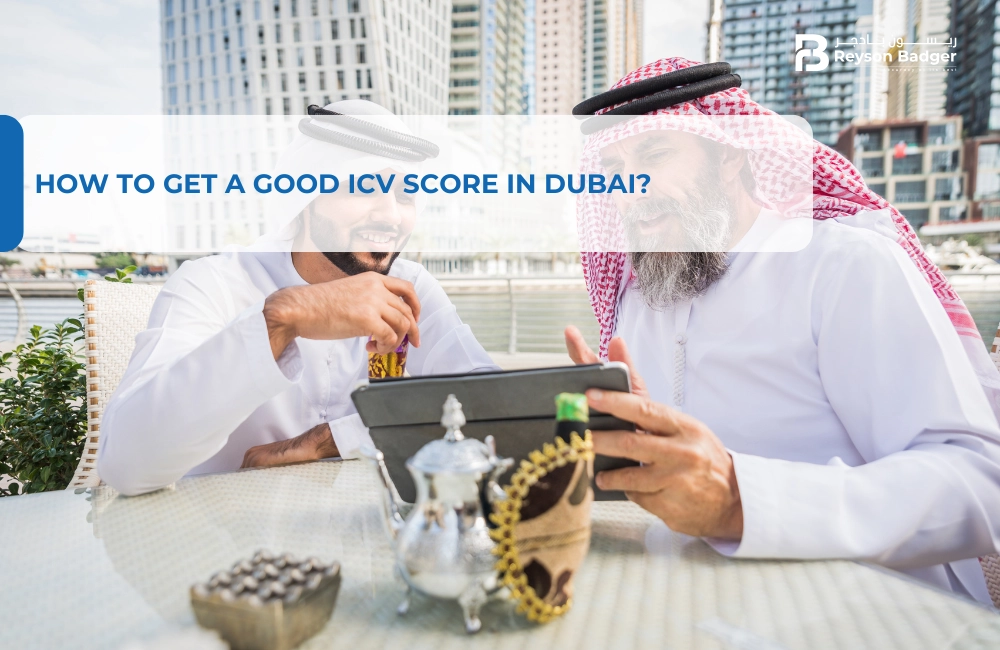


If you want a good ICV score in Dubai, you need to improve the numbers that certifying bodies actually review, local procurement, Emirati employment, in-country investment, and the accuracy of your audited records. The UAE's In-Country Value (ICV) program, managed by the Ministry of Industry and Advanced Technology (MoIAT), requires suppliers bidding on government and semi-government contracts to hold a valid ICV certificate. Without one, your bid is assigned a zero ICV score in the evaluation meaning competitors with even a modest certificate will rank ahead of you regardless of your pricing.
For the 2026 certification cycle, you need to check your file early. MoIAT has tightened its requirements. Branch-level audited financials prepared under IFRS are now mandatory. Consolidated or group accounts are rejected. Financial statements must not be more than 10 months old at the time of submission. These are not new proposals, they are enforced rejections.
This guide covers how the ICV score is calculated, what the 2026 compliance requirements mean for your business, and the specific steps you can take to improve your score before your next certification without inflating figures that MoIAT will verify against your audit.
What is a Good ICV Score?
A good ICV score Dubai is one that keeps your business competitive in the specific tender you're targeting. An ICV score measures your company's economic contribution to the UAE, covering local procurement, Emirati employment, in-country investment, and related factors. There isn't a universal pass mark. There is no minimum score required to bid for a tender, and a company without any ICV certificate can still participate, though it will be treated as having a score of zero, which is effectively disqualifying in any competitive bid.
What matters to you is how the buyer weights ICV against price and technical scoring. What counts as competitive depends on the sector, contract value, and the entity awarding the tender. Each procuring entity applies the score differently within its own evaluation framework, so always review the specific tender document to understand the weighting and any minimum thresholds that apply to that opportunity. The higher your score, the stronger your position and letting your certificate lapse is just as damaging as having a low score in the first place. If your certificate expires before bid submission or award review, you don't just lose points, you can lose the contract opportunity even when your commercial offer is stronger.
Eligibility to Obtain ICV Certificate
Your business is generally eligible for an ICV certificate if it is a legal entity operating in the UAE and can support its submission with the financial and operational records required by the certifying body. If you can't support the figures, the application can be delayed or rejected.
Audited Financial Statements
For most established businesses, audited financial statements are the starting point for ICV certification Dubai. Branch-level audited financials under IFRS are required for the 2026 cycle and that consolidated accounts are rejected. If your audit file isn't ready, your certification timing slips with it.
Newly Established Companies and Management Accounts
Newly established companies may in some cases be asked for management accounts and supporting schedules where a full audit period is not yet available. You should not rely on this until the relevant certifying body confirms the exact conditions, because using the wrong reporting basis can lead to rejection.
Branches Eligibility for ICV Certification
Branches need special attention because the 2026 cycle requires branch-level audited financial statements prepared under IFRS. If your business submits group or combined numbers instead, the file can be rejected before scoring even starts.
Evaluation by Certifying Body
Eligibility is not just about being registered in the UAE, it's about whether your figures can be tested by the certifying body against your records. If payroll, supplier spend, or asset values can't be matched to source documents, your score can be reduced or the application can stall.
Certificate Issuance
Your certificate is issued only after the certifying body completes its review and accepts the submission. If you leave corrections until tender week, you may miss the bid window even if your numbers are otherwise acceptable.
Which Businesses Should Obtain an ICV Certificate?
You should consider ICV certification Dubai if your business plans to bid for government or semi-government work, supply larger contractors, or protect its position in procurement chains that already use ICV scoring. This usually affects manufacturers, traders, service providers, contractors, and SMEs that sell into public sector linked projects. If your buyers ask for an ICV certificate during prequalification or tendering, waiting too long can push your bid to the bottom of the ranking. It's also relevant if your growth plan depends on sectors influenced by national procurement priorities, including local manufacturing, technology adoption, human capital development, and supplier development. If you ignore that shift, your business may keep quoting but still lose on evaluation.
Understanding the ICV Framework
The ICV framework measures how much of your business value stays inside the UAE. The ICV score is calculated based on a specific formula that considers various aspects of your company's contribution to the UAE's economic development. That matters because procurement programs are designed to push local manufacturing, support SMEs, encourage technology adoption, and strengthen human capital development.
- Local Value Add (LVA): This measures the value your business creates inside the UAE. This component measures the value created through activities within the UAE. It encompasses factors like:
a. Manufacturing Cost: The percentage of production costs incurred in the UAE.
b. Investment: The value of your company's assets established in the UAE.
- Emiratization: The percentage of your workforce comprised of UAE Nationals. If your business underinvests in Emirati hiring and development, you don't just miss points, you weaken your position in tenders that reward local workforce contribution.
- Expat Contribution: The salaries, training expenses, and benefits provided to expatriate employees.
- ICV Bonus & Advanced Technology & Sustainability Bonus: Additional points awarded for exceeding specific benchmarks in areas like sourcing from local suppliers, using advanced technologies, and adhering to sustainable practices.
If your spending sits outside the UAE or can't be backed by records, your score drops and your pricing advantage may no longer be enough to win.
Calculating ICV Score
Your ICV score is based on measurable UAE-linked spend and value, not estimates. The ICV score shows how much a company invests in the UAE (United Arab Emirates). It looks at how much the company spends on things like goods, services, and its employees in the UAE. Here's how it's calculated:
For all companies:
ICV Score = (Total Money Spent in UAE / Total Money the Company Makes) x 100
Different business models are assessed differently, so you need to classify your entity correctly before filing. Different types of companies have slightly different ways to calculate it:
For Companies Making Things in UAE:
ICV Score = (Money Spent on Making Things in UAE + Money Spent on Emirati Workers + 60% of Money Spent on Expats) / (Total Money Spent)
For Companies Selling Things in UAE:
ICV Score = (Money Made from Selling Things x ICV of the Supplier + Money Spent on Emirati Workers + 60% of Money Spent on Expats) / (Total Money Spent)
For Companies Investing in UAE:
The score is 25% of all the things the company owns in the UAE. And the more valuable their stuff is in the UAE, the higher the score.
ICV Score = Value of Company's Stuff in UAE / Total Value of Company's Stuff
You should treat these formulas as directional summaries, because the certifying body will still test your figures against audited financials, supplier records, payroll support, and other schedules. If the backup doesn't match, your score won't stand.
How to Improve your ICV Score in Dubai?
If you want to improve ICV score Dubai, focus on the spending, hiring, asset, and documentation areas that can change your score before the next certificate review.
- Prioritize Local Sourcing: Review your biggest supplier categories first. Prioritize sourcing raw materials, subcontracting services, and other operational needs from local UAE suppliers. If your major spends sits with non-qualifying vendors, you leave points on the table every month.
- Invest in Emirati Talent: Actively recruit and hire UAE Nationals. Provide training programs and career development opportunities to empower Emirati employees and showcase your dedication to the national workforce. If your Emiratization plan exists only on paper, it won't help your bid outcome.
- Increase In-Country Investment: Track the UAE-based assets your business owns and uses, because unrecorded in-country investment can be missed during scoring. If fixed assets or qualifying investments are poorly documented, your certificate may understate your actual position.
- Build Local Operations Where Viable: If feasible, consider establishing or expanding manufacturing capabilities within the UAE. This significantly boosts your LVA score and demonstrates a long-term commitment to the Emirati economy. That can also support wider business goals linked to GDP growth and local supplier participation.
- Use Technology and Sustainable Practices Carefully: Incorporate advanced technologies and sustainable practices into your operations. You need evidence for any claimed bonus area, because unsupported claims can be removed during review.
- Prepare Records Before You Apply: Don't wait until tender week to clean up payroll, supplier, and accounts payable support. If your records are inconsistent, the certifying body may ask for revisions and your submission can miss the bid deadline.
- Work With Experienced Advisors: Once you understand the scoring mechanics, getting an external review helps you spot weak categories before they affect your certificate. Consulting with ICV auditors in Dubai can be beneficial. They can review your current standing, identify areas for improvement, and guide you through the ICV certification process.
Obtaining Your ICV Certificate
Once you've taken concrete steps to enhance your ICV score, it's time to secure your official ICV certificate. Here's a general overview of the process:
- Gather Documentation: Compile all necessary documents, including audited financial statements, details of your workforce composition, and information on local sourcing and investments.
- Select a Certifying Body: Choose a UAE government-approved certifying body to evaluate your application.
- Complete the ICV Template: Utilize the official ICV template to meticulously record all relevant data pertaining to your company's contribution to the UAE's economy.
- Submit Your Application: Present your completed application and supporting documentation to the chosen certifying body.
- Verification and Certification: The certifying body will verify your information and, upon successful evaluation, issue your official ICV certificate.
ICV Registration Dubai, Step-by-Step Application Process
| Step | What you need to do | What happens if you miss it |
1 | Confirm the legal entity that is applying and match it to the correct audited financials. | Wrong entity selection can lead to rejection, especially for branches or group structures. |
2 | Collect the financial, payroll, supplier, and investment records that support your template figures. | The certifying body may pause the review and ask for a resubmission. |
3 | Complete the ICV template carefully and reconcile it to your audited numbers. | If the template doesn't tie back to the audit, the score can be revised downward. |
4 | Submit through the relevant certification channel and respond quickly to clarification requests. | Slow responses can push you past tender deadlines. |
5 | Check certificate validity before using it in bids or supplier onboarding. | An expired or unverifiable certificate can be treated as zero. |
Documents Required for ICV Certification
You should prepare your documents before you approach a certifying body, because missing support usually causes delays, clarifications, or a lower accepted score.
- Audited financial statements for the applying legal entity.
- Completed ICV template and supporting schedules.
- Supplier spend records and local procurement support.
- Payroll records, employee details, and evidence relevant to Emiratization and employee cost claims.
- Fixed asset or investment schedules where in-country investment is being claimed.
Wage Protection System (WPS) reports covering the last 12 months are standard requirements to verify employee salaries and Emiratization claims. If your company operates in a jurisdiction exempt from WPS, alternative bank-verified payroll evidence must be confirmed with your certifying body.
Key Considerations Before Applying for ICV Certification
You should review timing, records, and certificate use before you apply, because the biggest ICV problems usually happen before submission, not after it.
- Check the age of your financial statements early. If they are outside the accepted period, your file may not proceed.
- Make sure your legal entity, branch data, and audit scope match. If they don't, you can lose weeks correcting the submission.
- Don't claim local spend, investment, or bonus areas unless you can support them. Unsupported figures can be removed during verification.
Processing time varies significantly based on your chosen certifying body, company size, and the quality of your submitted file. Because discrepancies between your ICV template and financial statements will trigger audit queries and delays, avoid promising your internal sales or bidding teams a fixed certificate issuance date until the certifier has reviewed your file and confirmed it is clean.
Maintaining a High ICV Score
Maintaining a high score means treating ICV compliance UAE as an ongoing review, not a once-a-year filing exercise. Achieving a high ICV score is an ongoing process. Here are some tips for sustaining your success:
- Regularly monitor your ICV score and identify areas for further improvement.
- Track major supplier shifts, payroll changes, and asset additions through the year, because late clean-up often leads to weak renewal files.
- Continuously implement strategies that enhance your local value creation and Emirati workforce development.
- Stay updated on any changes or revisions to the ICV program guidelines.
If your business lets the certificate lapse or stops monitoring qualifying spend, your next tender can be affected before you have time to fix the score.
ICV Updates and Digital Verification (2026)
Companies targeting public sector contracts should check MoIAT's current ICV requirements before starting a new submission, because operational rules can change and rejected files still miss live tender deadlines.
- Stand-Alone Audited Financials: Financial statements must be prepared at the individual legal entity level and independently audited under IFRS by a UAE-licensed auditor. (The ICV certificate itself is then issued by a MoIAT-approved Certifying Body). For 2026 applications, statements must not be older than two years (i.e., ending on or after 1 January 2024). Consolidated or combined group accounts are rejected outright unless specific branch-exemption criteria apply.
- Digital Certification Platform: ICV applications, renewals, and updates are managed through MoIAT's official digital platform. If your team isn't ready for digital submission steps, including identity and document controls, the file can stall before review starts.
- Certificate Authentication via Digital Validation: Buyers and certifying bodies may validate certificate authenticity through official digital checks. If your certificate can't be verified when the buyer checks it, your commercial offer may still be lost.
- UAE Pass Access: Where access to the relevant service requires UAE Pass, make sure the responsible signatory can complete it in time. If account access is blocked at submission stage, your tender timeline doesn't pause with it.
- Instant Validation for Buyers and Auditors: Certifying bodies and procuring entities use MoIAT's portal to confirm a company's ICV score and certificate status. An expired or unverifiable certificate is treated as a zero score.
If your company delays certification preparations, you risk entering the tender process without a valid certificate, which is effectively disqualifying in most government and semi-government procurement evaluations.
Should You Get an ICV Certificate?
You should get an ICV certificate if your sales pipeline depends on tenders or supply chains where buyers check ICV during evaluation. If your market doesn't use ICV at all, the timing may be less urgent, but you still need to plan ahead before that requirement appears in a live bid. Ask three practical questions, are your target buyers asking for it, can your records support it, and will a zero or expired score hurt your commercial ranking. If the answer is yes to any of these, delaying the certificate can cost more than preparing it properly.
How do ICV Auditors help achieve ICV Scores?
At Reyson Badger, experienced advisors can help you review the figures behind your ICV score before they reach the certifying body. If weak records or mismatched schedules are caught late, your certificate timeline can slip and your bid can suffer.
That can include reviewing local spend, Emiratization inputs, and the audit trail behind the ICV template so your business knows where improvement is realistic. We work closely with you to improve your Emiratization agenda, which means hiring and developing local talent.
Once you understand the requirement, working with experienced advisors helps avoid costly mistakes during certification and renewal. Reyson Badger supports businesses that want a clearer next step after reading the rules.