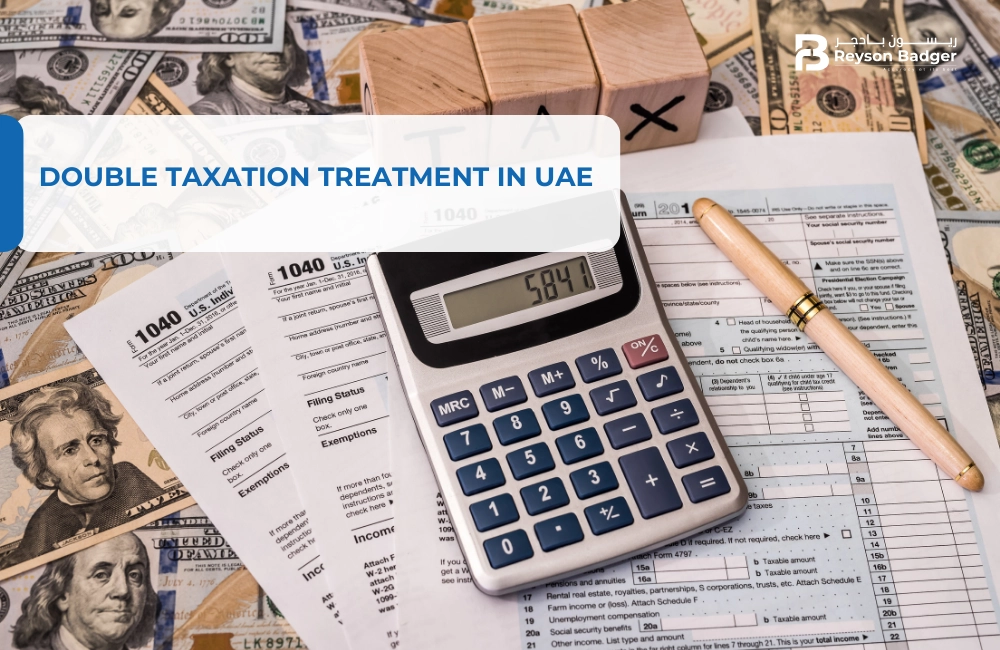


Double taxation is a significant issue where the same income or property is taxed by two different countries. For instance, you may earn money in one country but still be required to pay taxes on that same income in another due to your residence or place of business. This results in paying taxes twice on the same amount, which can severely reduce earnings or profits.
In the context of the UAE, double taxation poses challenges for both individuals and companies engaged in international trade or investments. The additional tax burden complicates financial management and can discourage cross-border business activities, affecting economic growth. To benefit from the UAE’s tax treaties, individuals and businesses must obtain a Tax Residency Certificate in uae , which serves as official proof of UAE tax residency when dealing with foreign tax authorities.
To solve this problem, countries make agreements to reduce or get rid of double taxation. People and businesses also use smart tax planning to pay the right amount of taxes in different places without paying twice.
Double Taxation Treatment in UAE
Double Taxation Treatment in UAE makes sure you don't get taxed twice on the same money or things in two ways:
Domestic Legislation: The UAE has its own rules about taxes. These rules say how much tax you have to pay, what kinds of money or things get taxed, what you don't have to pay tax on, and how to do all the tax paperwork. This helps keep things fair and organised for everyone paying taxes in the UAE.
Double Taxation Agreements (DTAs): The UAE also talks with many other countries and made agreements called Double Taxation Agreement (DTA). These agreements decide which country can tax certain types of money or things. They also say how much tax you might have to pay and sometimes make it less so you don't pay too much tax in both countries. If there's ever a problem or disagreement about taxes between countries, these agreements help sort it out.
So, by having clear rules at home and friendly agreements with other places, the UAE makes sure you're not taxed twice on the same things, which is good for people and businesses doing business across borders.
Double Taxation Treatment Criteria
To address the issue of double taxation, countries around the world have signed hundreds of treaties to avoid it. These, or tax treaties, are bilateral agreements between two countries to resolve issues involving double taxation of their citizens' passive and active income. They generally specify the amount of tax that a country can levy on a taxpayer's income, capital, estate, or wealth. These tax treaties aim to provide taxpayers with certainty and clarity while also avoiding situations in which income is taxed twice. To take advantage of these agreements, eligible individuals and entities must understand the process for obtaining a tax residency certificate in the UAE, which serves as proof of their UAE tax residency status for treaty benefits.
To avoid double taxation and promote trade and investment, the UAE has signed double-tax treaties with a number of countries. These treaties specify how individuals and businesses must pay taxes on income earned in the UAE and other treaty countries. The UAE has double tax treaties with numerous countries, including the United Kingdom, France, Germany, India, and China. These treaties offer:
- Exchanging information among tax authorities.
- Avoiding double taxation.
- Provisions for allocating taxation rights between the two countries.
Double Taxation Agreements in UAE help stop people and businesses from paying taxes twice on the same money or things. To benefit, maintaining valid tax residency in UAE is often required. Here's when a DTA typically applies.
- Residency of the taxpayer: If you live in one country but make money in another, the DTA decides which country gets to tax that money. This stops you from being taxed twice just because of where you live.
- Permanent establishment in the other country: For companies, if they have a big presence like an office in another country, the DTA says how much tax they should pay there compared to their home country. This stops them from paying double taxes on their profits.
- Type of income: Different types of money, like salaries or business profits, have different rules in the DTA. It says which country can tax each type of money and how much, making sure everyone pays their fair share without getting taxed twice.
So, the DTA looks at where you live, how big your business is in other countries, and what kind of money you're making to make sure you're not taxed too much or unfairly.
Types of Double Taxation Agreements
There are two main types of Double Taxation Agreements (DTAs) that countries use: the Exemption Method and the Credit Method.
Exemption Method: Under this method, the country where you earned the income exempts you from paying tax on that income if you've already paid taxes on it in another country. You're exempted from double taxation by not having to pay tax twice on the same income. This method is beneficial for individuals and businesses as it prevents double taxation and avoids complications related to tax credits.
Credit Method: With the credit method, if you've paid taxes in one country but owe more taxes in another country for the same income, you can use the taxes already paid to reduce what you owe in the second country. For example, if you paid $100 in taxes in Country A and need to pay $150 in taxes for the same income in Country B, you can subtract the $100 from Country A's taxes from the $150 owed to Country B. This leaves you with only $50 left to pay in Country B. This way, you're not taxed twice on the same money, and you still follow the tax rules in both countries.
Tax Implications for Businesses and Individuals in the UAE
How DTAs Help Businesses in the UAE?
Double Taxation Agreements Services in UAE can really help businesses in the UAE in two big ways:
- Less Tax to Pay: DTAs make sure businesses don't pay taxes twice on the same money they earn in different countries. This means they keep more of their profits because they're not over-taxed.
- Clear Rules: DTAs give clear rules about which country gets to tax what types of money. This clarity helps businesses plan better and know exactly what taxes they need to pay, making it easier to follow the tax rules without any surprises.
How DTAs Help People Living and Working in the UAE?
For people who live and work in the UAE but earn money in other countries, DTAs can be a big help:
- No Double Tax: DTAs make sure individuals don't pay taxes twice on the same money, which saves them from paying too much in taxes and reduces their overall tax burden.
- Tax Benefits: DTAs sometimes offer benefits like tax relief or credits. This means people can use taxes they've already paid in other countries to lower the taxes they owe in the UAE. It's like getting a discount on taxes, which helps them save money and manage their taxes better.
- Clear Rules: DTAs also give clear rules about taxes on money earned across borders. This clarity helps people understand their tax responsibilities and makes it easier for them to follow the tax laws in both the UAE and other countries.
List of Countries with Double Taxation Agreements with UAE
Here is a list of countries that have Double Taxation Agreements in UAE with the United Arab Emirates (UAE) as of my last update:
Albania |
Algeria |
Andorra |
Angola |
Antigua and Barbuda |
Argentina |
Armenia |
Austria |
Austria (Protocol Amendment) |
Azerbaijan |
Bangladesh |
Barbados |
Belarus |
Belarus (Protocol Amendment) |
Belgium |
Belize |
Benin |
Bermuda |
Bosnia and Herzegovina |
Botswana |
Brazil |
Brunei Darussalam |
Bulgaria |
Burkina Faso |
Burundi |
Cameroon |
Canada |
Chad |
Chile |
China |
Colombia |
Commonwealth of Dominica |
Comoro Islands |
Costa Rica |
Cote D’ivoire |
Croatia |
Cyprus |
Czech |
Czech (new) |
Democratic Republic of the Congo |
Ecuador |
Egypt (New) |
Equatorial Guinea |
Estonia |
Ethiopia |
Fiji |
Finland |
France |
Gabon |
Gambia |
Georgia |
Ghana |
Guinea |
Guinea- Bissau |
Hellenic |
Hellenic (Protocol Amendment) |
Hong Kong |
Hungary |
India |
India (Protocol) |
Indonesia (New) |
Iraq |
Ireland |
Israel |
Italy |
Jamaica |
Japan |
Jersey |
Jordan |
Kazakhstan |
Kenya |
Kingdom of Saudi Arabia |
Korea |
Kosovo |
Kyrgyzstan |
Latvia |
Lebanon |
Liberia |
Libya |
Liechtenstein |
Lithuania |
Luxembourg |
Luxembourg (Protocol Amendment) |
Macedonia |
Magnolia |
Malaysia |
Maldives |
Mali |
Malta |
Mauritania |
Mauritius |
Moldova |
Monaco |
Montenegro |
Morocco |
Mozambique |
Netherlands |
New Zealand |
Niger |
Nigeria |
Pakistan |
Palestine |
Panama |
Paraguay |
Philippine |
Poland |
Poland |
Portugal |
Republic of Congo (Brazzaville) |
Romania (New) |
Russia |
Rwanda |
Saint Kitts and Nevis |
Saint Vincent and the Grenadines |
San Marino |
Senegal |
Serbia |
Seychelles |
Sierra Leone |
Singapore |
Singapore Protocol Second Amendment |
Slovak |
Slovenia |
South Africa |
South Sudan |
Spain |
Sri Lanka |
Sudan |
Suriname |
Switzerland |
Switzerland (Protocol) |
Syria |
Tajikistan |
Tanzania |
Thailand |
The Co-operative Republic of Guyana |
Tunisia |
Turkey |
Turkmenistan |
Turkmenistan (Protocol Amendment) |
Uganda |
Ukraine |
Ukraine |
United Kingdom of Great Britain and Northern Ireland |
United Mexican States |
Uruguay |
Uzbekistan |
Venezuela |
Vietnam |
Yemen |
Zambia |
Zimbabwe |
QATAR |
How to Avoid Paying Taxes Twice?
If you want to make sure you're not paying taxes twice for the same money or things in the UAE, it's smart to get advice from experts like Reyson Badger, We can help you to understand Double Taxation Services in UAE, which are like rules that stop you from being taxed twice. These rules are important because they encourage businesses and people to trade and invest across different countries without getting taxed too much. The UAE has a lot of these rules with many countries, making it easier for businesses to deal with taxes when they're doing business internationally. To stay on top of things and avoid double taxes, you should learn about these rules, know where you live for tax purposes, and plan your taxes smartly to follow the rules and pay the right amount of taxes without any extra hassle.