
Accounts Reconciliation in Sharjah
Keep your financial records accurate and organized
with expert accounts reconciliation services in Sharjah
that help detect errors and ensure reliable reporting.
Accounts Reconciliation Services in Sharjah
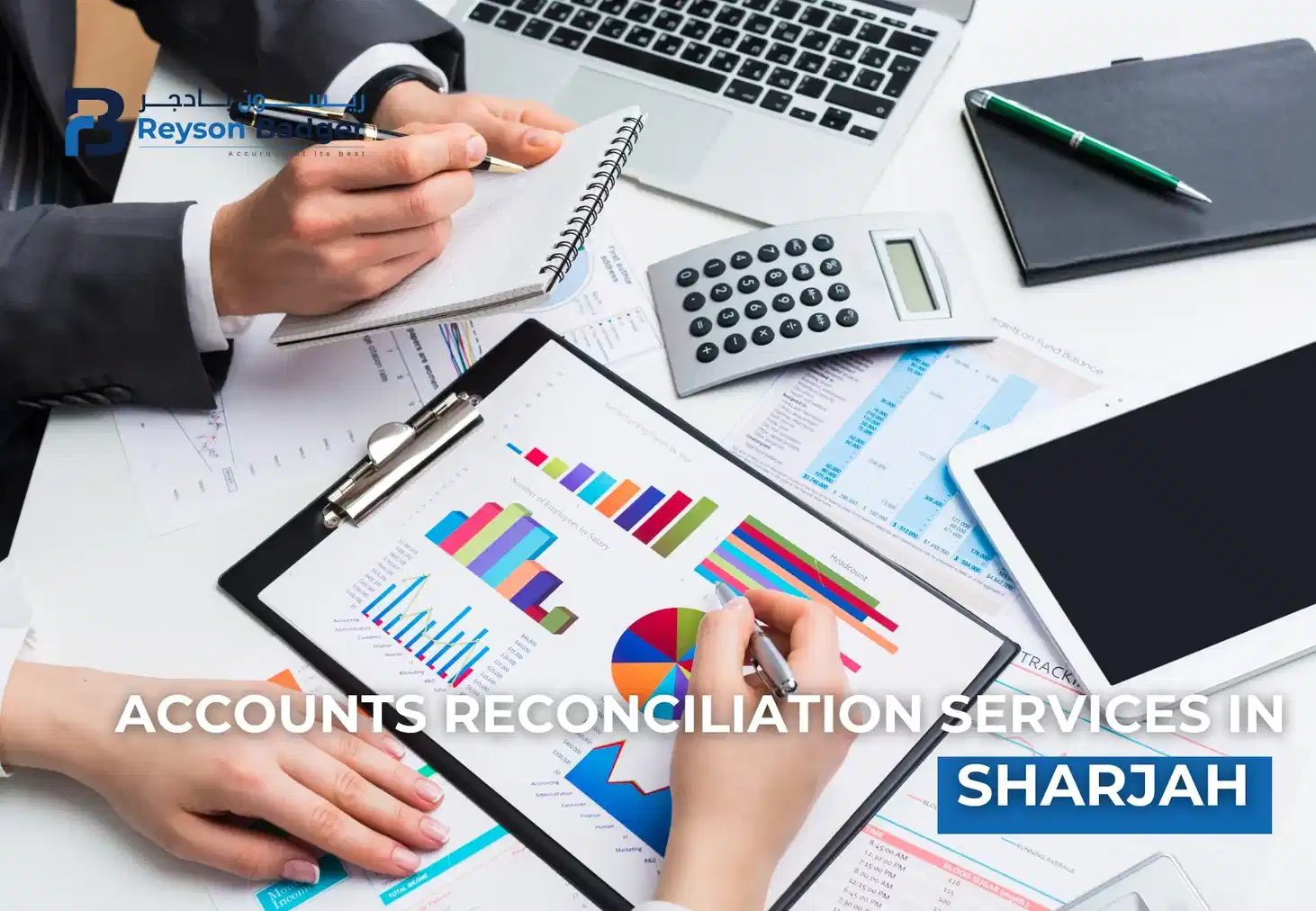
Accounts reconciliation is a very sensitive financial process, ensuring the accuracy and reliability of a firm's financial records. In Sharjah, businesses need effective accounts reconciliation services to reconcile their ledgers, and bank statements, among other financial accounts. The accounts reconciliation process involves analyzing internal financial records for comparison with appropriate external statements that show discrepancies by validating errors and correcting transactions. Accurate reconciliation for businesses operating in Sharjah will ensure sound, well-informed decision making on improving financial transparency and reducing risks from incorrect reporting of financial figures.
Types of Accounts Reconciliation Services
- Bank Statement Reconciliation Service: Confirms bank statements against in-house financial records for the purpose of seeing to it that there is no discrepancy.
- Vendor Reconciliation Service: Reconciles accounts payable and vendor statements to affirm the payment process and to eliminate duplicate payments.
- Customer Reconciliation Service: Reconciles accounts receivable and customer statements to affirm the invoicing process and recording of proper remittance.
- Intercompany Reconciliations Service: This refers to reconciling transactions between related companies or subsidiaries with the aim of making them consistent and accurate.
- Ledger Reconciliations Service: The general ledger accounts are recompiled for accuracy in compliance with financial reporting standards.
- Credit Card Reconciliations Service: There will not be unauthorized transactions once credit card statements are reconciled for accurate recording.
- Payroll Reconciliation Service: Payroll transactions are reconciled and verified for correct employee compensation and compliance with labor and tax laws.
- VAT/GST Reconciliation Service: VAT/GST reconciliation service provides for prompt reconciliation of G.S.T or V.A.T. returns in line with tax regulations.
Advantages of Reconciliations Services
- Accurate Financial Records and Reporting: Reconciliations are done from time to time ensuring financial records are correct, complete, and up-to-date. This means the financial statement and reports will be reliable, therefore giving good transparency over a company's financial position. Therefore successful decisions in business will be realized.
- Detection of Discrepancies and Fraud Prevention: Reconciliation provides the means for determining discrepancies between any internal records and external documents, like bank statements or supplier invoices. So, it can detect and rectify errors or unauthorized transactions early, thereby preventing financial losses.
- Better management of cash flow : With accurate reconciliation, businesses tend to monitor inflows and outflows in cash better, thus improving their ability to manage working capital. The businesses will be in a better position to meet financial obligations and make appropriate decisions on investments and expenditures.
Account Reconciliation Process
Step 1: Gather Necessary Documents
Collect relevant financial documents
- Bank statements
- Ledger accounts
- Vendor statements
- Customer statements
- Invoices
- Payment receipts
Step 2: Review and Verify Transactions
- Verify transaction dates and amounts across documents.
- Check for duplicates or missing transactions.
- Identify any discrepancies or irregularities in transactions.
Step 3: Match Transactions
- Match transactions in ledger accounts to corresponding entries in bank statements, vendor statements, or customer statements.
- Ensure the accuracy and completeness of each transaction.
Step 4: Investigate Discrepancies
- Research the cause of any discrepancies or irregularities found.
- Contact vendors, customers, or financial institutions if clarification or additional information is needed.
Step 5: Adjust Ledger Accounts
- Make necessary adjustments to ledger accounts to correct errors or discrepancies.
- Properly record all corrections or adjustments made.
Step 6: Verify Reconciliation
- Reconcile the adjusted ledger accounts with the bank statements or vendor/customer statements.
- Ensure the reconciliation is accurate and complete.
Step 7: Document and Store Reconciliation
- Maintain thorough records of the reconciliation process.
- Store all reconciliation documents securely for future reference or audit purposes.
Step 8: Review and Analyze Reconciliation Results
- Identify any trends or recurring issues from the reconciliation.
- Use the insights gained to improve internal controls and financial processes.
Who Can Benefit from Account Reconciliation Services?
Various industries and entities can benefit from account reconciliation services:
Industries:
- Banking and Financial Institutions
- Retail and E-commerce
- Manufacturing and Logistics
- Healthcare and Medical Services
- Real Estate and Construction
- Hospitality and Tourism
- Non-Profit Organizations
- Government Agencies
- Educational Institutions
- Small and Medium-Sized Enterprises (SMEs)
Businesses:
- Start-ups
- Growing businesses
- Companies with complex financial transactions
- Businesses with multiple branches or locations
- Companies with a high volume of transactions
- Businesses with limited accounting staff
- Companies undergoing mergers and acquisitions
- Businesses with foreign transactions or subsidiaries
Entities:
- Sole Proprietorships
- Partnerships
- Limited Liability Companies (LLCs)
- Corporations
- Trusts
- Estates
- Non-Profit Organizations
- Government Agencies
Individuals:
- High Net Worth Individuals
- Business Owners
- Entrepreneurs
- Expats
- Individuals with Complex Financial Situations
Why Choose Accounts Reconciliation Services in Sharjah?
All of these depend on the effective reconciliation process, involving unnoted mistakes as well as fraud. Services will be ready to best match local businesses according to the law in order to manage cash flow better. As the best accounts reconciliation services in Sharjah, we are here to ensure that your accounts balance is correct to avoid unnecessary disclaimers and comply accordingly. Professionally portray financial integrity with the reconciliation services from Reyson Badger. Get in touch with us today for solutions tailored specifically for you!
Latest Blogs
How UAE Accounting Services Help Businesses Stay 100% FTA Compliant
Discover how expert accounting services in UAE reduce filing errors, prevent FTA penalties, and keep your business audit-ready and compliant.
READ MORE →
Do UAE E-Invoicing Need QR Codes? Explained Simply
The right E-invoicing Services in UAE, businesses can ensure smooth compliance, improve efficiency, and stay ready for the future of digital taxation in the UAE.
READ MORE →
The Importance of Audit Services in UAE for Manufacturing Businesses
READ MORE →
How to Close a Business in Dubai: Complete Guide to Company Liquidation
Learn how to close a business in Dubai with this complete guide to company liquidation. Understand the legal requirements, liquidation process, document preparation, license cancellation procedures, and compliance obligations to ensure a smooth and hassle-free business closure in the UAE.
READ MORE →
Anti-Money Laundering Regulations in UAE: How AML Compliance Services Keep You Protected
AML Compliance Services in the UAE help businesses meet anti-money laundering rules, reduce financial crime risk, and avoid regulatory penalties.
READ MORE →
In-House Accountant vs Outsourced Accounting in Dubai: Real Cost Comparison for 2026
Our outsourced accounting services Dubai are structured around each client's business size, transaction volume, and compliance requirements, not a generic package.
READ MORE →
Mandatory vs Voluntary VAT Registration in the UAE: Which One is Right for Your Business?
Understand mandatory vs voluntary VAT registration in the UAE, including turnover thresholds, compliance requirements, benefits, and how to choose the right VAT registration option for your business.
READ MORE →
Difference Between Regular and Golden Visa in UAE
Learn the differences between Regular and Golden Visas in the UAE, including eligibility, duration, and benefits.
READ MORE →
Corporate Tax Year-End Accounting Checklist for Dubai Businesses: What to Prepare Before the Deadline
Professional support through accounting services in Dubai and corporate tax services in UAE makes the difference between a smooth, compliant year-end and a stressful.
READ MORE →
Understanding Your Rights: Legal Services for Individuals in UAE
A guide to legal services for individuals in the UAE and the importance of understanding your legal right.
READ MORE →