Accounting Services in Dubai: A Practical Guide for Growing Companies
19-Jan-2026
Compliance and Anti-Money Laundering
Protect your business with practical Anti-Money
Laundering solutions that ensure compliance,
reduce risk, and build lasting trust.
Compliance & Anti-Money Laundering
If you're looking for reliable AML compliance services in UAE or Dubai, you need a team that keeps you on the right side of anti-money laundering regulations so you don't risk fines, bank account closures, or reputational damage. Reyson Badger provides end-to-end AML/CFT services in the UAE to help your business prevent financial crime, meet regulatory obligations, and protect its reputation.
The UAE's Anti-Money Laundering (AML) framework is built on two main laws: Federal Law No. (20) of 2018 and Cabinet Decision No. (10) of 2019. These laws define the responsibilities for preventing money laundering and terrorist financing.
Key entities that must comply include financial institutions (like banks and insurers), as well as designated non-financial businesses and professions (DNFBPs) such as lawyers, accountants, and real estate agents. The Financial Intelligence Unit ( FIU ) can also specify other entities. All these obligated parties are required to implement strong AML measures.
Obliged entities must stay updated with the latest developments and guidelines in AML regulations, as these are subject to change. If your AML controls or reporting fall behind these anti-money laundering regulations, your business can face penalties, inspection findings, or even suspension of activity. Continuous monitoring and adaptation to new AML requirements are essential for ensuring ongoing compliance and effectively preventing and detecting money laundering and terrorist financing threats in the UAE.
AML Compliance Services in UAE – Your Partner in AML/CFT
Reyson Badger provides focus AML solutions to support businesses in navigating regulatory requirements and minimizing financial crime risks. Some of the AML Services offered by Reyson Badger include:
- AML Registration Services
- AML Documentation
- AML Health Check
- AML Software Services
- AML Notification Services
- AML Filing Services
- AML Due Diligence Services
- AML KYC Support
- AML Inspection Support
- AML Risk Assessment
- AML Regulation Services
- AML Compliance Support
- AML Setup Services
- AML Policy Services
- AML Certification Services
- AML Reporting Services
AML Compliance Services in Dubai, UAE
Our AML compliance services in Dubai are designed to keep your business aligned with local regulators so you don't end up facing unexpected inspections, account freezes, or licence issues.
Whether you're a bank in Dubai, a DNFBP in JLT, a Virtual Asset Service Provider, or a Dealers in Precious Metals and Stones (DPMS) outlet, we help you interpret UAE anti-money laundering regulations, build practical controls, and respond quickly to FIU or supervisor requests.
Who Needs AML Compliance Services in UAE
AML compliance services are required for you if your business falls under UAE AML/CFT rules and you don't want to risk penalties or public enforcement actions.
Key reporting entities include:
- Financial institutions: banks, finance companies, money service businesses, insurers, and securities firms.
- Designated non-financial businesses and professions (DNFBPs) : lawyers, auditors, accountants, real estate brokers, and company and trust service providers.
- Dealers in Precious Metals and Stones (DPMS): gold and jewellery traders, bullion dealers, and high‑value luxury dealers.
- Virtual Asset Service Providers (VASP): crypto exchanges, virtual asset brokers, and similar service providers licensed by the relevant authorities.
If you're in any of these categories and your AML controls, KYC files, or STR reporting aren't in order, you can face fines, onsite inspections, and banking relationship challenges.
AML Registration Services

Anti-money laundering registration is important for businesses operating in the UAE to comply with regulatory requirements. The UAE government has implemented strict AML regulations to prevent financial crimes, and businesses must register with the relevant authorities to show their commitment to AML compliance.
- Assistance with registering the company with the relevant AML authorities, including the UAE Financial Intelligence Unit (FIU) and the Dubai Financial Services Authority (DFSA)
- Preparation and submission of registration applications and documents, including the AML registration form, business license, and identity documents
- Liaison with authorities to ensure successful registration and resolution of any queries or issues
- Obtaining the AML registration certificate and supporting businesses with ongoing compliance requirements
Reyson Badger's AML registration services enable businesses to navigate the registration process with ease, mitigating risks of non-compliance, such as financial penalties and damage to their reputation.
AML Documentation
We assist obliged entities in preparing and maintaining necessary AML documentation, including:
AML Policy Development
- Creation of a tailored AML policy that meets regulatory requirements
- Definition of AML roles and responsibilities within the organization, including Money Laundering Reporting Officer (MLRO) duties where required
- Establishment of procedures for reporting suspicious transactions
Customer Due Diligence (CDD) Documentation
- Development of CDD forms and templates for customers onboarding and ongoing monitoring
- Creation of risk assessments and scoring matrices for customer categorization
- Implementation of ongoing CDD review and update processes
AML Risk Assessment and Management
- Identification and assessment of AML risks specific to the business
- Development of risk mitigation strategies and controls
- Preparation of Business Risk Assessment and Enterprise-Wide Risk Assessment (EWRA) documentation required by regulators
- Drafting and updating your Annual AML/CFT Risk Assessment Report so you can evidence your risk‑based approach during inspections
AML Transaction Reporting
- Creation of procedures for reporting suspicious transactions to the UAE FIU
- Development of templates for submitting Suspicious Transaction Reports (STRs)
- Ongoing support for submitting STRs and maintaining related records
AML Record Keeping
- Establishment of a system for maintaining AML-related records, including customer documents and transaction data
- Development of procedures for storing, retrieving, and deleting AML records
- Ongoing support for maintaining accurate and up-to-date AML records
Our team ensures that all AML documentation is accurate, complete, and up-to-date, helping obliged entities demonstrate compliance with UAE regulations.
AML Health Check
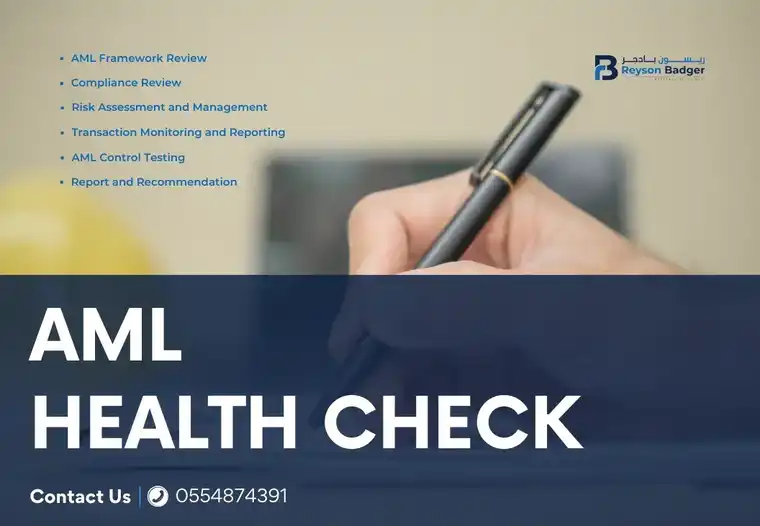
An AML Health Check is a thorough assessment of a company's AML framework, designed to evaluate its effectiveness and adherence to regulatory standards. The health check assesses the company's AML policies, procedures, and controls to identify areas of strength and weakness, providing recommendations for improvement. If you don't test your AML controls proactively, a regulator may identify gaps first resulting in remediation orders, fines, or reputational damage. This proactive approach helps businesses prevent financial crimes, avoid regulatory penalties, and maintain a strong AML compliance culture.
AML Framework Review
- Assessment of AML policies, procedures, and guidelines
- Review of AML risk assessments and risk management strategies
- Evaluation of AML training programs and awareness initiatives
Compliance Review
- Review of customer due diligence (CDD) processes and procedures
- Assessment of ongoing CDD and transaction monitoring practices
- Evaluation of sanctions screening and Politically Exposed Persons (PEPs) management
Risk Assessment and Management
- Identification and assessment of AML risks specific to the business
- Evaluation of risk mitigation strategies and controls
- Recommendations for enhancing risk management practices
Transaction Monitoring and Reporting
- Review of transaction monitoring systems and processes
- Assessment of Suspicious Transaction Report (STR) submission practices
- Evaluation of AML transaction reporting and record-keeping practices
AML Control Testing
- Testing of AML controls and procedures to ensure effectiveness
- Identification of control gaps and weaknesses
- Recommendations for strengthening AML controls
Report and Recommendations
- A comprehensive report highlighting AML health check findings
- Practical recommendations for improving AML compliance and controls
- Action plan for implementing recommendations and enhancing AML framework
AML Software Services
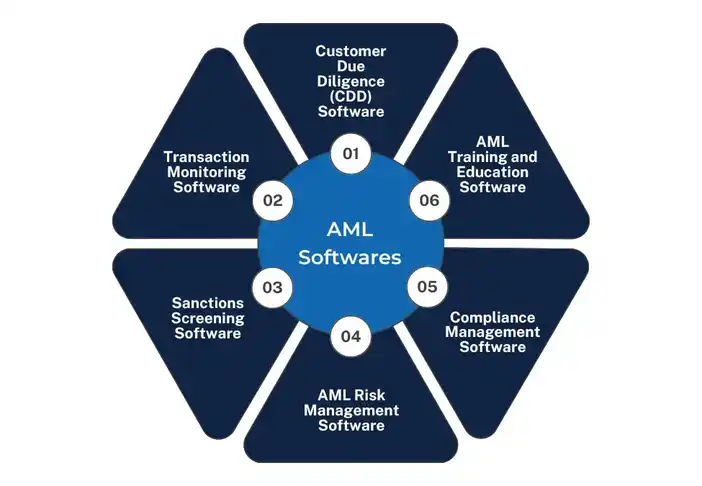
AML software services help you choose, implement, and validate the right tools so you don't rely on manual checks that miss risks or trigger findings during inspections.
Customer Due Diligence (CDD) Software
- Automates CDD processes for efficiency.
- Provides real-time customer risk assessment.
- Offers ongoing monitoring and updates for customer information.
Transaction Monitoring Software
- Screens transactions in real-time to identify suspicious activity.
- Uses advanced risk scoring to prioritize alerts.
- Automates Suspicious Transaction Report (STR) filing.
Sanctions Screening Software
- Screens customers and transactions against global sanction lists in real time.
- Generates automated alerts and notifications for potential matches.
- Ensures ongoing updates and maintenance of sanction lists.
PEP & Adverse Media Screening
- Identifies Politically Exposed Persons (PEPs) connected to your customers.
- Flags negative news (adverse media) so you can reassess risk levels quickly.
AML Risk Management Software
- Assess and score potential money laundering risks within your business.
- Enables a risk-based approach to CDD and ongoing monitoring.
- Automates risk reporting and provides data analytics.
Compliance Management Software
- Automates compliance tasks and generates reminders.
- Provides real-time reporting and analytics on your compliance status.
AML Training and Education Software
- Delivers interactive training modules for your staff on AML best practices.
- Tracks and records employee training completion.
- Offers automated updates and notifications on new regulations or training materials.
We also help you with AML software selection and independent testing or validation of name screening, sanctions, PEP, and transaction monitoring tools, so you can show regulators that your systems actually work and that alerts are properly tuned.
AML Notification Services
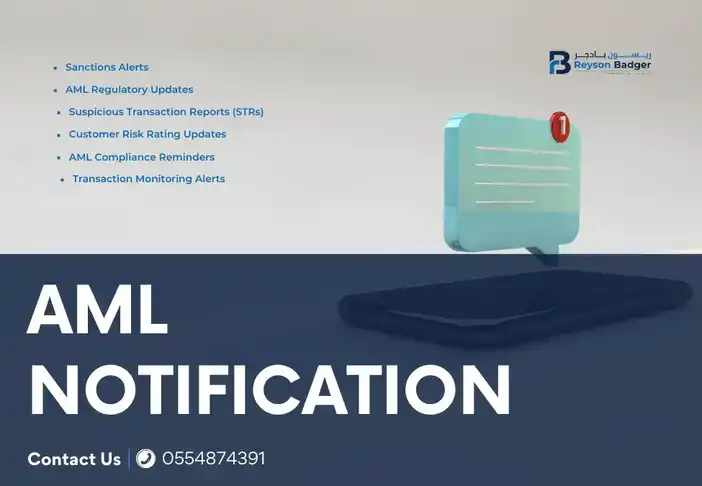
Anti-Money Laundering (AML) notification services are crucial for keeping businesses safe from money laundering. These services deliver real-time alerts to help businesses identify and mitigate AML risks promptly. With AML notifications, businesses can quickly learn about changes in customer risk, sanctions, and negative news. This helps them act fast to stay compliant and lower risks. Using AML notification services helps businesses improve their AML programs, reduce risk, and protect themselves against money laundering and terrorist financing.
Our AML notification services deliver prompt and precise compliance solutions, keeping you up-to-date with regulatory obligations. Our services include:
Sanctions Alerts:
- Real-time notifications of sanctions list updates
- Automated screening against sanctions lists
AML Regulatory Updates:
- Notifications of changes to AML regulations and guidelines
- Analysis and interpretation of regulatory updates
Suspicious Transaction Reports (STRs):
- Automated generation and submission of STRs
- Notifications to relevant authorities and stakeholders
Customer Risk Rating Updates:
- Ongoing monitoring and updates of customer risk ratings
- Notifications of changes to customer risk profiles
AML Compliance Reminders:
- Automated reminders for AML compliance tasks and deadlines
- Notifications of upcoming compliance requirements
Transaction Monitoring Alerts:
- Real-time alerts for high-risk transactions
- Automated transaction monitoring and reporting
AML Filing Services
Anti-Money Laundering (AML) filing services involve sending necessary reports to regulatory authorities like the Financial Intelligence Unit (FIU) to follow AML rules. AML filing is very important for a good AML compliance program. It helps find and report suspicious transactions, activities, and transactions that go over certain amounts. Accurate and timely AML filing helps stop money laundering, terrorist financing, and other financial crimes. Partnering with Reyson Badger for AML filing services enables businesses to maintain regulatory adherence, minimize risk, and uphold a robust AML compliance framework.
Reyson Badger's AML Filing Services help businesses comply with regulatory requirements by filing necessary reports, including:
- Suspicious Transaction Reports (STRs)
- Suspicious Activity Reports (SARs)
- Currency Transaction Reports (CTRs)
- Large Cash Transaction Reports (LCTRs)
AML Due Diligence Services
Customer Due Diligence (CDD)
- Verifies customer identity and credentials through documentation and data checks.
- Assesses customer risk profile based on business activities, ownership structure, and geographic location.
- Provides ongoing monitoring and updates to keep customer information current.
Enhanced Due Diligence (EDD)
- Conducts in-depth analysis for high-risk customers or transactions.
- Investigate sources of funds and wealth to identify potential money laundering risks.
- Assesses political exposure (PEP status) and reputational risks associated with the customer.
Vendor Due Diligence
- Evaluates the risk profile of potential or existing vendors.
- Verifies vendor credentials and reputation through background checks and reference inquiries.
- Implements ongoing monitoring to identify any changes in vendor risk.
Partner Due Diligence
- Assesses the risk profile of potential or existing business partners.
- Verifies partner credentials and reputation through document checks and reference checks.
- Maintains ongoing monitoring to stay updated on any changes in partner risk.
AML Screening
- Screens customers, vendors, and partners against global sanctions lists and AML watchlists.
- Conducts ongoing monitoring for any additions or changes to these lists that may impact your business relationships.
Risk Assessment
- Identifies and evaluates potential Anti-Money Laundering (AML) risks specific to your business.
- Develops risk mitigation strategies to address identified vulnerabilities and ensure compliance.
AML KYC Support
AML KYC (Know Your Customer) Support helps businesses follow Anti-Money Laundering (AML) rules by checking and keeping track of their customers' identities and activities. This support makes sure businesses understand their customers' risk levels, helping them avoid AML risks. If KYC files are incomplete or outdated, regulators can treat every related transaction as higher risk. By using Reyson Badger's AML KYC Support, businesses can do accurate and efficient customer checks, reduce AML risks, and keep a strong compliance program.
Reyson Badger's AML KYC Support provides businesses with expert assistance in
- Customer Identification and Verification
- Risk Assessment and Categorization
- Ongoing Monitoring and Updates
- Document Collection and Validation
- PEP and Sanctions Screening
We offer managed KYC and Customer Due Diligence (CDD) services so your team doesn't struggle with manual checks, missing documents, or inconsistent risk ratings. KYC is very important for AML compliance. Robust KYC procedures help prevent money laundering, terrorist financing, and other financial crimes. Reyson Badger's AML KYC Support helps businesses build strong relationships with their customers while making sure they follow the rules.
AML Inspection Support
AML Inspection is a process that helps identify vulnerabilities and weaknesses in a company's Anti-Money Laundering (AML) compliance program. The inspection process includes:
- Review of AML policies and procedures
- Assessment of Customer Due Diligence (CDD) Practices
- Evaluation of transaction monitoring and reporting systems
- Review of Sanctions and Watchlist screening processes
- Assessment of AML training programs for employees
- Review of record-keeping and documentation practices
- Evaluation of risk assessment and management practices
- Review of compliance with regulatory requirements and guidelines
The goals of an AML inspection include:
- Identifying areas for improvement in the AML compliance program
- Ensuring compliance with regulatory requirements and guidelines
- Detecting and combating money laundering and terrorist financing.
- Protecting the company from reputational risk and financial losses
- Ensuring effective implementation of AML controls and procedures
AML inspections can be conducted by:
The UAE prioritizes Anti-Money Laundering (AML) and Counter-Financing of Terrorism (CFT) efforts through rigorous inspections. Various regulatory bodies oversee compliance, depending on the business type and location.
Key AML Regulators in the UAE:
- Central Bank of the UAE (CBUAE) : Supervises financial institutions, including banks, insurance companies, and exchange houses in the mainland.
- Ministry of Economy (MoEc): Oversees designated non-financial businesses and professions, such as:
- Real estate agents and brokers
- Traders of precious gems and metals
- Auditors and accountants
- Attorneys and legal practitioners
- Company service providers
- Crypto asset service providers
- Securities and Commodities Authority (SCA): Regulates securities and capital market activities.
- Financial Services Regulatory Authority (FSRA): Conducts AML supervision for businesses in the Abu Dhabi Global Market (ADGM) free zone.
- Dubai Financial Services Authority (DFSA): Oversees Anti-Money Laundering (AML) compliance for entities operating within the Dubai International Financial Centre (DIFC), a prominent financial free zone.
AML Risk Assessment
AML (Anti-Money Laundering) Risk Assessment is a systematic process to identify, assess, and prioritize risks related to money laundering and terrorist financing. It involves evaluating the likelihood and potential impact of AML risks and implementing controls to mitigate them.
Key steps in AML Risk Assessment:
- Identify Risks: Consider factors such as customer types, geographic locations, products and services, transaction patterns, and industry sectors.
- Assess Risks: Evaluate the likelihood and potential impact of identified risks using a risk matrix or scoring system.
- Categorize Risks: Group risks into high, medium, or low categories based on their assessed level of risk.
- Implement Controls: Develop and implement AML controls and procedures to mitigate identified risks.
- Monitor and Review: Continuously monitor and review the risk assessment and update controls as needed.
AML Risk Assessment considers various factors, including:
- Customer Risk: PEPs, high-risk industries, adverse media
- Geographic Risk: High-risk countries, sanctions, and embargoes
- Product/Service Risk: Cash-intensive businesses, high-risk transactions
- Transaction Risk: Large or unusual transactions, cash transactions
- Industry Sector Risk: High-risk industries like gambling, cryptocurrency
By conducting regular AML Risk Assessments, businesses can:
- Identify and mitigate AML risks
- Comply with regulatory requirements
- Protect their reputation and assets
- Enhance their AML compliance program
Reyson Badger's AML Risk Assessment services can help businesses effectively identify and manage their AML risks.
Business Risk Assessment & Annual AML/CFT Risk Assessment Report
Business Risk Assessments and annual AML/CFT risk assessment reports give you and your regulator a clear picture of where your exposure sits so you don't guess where to focus controls.
- Initial Business Risk Assessment (BRA) and Enterprise-Wide Risk Assessment (EWRA).
- Annual AML/CFT Risk Assessment Report aligned with UAE expectations.
- Risk scoring models for customers, products, channels, and geographies.
- Action plans that link each key risk to specific controls.
If these assessments are missing or outdated, supervisors can conclude that your AML framework isn't risk‑based, which often leads to remediation orders.
AML Regulation Services in UAE
AML Regulation services help your business interpret UAE anti-money laundering regulations and convert them into day‑to‑day controls so you don't misread a rule and end up with a violation. AML (Anti-Money Laundering) regulations are laws and guidelines designed to prevent money laundering and terrorist financing. Key aspects of AML regulations include:
- Customer Due Diligence (CDD): Verifying customer identity and assessing risk.
- Ongoing Monitoring: Regularly reviewing customer transactions and activity.
- Reporting Suspicious Transactions: Submitting SARs (Suspicious Activity Reports) to regulatory authorities.
- Record Keeping: Maintaining accurate and up-to-date records.
- Compliance Programs: Establishing and maintaining effective AML programs.
- Training and Education: Educating employees on AML regulations and requirements.
- Risk Assessment: Identifying and assessing AML risks.
- Transaction Screening: Screening transactions against sanctions and watchlists.
These regulations are enforced by different supervisory authorities depending on your licence type, and misunderstanding that split can leave your business exposed.
Businesses subject to AML regulations include:
- Banks and financial institutions
- Money service businesses (MSBs)
- Securities and insurance companies
- Casinos and gaming establishments
- Real estate and luxury goods dealers
- Cryptocurrency and Virtual Asset Service Providers (VASP)
- Dealers in Precious Metals and Stones (DPMS)
- Company and Trust Service Providers
We translate these AML/CFT rules into clear actions, policies, and monitoring steps tailored to your sector.
AML Compliance Support
Our AML compliance support is designed to relieve pressure on your team by building, implementing, and reviewing the controls required to meet UAE AML/CFT obligations. AML (Anti-Money Laundering) compliance refers to the processes and procedures implemented by businesses to prevent, detect, and report money laundering and terrorist financing activities. AML compliance involves:
- Customer Due Diligence (CDD): Verifying customer identity and assessing risk.
- Ongoing Monitoring: Regularly reviewing customer transactions and activity.
- Transaction Reporting: Submitting SARs (Suspicious Activity Reports) and other required reports.
- Risk Assessment: Identifying and assessing AML risks.
- Compliance Programs: Establishing and maintaining effective AML programs.
- Training and Education: Educating employees on AML regulations and requirements.
- Record Keeping: Maintaining accurate and up-to-date records.
- Audit and Testing: Regularly reviewing and testing AML controls.
We can also help you structure your in‑house AML function and MLRO responsibilities so you're ready when supervisors ask who owns AML in your business.
AML compliance is crucial for businesses to:
- Prevent money laundering and terrorist financing.
- Meet legal and regulatory requirements.
- Protect their reputation and assets.
- Avoid fines and penalties for non-compliance.
- Ensure a safe and secure financial system.
AML Setup Services
AML Setup refers to the process of establishing and configuring an Anti-Money Laundering (AML) system or program for a business or organization. This includes:
- Identifying and assessing AML risks.
- Policy Development: Creating AML policies and procedures.
- Setting up CDD processes and procedures.
- Configuring transaction monitoring and reporting tools.
- Setting up sanctions screening and watchlist filtering.
- Configuring reporting tools for SARs (Suspicious Activity Reports) and other required reports.
- Providing AML training for employees.
- Establishing an AML compliance program.
- Integrating AML systems with existing infrastructure.
- Testing and validating the AML setup to ensure effectiveness.
These setup services establish the foundation of your in-house AML compliance function and enable your MLRO to fulfil their regulatory responsibilities effectively.
AML/CFT Policy, Controls, and Procedures Documentation
An AML (Anti-Money Laundering) policy is a document outlining a company's procedures and guidelines for preventing, detecting, and reporting money laundering and terrorist financing activities. An AML policy should include:
- Purpose and Scope
- Risk Assessment and Management
- Customer Due Diligence (CDD) and Know-Your-Customer (KYC) procedures
- Transaction Monitoring and Reporting
- Sanctions and Watchlist Screening
- Suspicious Activity Reporting (SAR)
- Record Keeping and Documentation
- Training and Education
- Compliance and Audit Procedures
- Review and Update Procedures
The AML policy should be:
- Written and readily available
- Approved by senior management
- Communicated to all employees
- Reviewed and updated regularly
- Consistent with regulatory requirements
If your AML/CFT policy doesn't match how your business really operates, regulators will see gaps quickly and may treat this as a governance issue.
AML Certification Services
In the United Arab Emirates (UAE), AML (Anti-Money Laundering) certification is a professional credential that demonstrates an individual's expertise and knowledge in AML compliance, prevention, and detection.
AML Certification Programs in the UAE:
- Association of Certified Anti-Money Laundering Specialists (ACAMS) - offered in the UAE
- Certified Anti-Money Laundering Professional (CAMP)
- Certified Money Laundering Prevention Officer (CMPO)
- Certified AML Specialist (CAMS) - offered by the UAE's Central Bank and the Emirates Institute for Banking and Financial Studies (EIBFS)
AML Certification Benefits:
- Demonstrated expertise in AML compliance
- Enhanced career opportunities in the UAE's financial sector
- Improved skills and knowledge in AML prevention and detection
- Recognition by employers and regulators in the UAE
- Staying up-to-date with the UAE's AML regulations and guidelines
To obtain AML Certification, individuals typically need to:
- Meet eligibility requirements (e.g., education, experience)
- Complete training and education programs (e.g., CAMS, ACAMS)
- Pass a certification exam (e.g., CAMS, ACAMS)
- Maintain certification through ongoing education and professional development
Additional Requirements in the UAE:
- Compliance with the UAE's AML regulations and guidelines
- Knowledge of the UAE's AML laws and regulations
- Familiarity with the UAE's Financial Intelligence Unit (FIU) and its reporting requirements
By obtaining AML certification, professionals in the UAE can demonstrate their expertise and commitment to preventing money laundering and terrorist financing, and enhance their careers in the financial sector.
AML Reporting
AML reporting in the UAE is a critical requirement for financial institutions and other organizations to prevent money laundering and terrorist financing. The UAE's Financial Intelligence Unit (FIU) receives and analyzes AML reports to identify suspicious transactions and prevent criminal activity.
Reports:
- Suspicious Transaction Report (STR)
- Currency Transaction Report (CTR)
Reporting Requirements:
- Businesses must identify and report suspicious transactions exceeding AED 55,000 (approximately USD 15,000) to the UAE's FIU.
- Submit reports to the UAE's FIU within 14 days of identifying a suspicious transaction
- Maintain accurate and complete records
- Ensure confidentiality and security of reported information
Additional Requirements:
- Ongoing monitoring of customer transactions
- Updating reporting as necessary
- Complying with UAE AML regulations and guidelines
Regulatory Authorities:
- Financial Intelligence Unit (FIU)
- Central Bank of the UAE
- Dubai Financial Services Authority (DFSA)
- Abu Dhabi Global Market (ADGM)
Industry Specific Requirements:
- Banks and financial institutions
- Insurance companies
- Money exchange and remittance businesses
- Auditing and accounting firms
- Legal firms
- Real estate agents
Consequences of Non-Compliance:
- Penalties and fines
- Criminal prosecution
- Reputation damage
- Loss of license or authorization
By understanding and complying with AML reporting requirements in the UAE, organizations can help prevent money laundering and terrorist financing and maintain the integrity of the financial system.
Regulatory Reporting Services
Regulatory reporting services help you prepare and file STRs, SARs, and other AML reports correctly so you don't miss deadlines or provide incomplete information.
- Assessment of suspicious activity and guidance on whether to file.
- Drafting Suspicious Transaction Reports (STRs) and related documentation.
- Organising supporting evidence so your reports are clear and defensible.
- Setting up internal reporting and escalation procedures for staff.
Late, inaccurate, or missing AML reports can lead to penalties and raise questions about your overall AML controls.
AML Software Selection & Validation
AML software selection and validation ensures you're using tools that actually fit your risk profile so you don't waste money on systems that either over‑alert or miss key risks.
- Requirements gathering based on your business model and AML/CFT obligations.
- Vendor comparison for transaction monitoring, name screening, and case management tools.
- Testing and validation of screening and monitoring performance.
- Documenting testing results you can share with regulators if requested.
Without proper validation, you might assume your AML software is working while leaving real gaps in sanctions, PEP, or adverse media coverage.
What are the key AML challenges facing the UAE today?
The UAE faces unique AML challenges, including:
- High-Risk Transactions: Large cash transactions and wire transfers.
- Real Estate Sector Vulnerabilities: Money laundering risks in property transactions.
- Free Zone Challenges: Lack of transparency and oversight in free zone transactions.
- Hawala and Informal Money Transfer Systems: Difficult to trace and monitor.
- Cash-Intensive Businesses: High-risk sectors like gold and jewelry trading.
- Limited AML Resources: Insufficient expertise and resources for effective enforcement.
- Language Barriers: Arabic and English language differences can hinder AML efforts.
- Cultural and Religious Sensitivities: Balancing AML measures with cultural and religious practices.
- Data Privacy Concerns: Ensuring AML measures comply with UAE data protection regulations.
- Sanctions Compliance: Adhering to international sanctions lists and regulations.
- Cryptocurrency Risks: Addressing AML risks associated with virtual assets.
- Coordination between Emirates: Ensuring consistent AML efforts across all seven Emirates.
Why are AML Services Essential for Businesses in the UAE?
AML compliance services are crucial for your business if you want to avoid fines, maintain banking relationships, and keep your licence in good standing. AML services are crucial to:
- AML services help detect and prevent money laundering, terrorist financing, and other financial crimes.
- Effective AML measures safeguard the reputation of financial institutions, businesses, and individuals from reputational damage.
- AML services ensure compliance with the UAE's AML regulations and guidelines, avoiding legal and financial penalties.
- AML services identify and mitigate risks associated with money laundering and terrorist financing.
- AML services help maintain the integrity of the financial system, ensuring the stability and trustworthiness of the UAE's economy.
- AML services facilitate thorough customer due diligence, ensuring that businesses deal with legitimate and trustworthy customers.
- AML services help expand financial inclusion by reducing the risk of financial crimes, making financial services more accessible to a wider audience.
- AML services facilitate collaboration between countries to combat global financial crimes.
In the UAE, AML services are essential for financial institutions, businesses, and individuals to prevent financial crimes, maintain their reputation, and comply with regulations.
Industries We Serve
We work with a wide range of regulated entities across the UAE, adjusting our AML compliance services to your risk profile and size so you don't pay for controls you don't need.
- Banks, financing companies, and payment firms
- Insurance and securities firms
- Audit, accounting, and advisory practices
- Law firms and legal consultants
- Real estate brokers and property managers
- Dealers in Precious Metals and Stones (DPMS)
- Virtual Asset Service Providers (VASP)
- Company and Trust Service Providers
Whether you're a start‑up DNFBP or a larger financial institution, we adapt our AML compliance services to your complexity and regulatory expectations.
AML Compliance Services in UAE – By Industry and Reporting Entity
This overview shows how our AML compliance services align with different regulated entities so you can quickly see what applies to your business.
| Industry / Reporting Entity | Key AML Compliance Services |
|---|---|
| Banks & Financial Institutions | EWRA and Business Risk Assessment, AML/CFT policies, KYC/CDD, transaction monitoring, sanctions and PEP screening, regulatory reporting (STR/SAR/CTR), AML training. |
| DNFBPs (Law, Audit, Accounting, Real Estate) | AML registration, risk assessment, CDD/KYC, AML policy and procedures, MLRO support, STR filing assistance, inspection preparation. |
| Dealers in Precious Metals and Stones (DPMS) | Customer identification for high‑value cash deals, cash transaction controls, name screening, AML training for sales staff, FIU reporting support. |
| Virtual Asset Service Providers (VASP) | Enhanced CDD and source‑of‑funds checks, wallet and transaction risk monitoring, sanctions and adverse media screening, policy and procedure documentation. |
| Company and Trust Service Providers | Beneficial ownership verification, KYC/KYB file setup, ongoing monitoring, AML/CFT policy drafting, MLRO and governance support. |
AML Compliance Services vs Business Need/Outcome
This table links our AML services to practical outcomes so you can decide where to focus first.
| AML Service | Business Need | Outcome if Done Properly |
|---|---|---|
| Business Risk Assessment & EWRA | Understand overall AML/CFT risk profile | Clear view of risks so you avoid over‑ or under‑controlling and can explain your approach to regulators. |
| KYC/CDD & Screening | Onboard safe customers and maintain banking relationships | Lower risk of onboarding sanctioned or high‑risk clients that trigger account closures or regulatory findings. |
| AML/CFT Policy & Procedures | Show structured controls during inspections | Documented evidence that you take AML seriously, reducing the chance of being classed as non‑compliant. |
| Regulatory Reporting (STR/SAR/CTR) | Meet FIU reporting deadlines | Lower risk of fines or sanctions for late, missing, or poor‑quality reports. |
| AML Training | Ensure staff recognise and escalate suspicious activity | Fewer missed red flags and stronger case files when you do report. |
| In-house AML Department Setup | Build internal AML capacity as you grow | Clear roles (including MLRO), better coordination, and reduced dependency on ad‑hoc fixes. |
Our AML Compliance Process
Our AML compliance process follows a simple structure so you know what will happen and when you’ll start seeing risk reduced.
- Discovery & Gap Analysis: We review your current AML/CFT setup, licences, and risk profile to spot urgent gaps that could lead to findings.
- Design: We agree on priorities and design practical policies, procedures, and tools that match your operations.
- Implementation: We help you roll out controls, train staff, and configure AML software without disrupting your core business.
- Review & Ongoing Support: We provide periodic reviews, health checks, and reporting support so you stay aligned with new regulations.
Why Choose Our AML Compliance Specialists in UAE?
Choosing the right AML compliance specialists in UAE means you get practical advice that fits your business instead of generic templates that don't stand up to regulatory review.
- We focus on UAE and Dubai AML/CFT expectations, so your controls match local practice.
- We adapt engagement scope for start‑ups, SMEs, and larger regulated entities.
- We connect policy design directly to daily workflows, so staff know what to do in real cases.
- We support you through inspections and queries, not just during initial setup.
This approach keeps your business fully compliant while maintaining operational efficiency — without unnecessary complexity or overhead.
Reyson Badger: Your Essential Partner in UAE AML Compliance
Robust AML compliance services go beyond regulatory obligation in the UAE — they are your frontline defence against financial crime; they're your frontline defense against financial crime, protecting your business, your reputation, and safeguarding the nation's financial infrastructure.
Navigating the complexities of UAE AML regulations, mitigating risks, and ensuring proper reporting can be a daunting task. But you don't have to go it alone. Partner with Reyson Badger for trusted expertise. We offer comprehensive AML support designed to help your organization not just comply, but thrive securely.
Ready to strengthen your AML defenses and ensure peace of mind? Contact Reyson Badger today to discover how our expert AML services can safeguard your business and keep you fully compliant.
FAQ
1. What are AML compliance services and why are they important?
These services are essential to avoid legal penalties, maintain financial transparency, and build trust with regulators, banks, and clients.
2. What does an AML compliance service typically include?
A professional AML compliance service usually includes risk assessment, customer due diligence (CDD), Know Your Customer (KYC) procedures, policy drafting, employee training, transaction monitoring, and regulatory reporting. These elements ensure your business stays compliant with evolving anti money laundering regulations in the UAE. At Reyson Badger, we tailor these AML compliance services in UAE and Dubai to your size and risk profile so you only implement what you really need.
Accounting
Accounting Services for Industries
- Engine Manufacturing
- Pharmaceutical Manufacturing Industry in UAE
- Accounting Services For Bread Manufacturing Units in Dubai
- Manufacturing Sector in UAE
- Accounting For Tobacco And Cigarette Manufacturing Industry in Dubai
- Iron and Steel Casting Industry in UAE
- Accounting for Marine Companies in UAE
- Accounting for Insurance Companies in UAE
- Accounting Services for Construction in UAE
- Accounting Services for Event Management in UAE
- Accounting Services for Oil and Gas in UAE
- Accounting Services for Real Estate in UAE
- Accounting Services for Restaurants in UAE
- Accounting services for E-Commerce in UAE
- Accounting Services for Technology in UAE
- Accounting Services for Food Manufacturing Industry in UAE
Request a Quote
We’ll get back to you shortlyFAQs
Any business that handles money, financial transactions, or client funds may need AML compliance. This often includes financial institutions, fintechs, real-estate firms, insurance providers, and crypto-related businesses.
Reyson offers end-to-end AML support — from risk assessments and customer due diligence, to policy drafting, staff training, ongoing monitoring, and regulatory reporting. We make sure your compliance is durable, not just a checkbox.
Yes. In many jurisdictions, businesses must register with the relevant financial intelligence unit or regulator before starting operations. Reyson can guide you through the entire registration process.
Latest Blogs
12
Jun
How UAE Accounting Services Help Businesses Stay 100% FTA Compliant
Discover how expert accounting services in UAE reduce filing errors, prevent FTA penalties, and keep your business audit-ready and compliant.
READ MORE →
11
Jun
Do UAE E-Invoicing Need QR Codes? Explained Simply
The right E-invoicing Services in UAE, businesses can ensure smooth compliance, improve efficiency, and stay ready for the future of digital taxation in the UAE.
READ MORE →
10
Jun
The Importance of Audit Services in UAE for Manufacturing Businesses
READ MORE →
10
Jun
How to Close a Business in Dubai: Complete Guide to Company Liquidation
Learn how to close a business in Dubai with this complete guide to company liquidation. Understand the legal requirements, liquidation process, document preparation, license cancellation procedures, and compliance obligations to ensure a smooth and hassle-free business closure in the UAE.
READ MORE →
16
Jun
Anti-Money Laundering Regulations in UAE: How AML Compliance Services Keep You Protected
AML Compliance Services in the UAE help businesses meet anti-money laundering rules, reduce financial crime risk, and avoid regulatory penalties.
READ MORE →
04
Jun
In-House Accountant vs Outsourced Accounting in Dubai: Real Cost Comparison for 2026
Our outsourced accounting services Dubai are structured around each client's business size, transaction volume, and compliance requirements, not a generic package.
READ MORE →
29
May
Mandatory vs Voluntary VAT Registration in the UAE: Which One is Right for Your Business?
Understand mandatory vs voluntary VAT registration in the UAE, including turnover thresholds, compliance requirements, benefits, and how to choose the right VAT registration option for your business.
READ MORE →
29
May
Difference Between Regular and Golden Visa in UAE
Learn the differences between Regular and Golden Visas in the UAE, including eligibility, duration, and benefits.
READ MORE →
26
May
Corporate Tax Year-End Accounting Checklist for Dubai Businesses: What to Prepare Before the Deadline
Professional support through accounting services in Dubai and corporate tax services in UAE makes the difference between a smooth, compliant year-end and a stressful.
READ MORE →
25
May
Understanding Your Rights: Legal Services for Individuals in UAE
A guide to legal services for individuals in the UAE and the importance of understanding your legal right.
READ MORE →