
Save Time and Reduce Risk with Professional PRO Services
03-Mar-2026
Embassy & Consulate Attestation
Trusted attestation services for embassy and consulate verification in the UAE
Embassy and Consulate Attestation
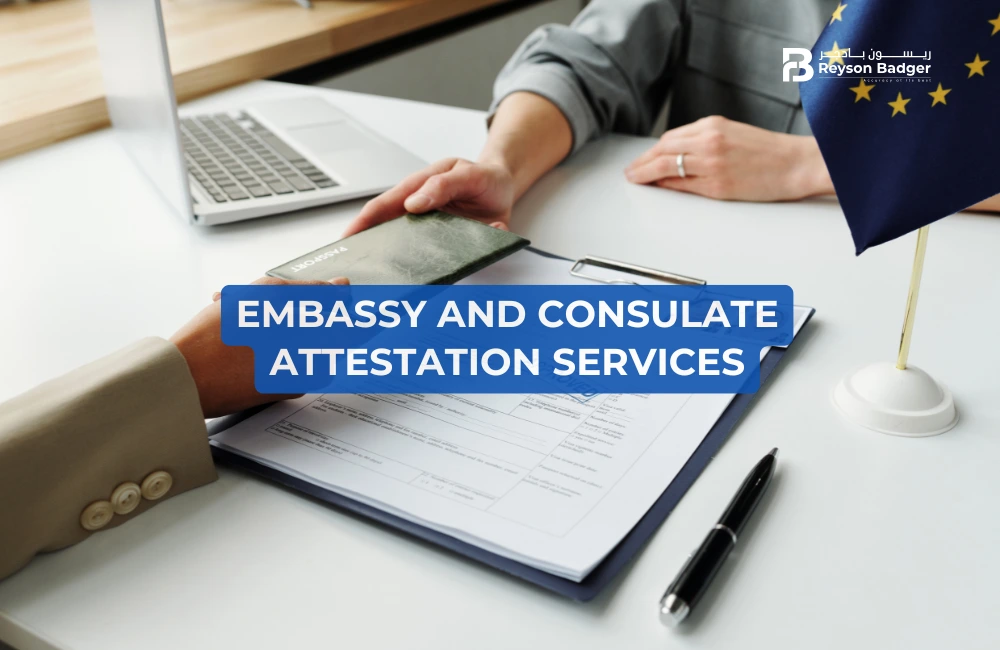
Embassy and Consulate Attestation in UAE is a formal legalization process that verifies the authenticity of documents issued in one country so they are legally accepted in another. This process is essential when documents are intended for official, legal, educational, employment, immigration, or business use either within the UAE or abroad.
Embassy attestation in UAE involves coordination between UAE government authorities primarily the Ministry of Foreign Affairs (MOFA UAE) and foreign embassies or consulates operating in the country. Without proper embassy or consulate attestation, documents may be rejected by employers, immigration departments, courts, universities, or foreign authorities.
What is Embassy and Consulate Attestation?
Definition and Purpose
Embassy and Consulate Attestation is the process by which a foreign country’s diplomatic mission (embassy or consulate) certifies a document after it has been verified by UAE authorities. This confirms that the document meets the legal standards required by the destination country or institution.
The primary purpose is to ensure that documents used across borders are genuine, verifiable, and legally enforceable.
Difference Between Embassy Attestation and Consulate Attestation
- Embassy Attestation is carried out by an embassy, which represents the foreign government at a national level in the UAE.
- Consulate Attestation is performed by a consulate, usually handling regional, administrative, or citizen-related services.
While the function is similar, the authority handling the attestation depends on the diplomatic mission structure of the concerned country.
When Is This Attestation Mandatory?
Embassy or Consulate attestation is mandatory when:
- Documents are issued in one country and used in another
- Foreign governments or institutions request legalization
- UAE immigration, education, employment, or business authorities require embassy-verified documents
Importance of Embassy & Consulate Attestation in UAE
Embassy and Consulate Attestation in UAE is essential for a wide range of official purposes:
- Employment Visa Processing: Educational and professional documents must be embassy-attested for employment visas, especially for skilled and professional roles.
- Family Visa & Immigration: Marriage certificates, birth certificates, and relationship documents require embassy attestation for family sponsorship and dependent visas.
- Education & Higher Studies: Universities and educational authorities often require embassy-attested certificates for admissions, equivalency, and verification.
- Business Setup & Legal Use: Commercial documents such as MOA, Power of Attorney, and trade-related documents must be attested for company registration, contracts, and court submissions.
- International Recognition of Documents: Attestation ensures documents are legally accepted and recognized across international jurisdictions.
Types of Documents for Attestation
Personal Documents
- Birth Certificate
- Marriage Certificate
- Divorce Certificate
- Death Certificate
These documents are commonly required for visas, immigration, family sponsorship, and legal procedures.
Educational Documents
- Degree Certificate
- Diploma Certificate
- School Certificates
Educational documents are required for employment, higher studies, professional licensing, and equivalency processes.
Commercial Documents
- Trade License
- Memorandum of Association (MOA)
- Power of Attorney
Commercial document attestation is essential for business setup, legal representation, and cross-border transactions.
Step-by-Step Process for Embassy & Consulate Attestation in UAE
The UAE embassy attestation process generally follows these stages:
- Verification from Issuing Authority: The document is first authenticated by the original issuing authority or relevant department.
- Attestation from Ministry of Foreign Affairs (MOFA UAE): MOFA UAE verifies the document for legality and authenticity within the UAE.
- Attestation from Respective Embassy or Consulate: The concerned embassy or consulate attests the document based on their country-specific requirements.
- Final Legalization (If Required): Some documents may require additional legalization depending on the destination country or purpose.
Embassy and Consulate Attestation Services in UAE
Professional embassy attestation services in UAE help individuals and businesses navigate complex embassy procedures by:
- Managing embassy-specific documentation requirements
- Ensuring accurate submission and compliance
- Coordinating with MOFA UAE and foreign embassies
- Reducing processing delays and rejections
Using professional services eliminates uncertainty and administrative burden.
Documents Required for Embassy and Consulate Attestation
- Original documents
- Passport copy of the applicant
- UAE visa copy (if applicable)
- Authorization letter (if processed through an attestation service provider)
Additional documents may be required depending on embassy regulations.
Why Choose Our Embassy & Consulate Attestation Services
- Experienced and knowledgeable attestation professionals
- MOFA-approved and compliant procedures
- Transparent pricing with no hidden costs
- Doorstep document collection and delivery
Reyson Badger provides reliable Embassy and Consulate Attestation Services in UAE, offering end-to-end support from document verification to MOFA UAE and embassy attestation ensuring accuracy, compliance, and timely completion.
PRO Services
Attestation Services in UAE
- Company Document Attestation Services in UAE
- True Copy Attestation Services
- MOFA (Ministry of Foreign Affairs) Attestation in UAE
- Commercial Document Attestation
- Trade License Attestation
- Marriage Certificate Attestation
- Birth Certificate Attestation
- Death Certificate Attestation in UAE
- Memorandum of Association (MOA) Attestation
- Educational Certificate Attestation
- Divorce Certificate Attestation
- Articles of Association Attestation in the UAE
- Medical Certificate Attestation in UAE
- Personal Document Attestation
- Police Clearance Certificate (PCC) Attestation in UAE
- Embassy and Consulate Attestation
- Degree Certificate Attestation
- Health Certificate Attestation
- Diploma Certificate Attestation
- Power of Attorney (POA) Attestation in UAE
- Commercial Invoice Attestation in UAE
- Board Resolution Attestation
- Experience Certificate Attestation
- Certificate of Incorporation Attestation
- Transcripts Attestation Services
- Sick Leave Certificate Attestation
- Document Legalization Services
- School Leaving Certificate Attestation
- Marksheet Attestation Services

Request a Quote
We’ll get back to you shortlyFAQs
Embassy attestation typically takes between 3 and 10 working days, depending on the embassy and document category.
Yes, MOFA UAE attestation is generally required before submitting documents to an embassy or consulate.
Most embassies require original documents, although a few may accept certified copies under specific conditions.
Most foreign embassies and consulates operating in Dubai and Abu Dhabi offer attestation services, subject to their internal guidelines.
Latest Blogs
12
Jun
How UAE Accounting Services Help Businesses Stay 100% FTA Compliant
Discover how expert accounting services in UAE reduce filing errors, prevent FTA penalties, and keep your business audit-ready and compliant.
READ MORE →
11
Jun
Do UAE E-Invoicing Need QR Codes? Explained Simply
The right E-invoicing Services in UAE, businesses can ensure smooth compliance, improve efficiency, and stay ready for the future of digital taxation in the UAE.
READ MORE →
10
Jun
The Importance of Audit Services in UAE for Manufacturing Businesses
READ MORE →
10
Jun
How to Close a Business in Dubai: Complete Guide to Company Liquidation
Learn how to close a business in Dubai with this complete guide to company liquidation. Understand the legal requirements, liquidation process, document preparation, license cancellation procedures, and compliance obligations to ensure a smooth and hassle-free business closure in the UAE.
READ MORE →
16
Jun
Anti-Money Laundering Regulations in UAE: How AML Compliance Services Keep You Protected
AML Compliance Services in the UAE help businesses meet anti-money laundering rules, reduce financial crime risk, and avoid regulatory penalties.
READ MORE →
04
Jun
In-House Accountant vs Outsourced Accounting in Dubai: Real Cost Comparison for 2026
Our outsourced accounting services Dubai are structured around each client's business size, transaction volume, and compliance requirements, not a generic package.
READ MORE →
29
May
Mandatory vs Voluntary VAT Registration in the UAE: Which One is Right for Your Business?
Understand mandatory vs voluntary VAT registration in the UAE, including turnover thresholds, compliance requirements, benefits, and how to choose the right VAT registration option for your business.
READ MORE →
29
May
Difference Between Regular and Golden Visa in UAE
Learn the differences between Regular and Golden Visas in the UAE, including eligibility, duration, and benefits.
READ MORE →
26
May
Corporate Tax Year-End Accounting Checklist for Dubai Businesses: What to Prepare Before the Deadline
Professional support through accounting services in Dubai and corporate tax services in UAE makes the difference between a smooth, compliant year-end and a stressful.
READ MORE →
25
May
Understanding Your Rights: Legal Services for Individuals in UAE
A guide to legal services for individuals in the UAE and the importance of understanding your legal right.
READ MORE →