Accounting Services in Dubai: A Practical Guide for Growing Companies
19-Jan-2026
Accounting service for engine manufacturing
Specialized accounting services for engine manufacturing
businesses to manage complex financial operations,
ensure compliance, and improve cost control.
Engine Manufacturing
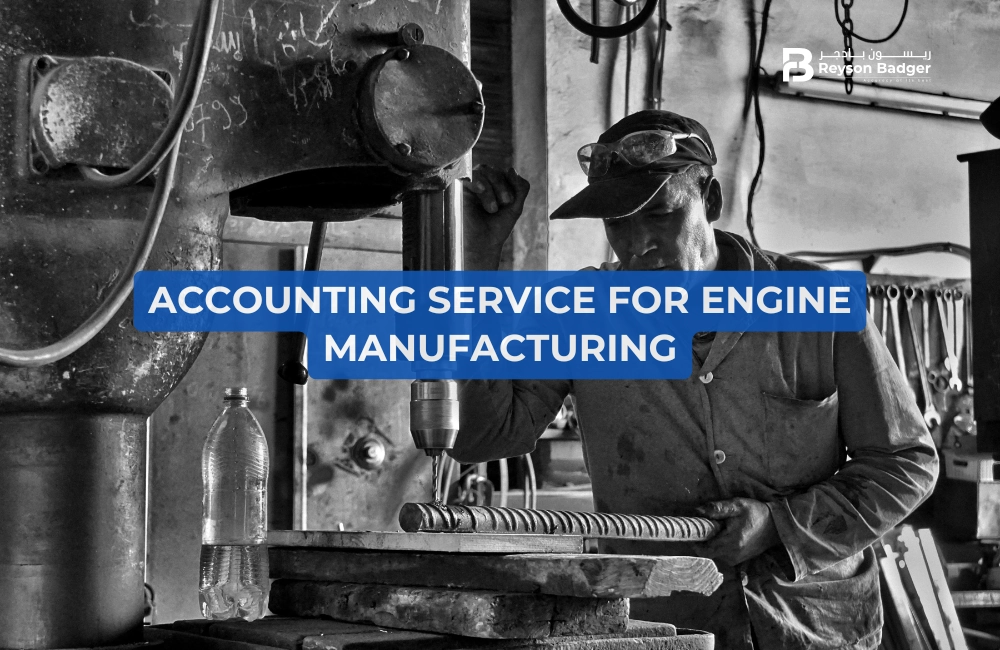
Manufacturing is a major contributor to economic growth. Because the equipment and engine manufacturing sector faces constant change and volatility, it requires vigilant accounting and financial oversight comprehensible, effective, reliable, and timely accounting and bookkeeping can help the equipment and engine manufacturing business in many ways. However, It's difficult to run an equipment and engine manufacturing business and keep track of the accounting at the same time.
Accounting and bookkeeping share fundamentals. Bookkeeping records transactions; accounting involves interpretation, analysis, classification, reporting and summarising financial data. Nonetheless, both are major activities that ought to be carried out by every firm. They lay down the basis for evaluation, serve as the foundation for managerial choices, and give shareholders and the government crucial financial data whilst also assuring adherence to UAE tax regulations.
Cost accounting, a subject that is infamously difficult to understand, is heavily incorporated into the equipment and engine manufacturing industry. The purpose of cost accounting is primarily to facilitate different types of internal analysis than it is to provide financial statements for use by external parties.
According to international standards and reporting guidelines, accounting for equipment and engine manufacturing enterprises primarily consists of two components: cost of goods sold and inventory valuation.
In equipment and engine manufacturing companies, raw materials usually form the bulk of inventory valuation. Some items become work-in-progress before reaching finished goods status.
The main inventory held by manufacturing enterprises consists of firstly Raw materials, which are necessary for the production process. Materials are directly used in the production of items, whereas, Work in Progress are manufacturing units that hold unfinished processes under the heading of work in progress, finally, Finished Goods are products that are entirely ready for market sale. Secondly, COGS is one of the major expenses a manufacturing company faces: the cost of goods sold. It must be regarded as the main counterbalancing expense. It happens before selling costs and office overhead, thus it should be taken into account sooner.
It is more difficult to grasp how changes in your operations affect your equipment and engine manufacturing bottom line when accounting is not customized for equipment and engine manufacturing processes. Since accounting enables you to determine what your equipment and engine manufacturing costs are, optimizing the operation is crucial to cost reduction. The services of accounting & bookkeeping organizations can be of help here and by appointing an expert and implementing accounting procedures within the organization, this challenge can be significantly mitigated.
With the transforming scenarios in UAE, bookkeeping and accounting are now more essential than ever. According to the UAE Commercial Companies Law, Federal Law No. 2 of 2015, every business must maintain accurate books of accounts and engage a registered auditor to have those books of accounts examined annually.
The new tax system, the implementation of VAT, and many other compliances are to be taken care of which shifts standards for maintaining the financial data one step up. Bookkeeping and accounting services in UAE are working constructively towards meeting all the agendas required to build a base and more, meeting the law of the land, the interest of the company, and other users and prospective users of the financial statements of the company.
A team of skilled professionals with years of experience in UAE accounting laws, IFRS and global standards can be a great asset to manufacturing businesses. They prepare structured accounting records that are comprehensible, effective, and reliable, helping to determine compliance. A strong accounting and financial system are the foundation of every business. In order to give business owners real-time data for informed choices, a sound accounting system makes sure that an organization's commercial transactions are accurately recorded, reliable, and efficient.
- Reduces administrative burden
- Cost reduction
- Accuracy
- Compliance with the law
- Saves time and resources
- Compliance with IFRS
- Professional approach
- Expert’s opinion
- Custom-tailored services
- Helps in decision-making
Every firm, regardless of size, must have accounting and bookkeeping systems in place. Without trustworthy, accurate, and timely financial information, you cannot function. In order to make prudent business decisions, it is vital to keep track of your company's performance, and bookkeeping and accounting services in UAE are top-notch.
Our bookkeeping and accounting services in Dubai and the UAE are tailored to meet your needs and preferences. The outsourced organization not only provides a wide range of bookkeeping and accounting services throughout the United Arab Emirates. For your specific accounting and bookkeeping needs to be met, our technology-driven specialists endeavor to comprehend the intricacies of your firm.
The UAE manufacturing sector is expanding. The Ministry of Economy has announced an aim to raise its contribution to GDP to 25% by 2026. Dubai's Department of Finance established the National Industrial Coordination Council (NICC), intending to help the UAE improve its position in the global manufacturing indexes.
A judicious analysis of financial statements to give an impartial opinion helps the business see a new perspective. They require consultants who can use this critical information in the audit process as precisely and successfully as possible. Hiring such service providers will not only save you time and resources but also give you an expert's opinion and tailored solutions for your enterprise. The professionalism they work with has given higher accuracy, transparency, confidentiality, and orderly workflow.
Accounting
Accounting Services for Industries
- Engine Manufacturing
- Pharmaceutical Manufacturing Industry in UAE
- Accounting Services For Bread Manufacturing Units in Dubai
- Manufacturing Sector in UAE
- Accounting For Tobacco And Cigarette Manufacturing Industry in Dubai
- Iron and Steel Casting Industry in UAE
- Accounting for Marine Companies in UAE
- Accounting for Insurance Companies in UAE
- Accounting Services for Construction in UAE
- Accounting Services for Event Management in UAE
- Accounting Services for Oil and Gas in UAE
- Accounting Services for Real Estate in UAE
- Accounting Services for Restaurants in UAE
- Accounting services for E-Commerce in UAE
- Accounting Services for Technology in UAE
- Accounting Services for Food Manufacturing Industry in UAE
Request a Quote
We’ll get back to you shortlyLatest Blogs
12
Jun
How UAE Accounting Services Help Businesses Stay 100% FTA Compliant
Discover how expert accounting services in UAE reduce filing errors, prevent FTA penalties, and keep your business audit-ready and compliant.
READ MORE →
11
Jun
Do UAE E-Invoicing Need QR Codes? Explained Simply
The right E-invoicing Services in UAE, businesses can ensure smooth compliance, improve efficiency, and stay ready for the future of digital taxation in the UAE.
READ MORE →
10
Jun
The Importance of Audit Services in UAE for Manufacturing Businesses
READ MORE →
10
Jun
How to Close a Business in Dubai: Complete Guide to Company Liquidation
Learn how to close a business in Dubai with this complete guide to company liquidation. Understand the legal requirements, liquidation process, document preparation, license cancellation procedures, and compliance obligations to ensure a smooth and hassle-free business closure in the UAE.
READ MORE →
16
Jun
Anti-Money Laundering Regulations in UAE: How AML Compliance Services Keep You Protected
AML Compliance Services in the UAE help businesses meet anti-money laundering rules, reduce financial crime risk, and avoid regulatory penalties.
READ MORE →
04
Jun
In-House Accountant vs Outsourced Accounting in Dubai: Real Cost Comparison for 2026
Our outsourced accounting services Dubai are structured around each client's business size, transaction volume, and compliance requirements, not a generic package.
READ MORE →
29
May
Mandatory vs Voluntary VAT Registration in the UAE: Which One is Right for Your Business?
Understand mandatory vs voluntary VAT registration in the UAE, including turnover thresholds, compliance requirements, benefits, and how to choose the right VAT registration option for your business.
READ MORE →
29
May
Difference Between Regular and Golden Visa in UAE
Learn the differences between Regular and Golden Visas in the UAE, including eligibility, duration, and benefits.
READ MORE →
26
May
Corporate Tax Year-End Accounting Checklist for Dubai Businesses: What to Prepare Before the Deadline
Professional support through accounting services in Dubai and corporate tax services in UAE makes the difference between a smooth, compliant year-end and a stressful.
READ MORE →
25
May
Understanding Your Rights: Legal Services for Individuals in UAE
A guide to legal services for individuals in the UAE and the importance of understanding your legal right.
READ MORE →